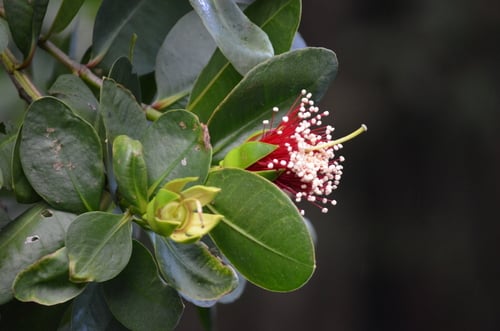
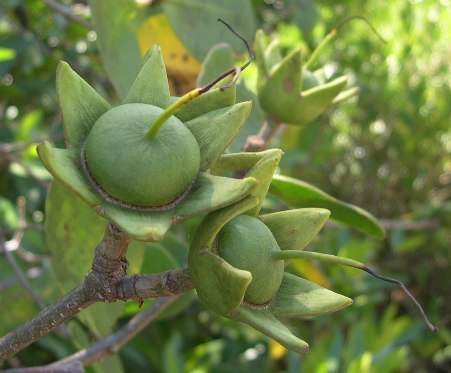
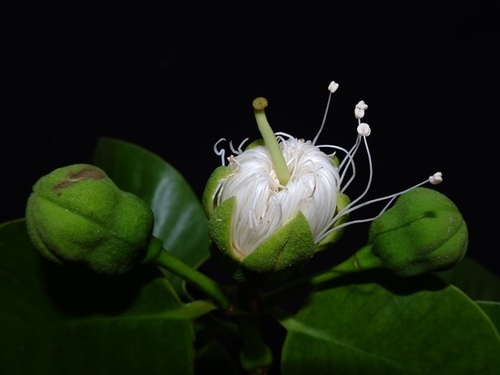
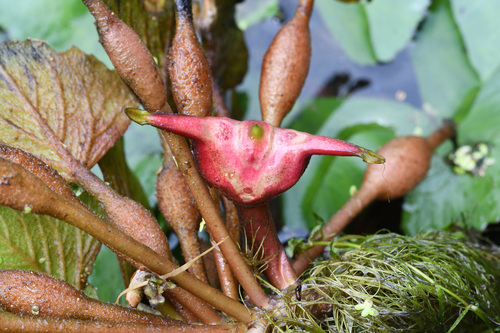
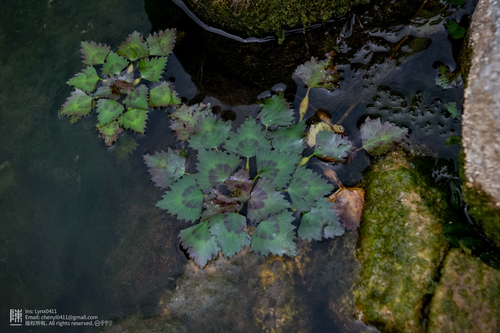
Heimia salicifolia - (Kunth.)Link.
(Kunth.)Link.
Erva De Vida, Shrubby yellowcrest
gbif· cc-by-nc
3300.jpg
gbif· cc-by-nc
3300.jpg
gbif· cc-by-nc
3300.jpg
Description
Heimia salicifolia is a deciduous Shrub growing to 3 m (9ft 10in). See above for USDA hardiness. It is hardy to UK zone 8. It is in flower from August to September. The species is hermaphrodite (has both male and female organs). Suitable for: light (sandy), medium (loamy) and heavy (clay) soils and prefers well-drained soil. Suitable pH: mildly acid, neutral and basic (mildly alkaline) soils. It cannot grow in the shade. It prefers moist soil.
Edible Uses
An intoxicating and euphoric drink is made by crushing the wilted leaves in water and leaving the liquid in a sunny position for three days to ferment. In larger quantities this can induce hallucinations and produces a vision that is typically overcast in yellow.
Medicinal Uses
Antispasmodic Hallucinogenic Sedative. The leaves are antispasmodic, hallucinogenic and sedative. An infusion serves to stabilize the blood pressure and relieve anxiety.
Distribution
Southern N. America from Texas to Mexico and south to Central America.
Where It Grows
NORTHERN AMERICA: United States (New Mexico, Texas), Mexico (Baja, Nuevo León, San Luis Potosí, Sonora, Tamaulipas, Zacatecas, Aguascalientes, Chiapas, Guanajuato, Guerrero, Hidalgo, Jalisco, México, Michoacán de Ocampo, Nayarit, Oaxaca, Puebla, Querétaro, Veracruz de Ignacio de la Llave) SOUTHERN AMERICA: Jamaica, Guatemala, El Salvador, Brazil, Bolivia, Argentina, Paraguay
Cultivation
Easily grown in any well-drained soil in full sun. Especially in the colder areas of the country this plant is best grown against a sunny south or south-west facing wall and given a good mulch of bracken in the winter. The rootstock is fairly hardy in most of Britain, whilst the top growth tolerates temperatures down to about -10 to -15°c. If cut back by severe weather the plant usually grows again from the base. Flowers are produced on the current seasons growth. Plants growing by the side of a greenhouse at Cambridge Botanical Gardens flower freely. This species is closely related to H. myrtifolia, differing mainly in having larger flowers. Any pruning is best carried out in early spring by removing excess growth at the base of the plant.
Propagation
Seed - we have no information for this species but suggest sowing the seed in spring in a greenhouse. Prick out the seedlings into individual pots once they are large enough to handle. Grow the young plants on for at least their first winter in a greenhouse and plant out in late spring or early summer. Mulch the roots well in the autumn to protect them from the cold. Cuttings of half-ripe wood, July/August in a frame.