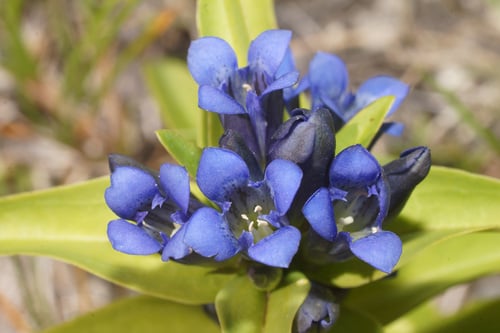
Gentiana macrophylla
Pall.
Qin Jiao
iNaturalist· cc-by-nc
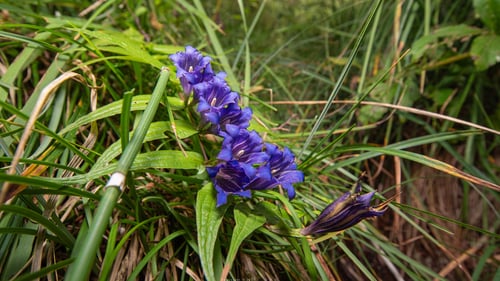
(c) Yao Li, some rights reserved (CC BY-NC), uploaded by Yao Li
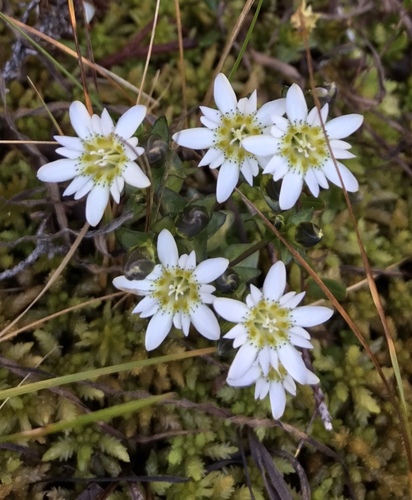
iNaturalist· cc-by-nc
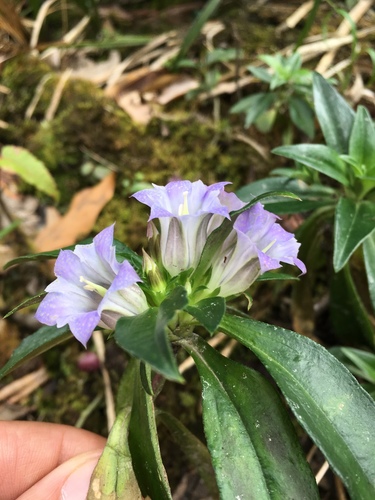
(c) Yao Li, some rights reserved (CC BY-NC), uploaded by Yao Li
Description
Gentiana macrophylla is a PERENNIAL growing to 0.6 m (2ft) by 0.6 m (2ft in). See above for USDA hardiness. It is hardy to UK zone 6. It is in flower from August to September. The species is hermaphrodite (has both male and female organs) and is pollinated by Bumblebees, butterflies. Suitable for: light (sandy), medium (loamy) and heavy (clay) soils and prefers well-drained soil. Suitable pH: mildly acid, neutral and basic (mildly alkaline) soils. It can grow in semi-shade (light woodland) or no shade. It prefers moist soil.
Edible Uses
Leaves - cooked. An emergency food, used when all else fails.
Medicinal Uses
Analgesic Antiinflammatory Antipyretic Antirheumatic Hypotensive. Qin Jiao has been used in Chinese herbalism for over 2,000 years and, like other members of this genus, the roots contain some of the most bitter compounds known and make an excellent tonic for the whole digestive system, working especially on the stomach, liver and gall bladder. The root is analgesic, anti-inflammatory, antipyretic, antirheumatic, diuretic, febrifuge, hypoglycaemic and hypotensive. The root is used internally in the treatment of digestive problems, arthritis, allergic inflammations, low-grade fever in chronic diseases, jaundice and hepatitis. The root is harvested in the autumn and dried for later use.
Distribution
E. Asia - China, Siberia.
Where It Grows
TEMPERATE ASIA: Russian Federation (Buryatia, Gorno-Altay, Tyva, Respublika, Yakutia-Sakha, Altay, Krasnoyarsk, Chita, Irkutsk, Kemerovskaja oblast, Novosibirsk, Tomsk), Kazakhstan, Mongolia (north), Russian Federation (Primorye, Amur), China (Hebei Sheng, Nei Mongol Zizhiqu, Ningxia Huizi Zizhiqu, Shaanxi Sheng, Shandong Sheng, Shanxi Sheng)
Cultivation
In general, gentians require a moist well-drained soil in a sheltered position, a certain minimum of atmospheric humidity, high light intensity but a site where temperatures are not too high. They are therefore more difficult to grow in areas with hot summers and in such a region they appreciate some protection from the strongest sunlight. Most species will grow well in the rock garden. This species requires a moist well-drained neutral to acid soil in a sheltered position. It prefers full sun but succeeds in partial shade. Plants are hardy to at least -15°c. A moisture loving plant, preferring to grow with full exposure to the sun but with plenty of underground moisture in the summer, it grows better in the north and west of Britain. Plants are intolerant of root disturbance.
Propagation
Seed - best sown as soon as it is ripe in a light position in a cold frame. It can also be sown in late winter or early spring but the seed germinates best if given a period of cold stratification and quickly loses viability when stored, with older seed germinating slowly and erratically. It is advantageous to keep the seed at about 10°c for a few days after sowing, to enable the seed to imbibe moisture. Following this with a period of at least 5 - 6 weeks with temperatures falling to between 0 and -5°c will usually produce reasonable germination. It is best to use clay pots, since plastic ones do not drain so freely and the moister conditions encourage the growth of moss, which will prevent germination of the seed. The seed should be surface-sown, or only covered with a very light dressing of compost. The seed requires dark for germination, so the pots should be covered with something like newspaper or be kept in the dark. Pot up the seedlings into individual pots as soon as they are large enough to handle and grow on in light shade in the greenhouse for at least their first winter. The seedlings grow on very slowly, taking 2 - 7 years to reach flowering size. When the plants are of sufficient size, place them out into their permanent positions in late spring or early summer. Division in March. Most members of this genus have either a single tap-root, or a compact root system united in a single root head, and are thus unsuitable for division. Cuttings of basal shoots in late spring.