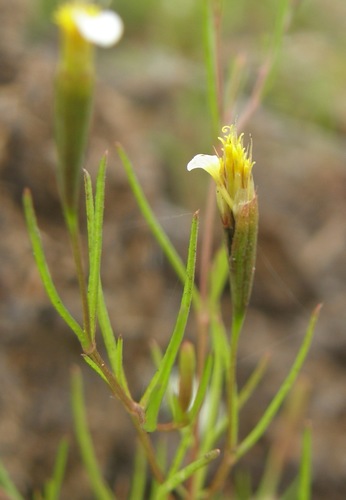
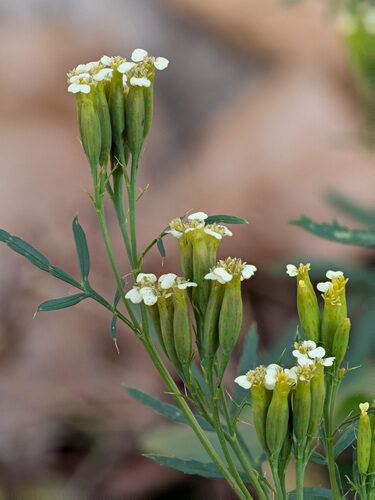
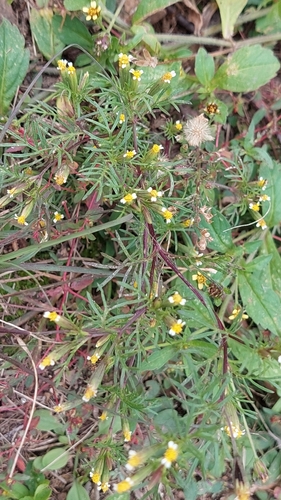
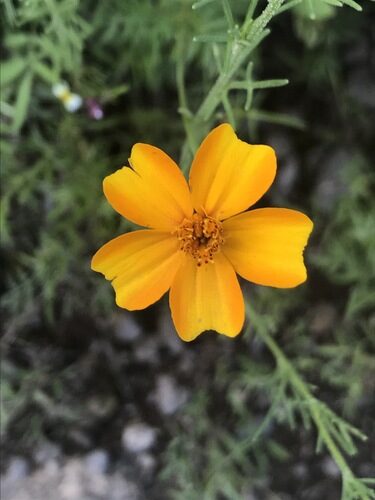
Eupatorium purpureum
L.
Gravel Root
gbif· cc-by-nc-nd
Sjoerd-Dirk
gbif· cc-by-nc-nd
Sjoerd-Dirk
gbif· cc-by-nc-nd
Sjoerd-Dirk
Description
Eupatorium purpureum is a PERENNIAL growing to 2 m (6ft) by 1 m (3ft 3in) at a fast rate. See above for USDA hardiness. It is hardy to UK zone 4. It is in flower from August to October, and the seeds ripen from September to November. The species is hermaphrodite (has both male and female organs) and is pollinated by Insects. The plant is self-fertile. It is noted for attracting wildlife. Suitable for: light (sandy), medium (loamy) and heavy (clay) soils and prefers well-drained soil. Suitable pH: mildly acid, neutral and basic (mildly alkaline) soils. It can grow in semi-shade (light woodland) or no shade. It prefers moist soil.
Edible Uses
Salt. The roots have been burnt and their ashes used as salt to flavour foods.
Medicinal Uses
Astringent Diuretic Nervine Tonic Urinary. Gravel root was used by the native N. American Indians as a diaphoretic to induce perspiration and break a fever. The plant was quickly adopted by the white settlers and still finds a use in modern herbalism. The whole plant, but especially the root, is astringent, diuretic, nervine and tonic. It works particularly on the genito-urinary system and the uterus. Especially valuable as a diuretic and stimulant, as well as an astringent tonic, a tea made from the roots and leaves has been used to eliminate stones from the urinary tract, to treat urinary incontinence in children, cystitis, urethritis, impotence etc. It is also said to be helpful in treating rheumatism and gout by increasing the removal of waste from the kidneys. The leaves and flowering stems are harvested in the summer before the buds open and are dried for later use. The roots are harvested in the autumn and dried for later use.
Distribution
Eastern N. America - New Hampshire to Minnesota, south to Florida and Oklahoma..
Where It Grows
NORTHERN AMERICA: Canada (Ontario), United States (Connecticut, Indiana, Massachusetts, Michigan (south), New Hampshire (southwest), New Jersey, New York, Ohio, Pennsylvania, Rhode Island, Vermont (south), West Virginia, Illinois, Iowa, Kansas (east), Minnesota (southeast), Missouri, Nebraska (east), Oklahoma (east), Wisconsin, Alabama (north), Arkansas, Delaware, Florida (northwest), Georgia, Kentucky, Louisiana (north), Maryland, Mississippi (north), North Carolina, South Carolina, Tennessee, Virginia)
Cultivation
Succeeds in ordinary garden soil that is well-drained but moisture retentive in sun or part shade. Plants can be grown in quite coarse grass, which can be cut annually in the autumn. A very cold-hardy plant, tolerating temperatures down to about -25°c. The bruised leaves have a vanilla-like odour. Plants seem to be immune to the predations of rabbits. Butterflies are attracted to this plant. In garden design, as well as the above-ground architecture of a plant, root structure considerations help in choosing plants that work together for their optimal soil requirements including nutrients and water. The predictable growth behaviour makes it easier to maintain without having to apply containment methods.
Propagation
Seed - sow spring in a cold frame and only just cover the seed. Prick out the seedlings into individual pots when they are large enough to handle and plant them out into their permanent positions in the summer. Division in spring or autumn. Very easy, the clumps can be replanted direct into their permanent positions.
Other Uses
Dye Straw. The stems have been used as straws. The fruits yield a pink or red textile dye.
Also Known As
Joe Pye weed