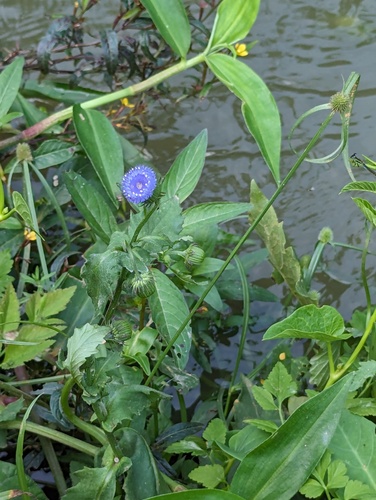
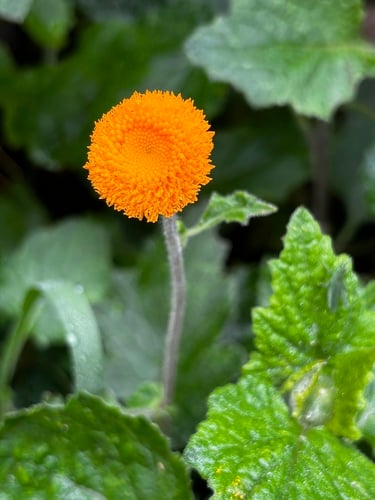
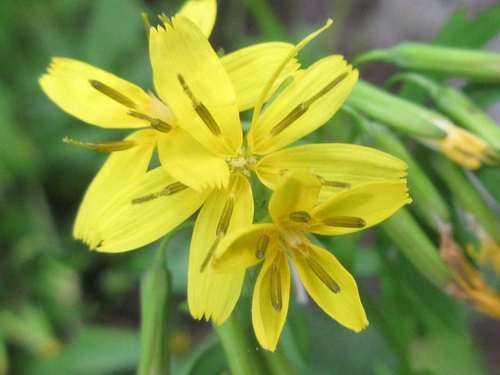
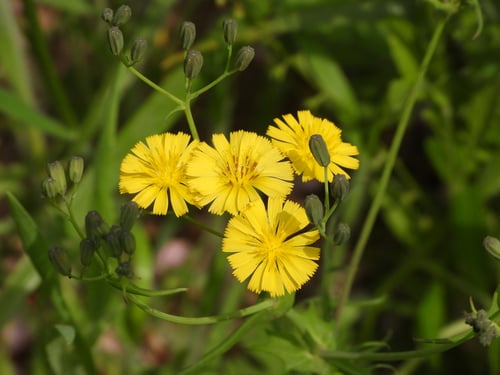
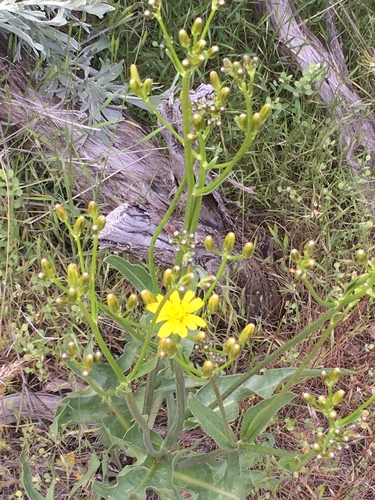
Gymnanthemum amygdalinum
(Delile) Sch. Bip.
Bitter leaf
iNaturalist· cc0
no rights reserved, uploaded by 葉子
iNaturalist· cc-by-sa
(c) Tony Eales, some rights reserved (CC BY-SA)
iNaturalist· cc-by-sa
(c) Tony Eales, some rights reserved (CC BY-SA)
Summary
Source: WikipediaAn evergreen shrub growing 8 m tall by 7 m wide at medium rate. Hardy to UK zone 10. Tolerates light sandy, medium loamy, and heavy clay soils with preference for well-drained conditions across mildly acidic to mildly alkaline pH. Requires full sun and handles both drought and moist conditions.
Description
A shrub or small tree. It grows 3-8 m tall. The trunk can be 40 cm wide. The leaves are narrowly oval and taper to the tip. They are 9-17 cm long by 4-6 cm wide. The flowers are white or pale red.
Edible Uses
Young leafy shoots are cooked and eaten as a potherb or added to soups. The leaves often have an intensely bitter flavour, though forms exist that are nearly free of bitterness. When harvesting, trim the ends of whole shoots rather than removing individual leaves, as this encourages new growth and avoids slowing the plant down.
Traditional Uses
The leaves are used in soups.
This uses section is brief — help expand it
Medicinal Uses
Bitterleaf is widely used in traditional African medicine. Leaf decoctions treat fever, malaria, diarrhoea, dysentery, hepatitis, and cough, and are also used as a laxative and fertility inducer, as well as for scabies, headache, and stomach-ache. Leaves are applied directly to wounds as a substitute for iodine. The bitterness comes from sesquiterpene lactones and steroid glucosides, some of which have significant antiparasitic activity — particularly vernodalin and vernonioside B1. Vernolepin has shown platelet anti-aggregating properties, and vernodalin and vernomygdin have cytotoxic activity. Young twigs are chewed as a stomachic tonic and appetite stimulant. The plant is one of the most common treatments for intestinal worms including nematodes — even chimpanzees have been observed ingesting the bitter pith to control intestinal nematode infections. Root extracts are used against malaria and gastrointestinal disorders, and in Zimbabwe a root infusion is used to treat sexually transmitted diseases. Bark infusions treat fever and diarrhoea, and dried flowers are used against stomach disorders.
Distribution
It is a tropical plant. It grows between 600-2,800 m bove sea levl,
Where It Grows
Africa, Angola, Benin, Botswana, Brazil, Cameroon, East Africa, Ethiopia, Guinea, Guinée, Kenya, Mali, Mozambique, South Africa, Southern Africa, West Africa, Zimbabwe,
Cultivation
A plant of the tropics, where it is found at elevations from 600 - 2,800 metres. It grows best in areas where annual daytime temperatures are within the range 20 - 26°c, but can tolerate 16 - 35°c. It prefers a mean annual rainfall in the range 750 - 2,000mm, but tolerates 600 - 2,400mm. Requires a position in full sun. Succeeds on most soil types, though it grows best in well-drained, humus-rich soils. Plants prefer a moist environment, though they are fairly drought tolerant once established. Prefers a pH in the range 5.5 - 7, tolerating 5 - 7.5. Plants can be coppiced. Cultivated forms have been selected that are less bitter than the wild plant. Flowering is induced by short days.
Propagation
Seed germinates in 2–3 weeks. Cuttings of mature wood can also be used.
Other Uses
The plant is sometimes grown as a hedge. Its branches are termite resistant and are used as stakes to line fields and as live fencing. It is also planted to help prevent soil erosion. The ash from burnt branches controls seed-borne fungi, improving seed viability and germination capacity, making it useful as a plant disease management tool. Young twigs are used as toothpicks or chewing sticks and contain substances with marked activity against bacteria that cause gum disease, while also stimulating appetite. The wood is used for timber, fuel, and charcoal production.
Other Information
It is a cultivated plant. It is popular.
Notes
It is used as a medicine to treat malaria.
Synonyms
Also Known As
Yoloyolo
References (7)
- Cultivated vegetables of the world: a multilingual anomasticon. 2011, Springer
- Dansi, A., et al, 2008, Traditional leafy vegetables and their use in the Benin Republic. Genet Resour Crop Evol (2008) 55:1239–1256
- Encyclopedia of Life.
- Ferns, Useful Tropical Plants.
- Mutie, F. M., et al, 2023, Important Medicinal and Food Taxa (Orders and Families) in Kenya, Based on Three Quantitative Approaches. Plants 2023, 12, 1145
Show all 7 references Hide references
- Welcome, A. K. & Van Wyk, B.-E., 2019, An inventory and analysis of the food plants of southern Africa. South African Journal of Botany 122 (2019) 136–179
- World Checklist of Useful Plant Species 2020. Royal Botanic Gardens, Kew