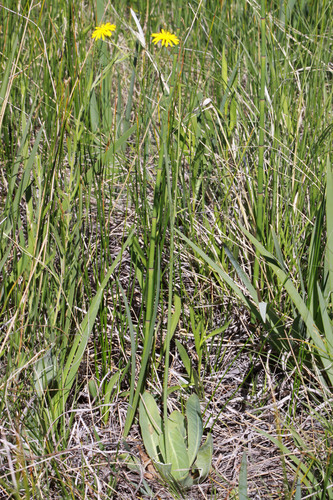
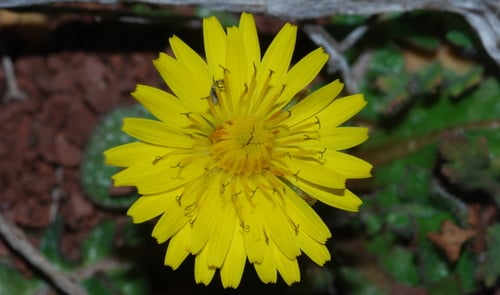
Gymnanthemum mespilifolium
(Less.) H. Rob.
Wikipedia· cc-by-sa
Wikimedia Commons - Gymnanthemum_mespilifolium00.jpg
iNaturalist· cc-by-nc
(c) Suzaan Kritzinger-Klopper, some rights reserved (CC BY-NC)
Summary
Source: WikipediaGymnanthemum mespilifolium (Greek gymnos = naked and anthos = flower, alluding to the lack of paleae on the receptacle - mespilifolium = leaf like that of Mespilus), is a sprawling woody liane up to 15 cm thick from Southern Africa occurring in the Eastern Cape, KwaZulu-Natal, Limpopo, Mpumalanga, Western Cape. This species is found as a vigorous pioneer in abused or degraded habitats such as cleared areas and forest margins. The genus comprises some 43 species found in sub-Saharan Africa, Madagascar, Southern Asia, and introduced into Brazil. Gymnanthemum was first described by Cassini in 1817, then included in Vernonia by Candolle in 1836 and Bentham in 1873 and finally resurrected by Robinson and Kahn in 1986 and 1999. The taxonomic limits of the genus are presently narrower than in 1999. Currently nine species are recognised in southern Africa, of which five are endemic to South Africa. The other four are more widespread - they are Gymnanthemum theophrastifolium (Schweinf. ex Oliv. & Hiern) H. Rob., Gymnanthemum coloratum (Willd.) H. Rob. & B. Kahn, Gymnanthemum amygdalinum (Del.) Sch. Bip. ex Walp. and Gymnanthemum myrianthum (Hook. f.) H. Rob. In the South African Journal of Botany Volume 102, January 2016, Pages 81–101, N.Swelankomo, J.C.Manning and A.R.Magee have proposed sinking Gymnanthemum mespilifolium in a new combination, Gymnanthemum capense.
Description
A Mediterranean shrub in the daisy family (Asteraceae) that can tolerate arid conditions.
This description is brief — help expand it
Edible Uses
The leaves are eaten.
Distribution
It is a Mediterranean plant. It can grow in arid places.
Where It Grows
Africa, Eswatini, South Africa, Southern Africa, Swaziland,
Synonyms
References (4)
- Fox, F. W. & Young, M. E. N., 1982, Food from the Veld. Delta Books. p 128 (As Vernonia mespilifolia)
- Long, C., 2005, Swaziland's Flora - siSwati names and Uses http://www.sntc.org.sz/flora/ (As Vernonia mespilifolia)
- Royal Botanic Gardens, Kew (1999). Survey of Economic Plants for Arid and Semi-Arid Lands (SEPASAL) database. Published on the Internet; http://www.rbgkew.org.uk/ceb/sepasal/internet [Accessed 14th April 2011] (As Vernonia mespilifolia)
- World Checklist of Useful Plant Species 2020. Royal Botanic Gardens, Kew