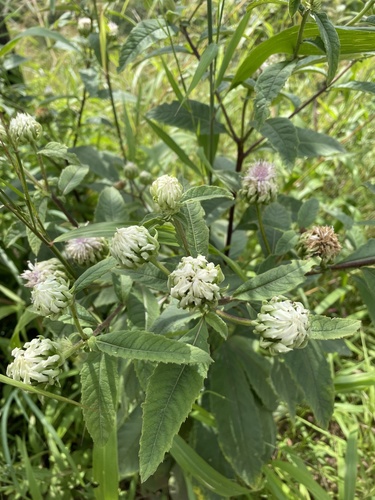
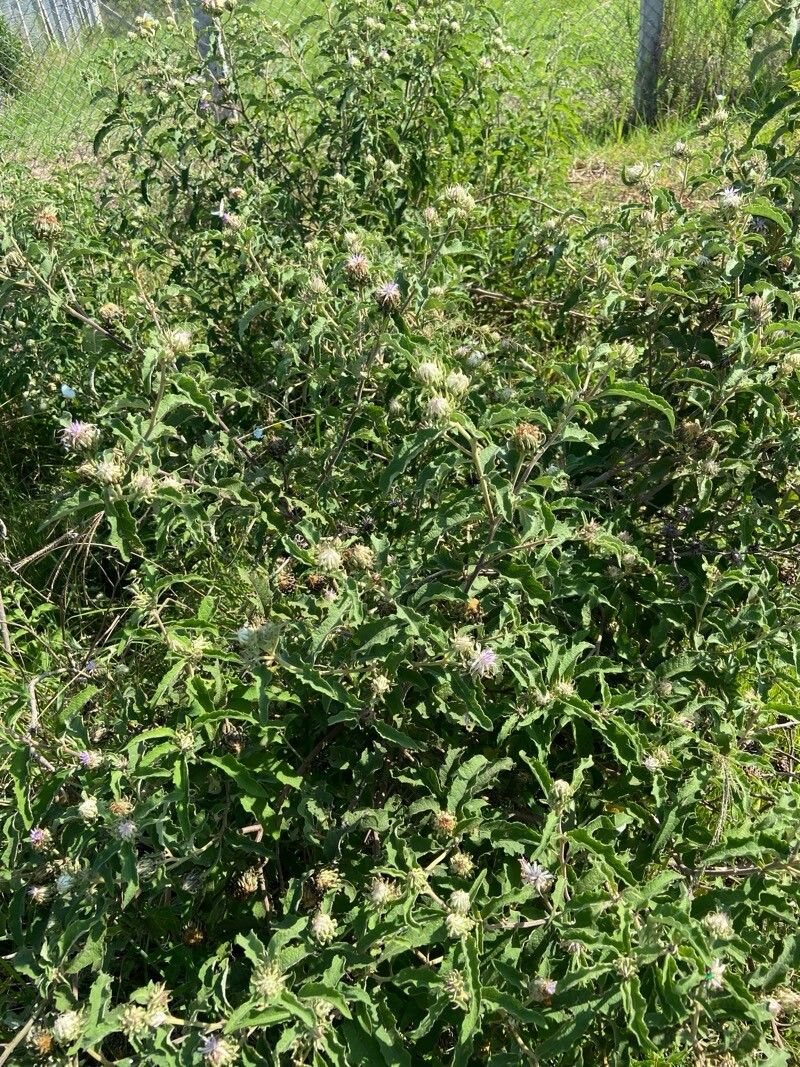
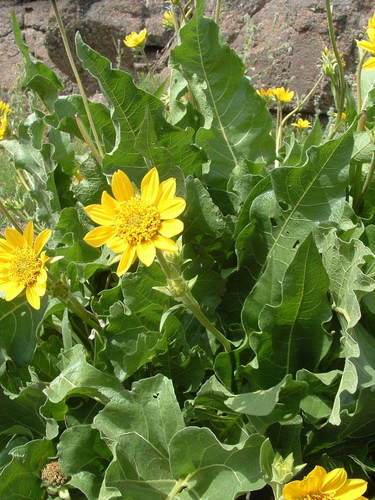
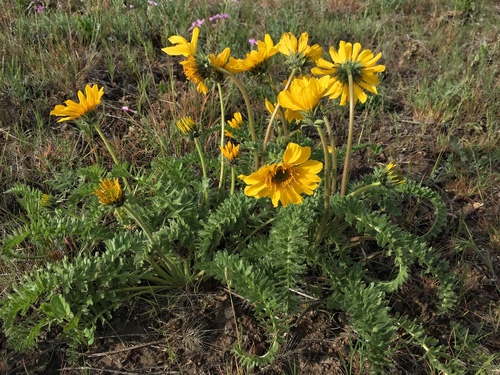
Ericameria nauseosa ssp. nauseosa -
Chamisa, Gray Rabbitbrush
gbif· cc-by
Steve Matson
gbif· cc-by
Steve Matson
gbif· cc-by
Steve Matson
Description
Ericameria nauseosa ssp. nauseosa is an evergreen Shrub growing to 1 m (3ft 3in) by 1 m (3ft 3in) at a medium rate. See above for USDA hardiness. It is hardy to UK zone 5. The flowers are pollinated by Bees, Insects. It is noted for attracting wildlife. Suitable for: light (sandy), medium (loamy) and heavy (clay) soils, prefers well-drained soil and can grow in nutritionally poor soil. Suitable pH: mildly acid, neutral and basic (mildly alkaline) soils and can grow in very alkaline soils. It cannot grow in the shade. It prefers dry or moist soil and can tolerate drought.
Edible Uses
Direct food use is negligible. Ash produced from burned plants was used as a leavening agent in traditional cooking. Traditional / Indigenous Use Summary: Widely used for chamisa ash, an early form of baking soda. Direct consumption was rare.
Medicinal Uses
See Ericameria nauseosa
Known Hazards
Potentially harmful compounds present. Avoid regular or large consumption.
Distribution
The native range of this variety is Arizona to Colorado and New Mexico.
Where It Grows
US. USA. Arizona, Colorado, New Mexico, Utah.
Cultivation
This species (Ericameria nauseosa ) thrives on poor soils and so is an indication that the land is poor, has been allowed to erode, has been overgrazed or in other ways neglected. It is also reported to tolerate alkaline conditions, drought, heavy clays and poor soils. The following notes are based on the general needs of the genus. Requires a sunny position and prefers a well-drained sandy soil. Plants do not require a rich soil. They tolerate alkaline soils. The sub-species C. nauseosus ssp.. consimilis, is characteristic of sites with highly saline soils. Climate: boreal to warm temperate. Humidity: semi-arid. Carbon Farming - Cultivation: experimental. Management: coppice. Typical Size: 60–170 cm tall. USDA Hardiness Zones: Approx. Zones 4–9.
Propagation
Seed.
Other Uses
The main species (Ericameria nauseosa ) is a source of latex, used in making rubber. There is no commercially viable method of extracting it as yet. This species has been identified as one of the more promising species from western N. America for the production of biocrude (hydrocarbon and hydrocarbon-like chemical fraction of plants which may be extracted by organic solvents and upgraded to liquid fuels and chemical feedstocks). Finding the cyclohexane extract to be 15.1%, the ethanol extract 20.8%, Mc. Laughlin and Hoffmann (1982) calculated 13.2 kBTU/lb. in the extractables, a biomass yield of ca 4.5 MT/ha or 12.5 bbls, at a per barrel cost of $50.00 or $13.10/million BTU. The leaves have been used as a sanitary towel, especially after childbirth. A green dye is obtained from the bark. A yellow-gold dye is obtained from the flowers. The growing plant repels insects. The cottony fruiting heads are used as a stuffing material for pillows etc. Along with associated species, like big sage and western wheat grass, rubber rabbitbrush is a significant source of food for browsing wildlife on winter ranges. An ornamental xeriscaping shrub. Carbon Farming - Industrial Crop: hydrocarbon.
Synonyms
Also Known As
Gray rabbitbrush, rubber rabbitbrush, chamisa