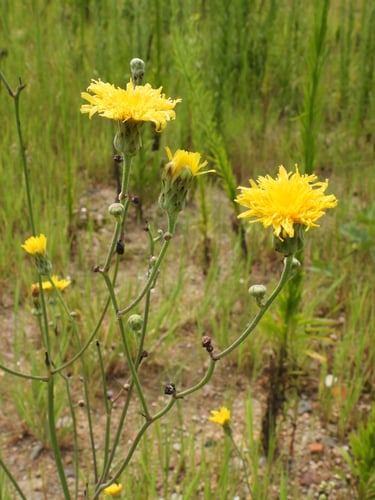
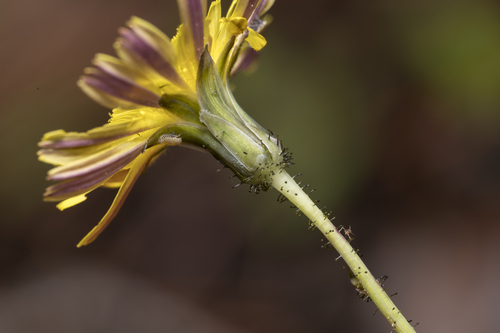
Crassocephalum rubens
(Juss. ex Jacq.) S. Moore
Yoruban bologi
iNaturalist· cc-by
(c) Matt Berger, some rights reserved (CC BY)
iNaturalist· cc-by-nc
(c) onidiras-iNaturalist, some rights reserved (CC BY-NC), uploaded by onidiras-iNaturalist
Summary
Source: WikipediaCrassocephalum rubens, also called Yoruba bologi, is an erect annual herb growing up to 80 cm tall. It is grown and consumed especially in Southwestern Nigeria, but also as far away as Yemen, South Africa, and islands of the Indian Ocean. Its mucilaginous leaves are used as a dry or fresh vegetable in a variety of dishes, and as medicine for several different ailments.
Description
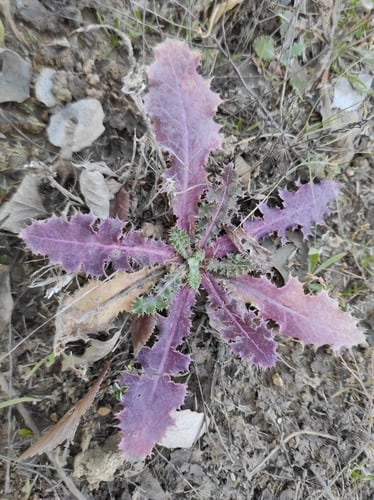
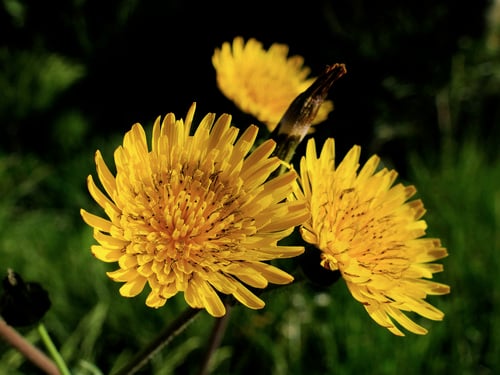
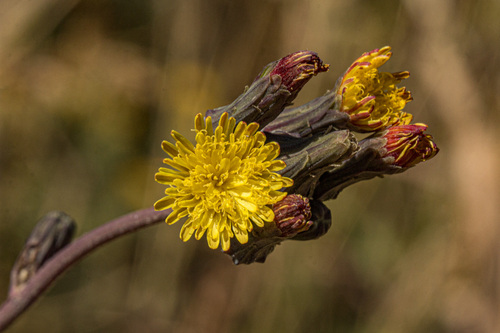
An annual herb. It grows 80 cm high. The leaves are arranged in spirals. They do not have leaf stalks. The leaves are deeply cut. Leaves are 5-16 cm long by 2-5 cm wide. The flower heads are red or purple. They are at the top of a long stalk.
Edible Uses
The leaves are cooked and eaten in soups and stews, where their slimy texture is valued. They can also be dried, chopped, and cooked with other vegetables.
Traditional Uses
The leaves are cooked and eaten. They are slimy and used in soups and stews. They can be dried and chopped and cooked with other vegetables.
This uses section is brief — help expand it
Medicinal Uses
The leaves are slightly laxative. They are used in traditional medicine to treat a range of complaints. They are given to women after childbirth for their laxative effect; they are used as a treatment for 'belly palava' (stomach-ache); when eaten in quantity they are used to treat liver-complaints; they are used as an infusion against colds. Applied externally, they are made into a poultices to treat burns. The leaf-sap is applied to sore eyes and is also instilled into the eye to remove filaria parasites. They are crushed in water and rubbed into the ear to treat earache. A trace of alkaloid has been reported present in the leaves. The powdered root has been used prepared as a paste for external application to breast-cancer in Nigeria.
Distribution
A tropical plant. It grows from sea level to 1,800 m altitude. It grows in areas with a rainfall of 1,000-1,600 m altitude. It does best in well drained soils with high organic matter. It grows in areas with an annual rainfall of 1,000-1,600 mm. In Yunnan.
Where It Grows
Africa, Angola, Asia, Benin, Cameroon, Central Africa, China, Congo DR, East Africa, Ethiopia, Gabon, Ghana, Guinea, Guinée, Guinea-Bissau, Lesotho, Liberia, Madagascar, Malawi, Mascarene Islands, Middle East, Mozambique, Myanmar, Niger, Nigeria, Sahel, Sao Tome and Principe, SE Asia, Sierra Leone, South Africa, Southern Africa, Sudan, Taiwan, Uganda, West Africa, Yemen, Zambia, Zimbabwe,
Cultivation
It can be grown from seed or by stem cuttings 20-25 cm long. Removing the flowering shoots enables more leaves to be produced.
Propagation
Seed - Stem cuttings 20 - 25 cm long, obtained from mature shoots. The plant is described as being an annual which, if true, makes this a rather strange method of propagation.
Other Uses
Like garlic, the whole plant has repellent properties to crocodiles.
Other Information
It is a cultivated food plant in Nigeria. It is sold in local markets.
Notes
There are about 25 Crassocephalum species.
Synonyms
Also Known As
Adjele, Agologolo, Akogbo, Banfa-banfa, Betranomay, Bolo, Bungudi, Bungudia, Chinunche, Chinunje, Chinusi, Chinusika, Gbolo, Hohounhogui, Kagiji, Kikpoi, Mushuwalindi, Mushiwarindi, Nu-su, Shekaadona, Sungumbuwa, Taw-bi-zat, Tignikoroya
References (35)
- Abbiw, D.K., 1990, Useful Plants of Ghana. West African uses of wild and cultivated plants. Intermediate Technology Publications and the Royal Botanic Gardens, Kew. p 41
- Achigan-Dako, E, et al (Eds), 2009, Catalogue of Traditional Vegetables in Benin. International Foundation for Science.
- Avouhou, H. T., et al, 2012, Ethnobotanical Factors Influencing the Use and Management of Wild Edible Plants in Agricultural Environments in Benin. Ethnobotany Research & Applications Vol 10:571-592
- Bosch, C.H., 2004. Crassocephalum rubens (Juss. ex Jacq.) S.Moore. [Internet] Record from Protabase. Grubben, G.J.H. & Denton, O.A. (Editors). PROTA (Plant Resources of Tropical Africa), Wageningen, Netherlands. < http://database.prota.org/search.htm>. Accessed 15 October 2009.
- Burkill, H. M., 1985, The useful plants of west tropical Africa, Vol. 1. Kew.
Show all 35 references Hide references
- Codjia, J. T. C., et al, 2003, Diversity and local valorisation of vegetal edible products in Benin. Cahiers Agricultures 12:1-12
- Dalziel, J. M., 1937, The Useful plants of west tropical Africa. Crown Agents for the Colonies London.
- Dansi, A., et al, 2008, Traditional leafy vegetables and their use in the Benin Republic. Genet Resour Crop Evol (2008) 55:1239–1256
- Dansi, A., et al, 2012, Diversity of the Neglected and Underutilized Crop Species of Importance in Benin. The Scientific World Journal. Volume 2012, Article ID 932947, 19 pages
- Food Composition Tables for use in Africa FAO http://www.fao.org/infoods/directory No. 601
- Fowler, D. G., 2007, Zambian Plants: Their Vernacular Names and Uses. Kew. p 12
- Gohre, A., et al, 2016, Plants from disturbed savannah vegetation and their usage by Bakongo tribes in Uíge, Northern Angola. Journal of Ethnobiology and Ethnomedicine (2016) 12:42
- Goode, P., 1989, Edible Plants of Uganda. FAO p 39
- Grivetti, L. E., 1980, Agricultural development: present and potential role of edible wild plants. Part 2: Sub-Saharan Africa, Report to the Department of State Agency for International Development. p 42 and p 29 (As Gynura cernua)
- Grubben, G. J. H. and Denton, O. A. (eds), 2004, Plant Resources of Tropical Africa 2. Vegetables. PROTA, Wageningen, Netherlands. p 228
- Jardin, C., 1970, List of Foods Used In Africa, FAO Nutrition Information Document Series No 2.p 70
- J. Bot. 50:212. 1912
- Lautenschläger, T., et al, 2018, First large-scale ethnobotanical survey in the province of Uíge, northern Angola. Journal of Ethnobiology and Ethnomedicine (2018) 14:51
- Lulekal, E., et al, 2011, Wild edible plants in Ethiopia: a review on their potential to combat food insecurity. Afrika Focus - Vol. 24, No 2. pp 71-121
- Malaisse, F., 1997, Se nourrir en floret claire africaine. Approche ecologique et nutritionnelle. CTA., p 91.
- Martin, F.W. & Ruberte, R.M., 1979, Edible Leaves of the Tropics. Antillian College Press, Mayaguez, Puerto Rico. p 184 (Also as Gynura cernua)
- Mawunu, M., et al, 2020, First Survey of the Edible Non-Wood Forest Products Sold in Uige Province, Northern Angola. European Journal of Agriculture and Food Sciences. Vol. 2, No. 6
- Mawunu, M., et al, 2022, Ethnobotanical uses of wild edible plants of Mucuba municipality, Angola. Natural Resources for Human Health. 2022, 0:1-10
- N'Danikou, S. et al, 2010, Eliciting Local Values of Wild Edible Plants in Southern Bénin to Identify Priority Species for Conservation. Economic Botany, 20(10), 2011, pp. 1–15.
- Peters, C. R., O'Brien, E. M., and Drummond, R.B., 1992, Edible Wild plants of Sub-saharan Africa. Kew. p 89
- Royal Botanic Gardens, Kew (1999). Survey of Economic Plants for Arid and Semi-Arid Lands (SEPASAL) database. Published on the Internet; http://www.rbgkew.org.uk/ceb/sepasal/internet [Accessed 11th April 2011] (As Gynura cernua)
- Segnon, A. C. and Achigan-Dako, E. G., 2014, Comparative analysis of diversity and utilization of edible plants in arid and semi-arid areas in Benin. Journal of Ethnobiology and Ethnomedicine. 10:80
- Seidemann J., 2005, World Spice Plants. Economic Usage, Botany, Taxonomy. Springer. p 119
- Shin, T., et al, 2018, Traditional knowledge of wild edible plants with special emphasis on medicinal uses in Southern Shan State, Myanmar. Journal of Ethnobiology and Ethnomedicine (2018) 14:48
- Terra, G.J.A., 1973, Tropical Vegetables. Communication 54e Royal Tropical Institute, Amsterdam, p 41 (Also as Gynura cernua)
- Vernon, R., 1983, Field Guide to Important Arable Weeds of Zambia. Dept of Agriculture, Chilanga, Zambia. p 88
- Williamson, J., 2005, Useful Plants of Malawi. 3rd. Edition. Mdadzi Book Trust. p 81
- World Checklist of Useful Plant Species 2020. Royal Botanic Gardens, Kew
- Yamada, T., 1999, A report of the Ethnobotany of the Nyindu in the Eastern part of the former Zaire. African Study Monographs 20(1):1-72
- Zon, A.P.M. van der, Grubben, G.J.H., 1976, Les legumes-feuilles spontanes et cultives du Sud-Dahomey, Communication 65, Royal Tropical Institute, Amsterdam, p 56