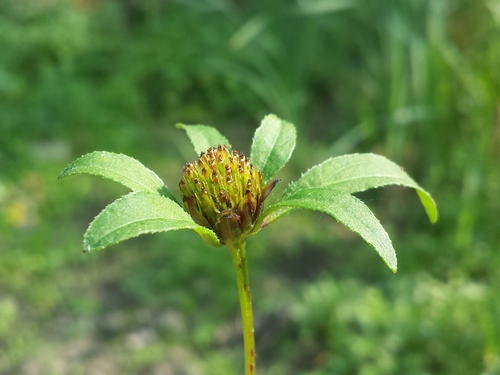
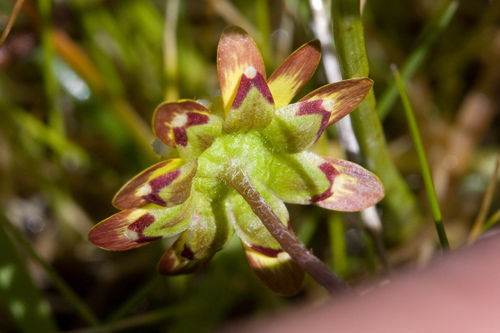
Crassocephalum montuosum
(S. Moore) Milne-Redh.
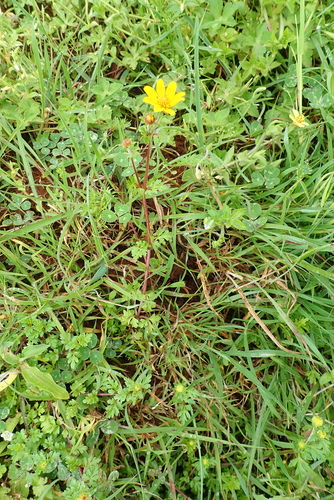
iNaturalist· cc-by-nc
(c) Alexey P. Seregin, some rights reserved (CC BY-NC), uploaded by Alexey P. Seregin
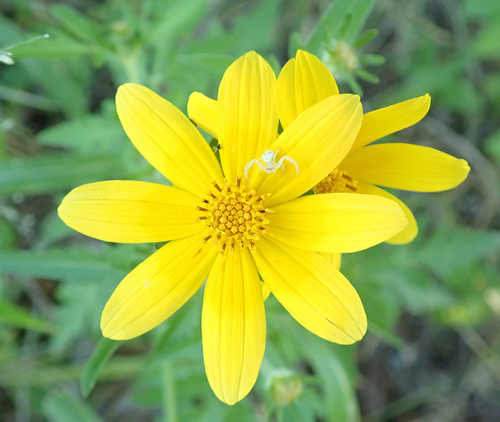
iNaturalist· cc-by-nc
(c) Nick Helme, some rights reserved (CC BY-NC), uploaded by Nick Helme
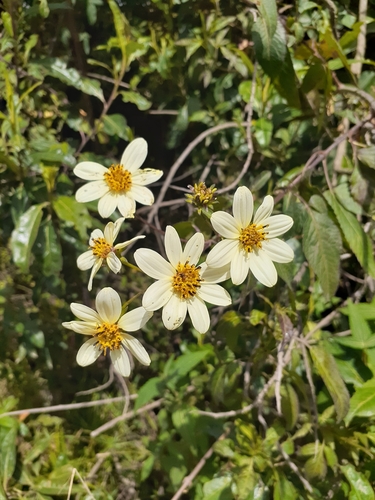
iNaturalist· cc-by-nc
(c) Bart Wursten, some rights reserved (CC BY-NC), uploaded by Bart Wursten
Description
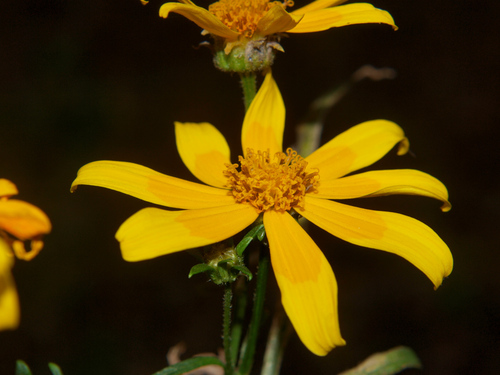
A herb. It grows 1.5 m tall. The leaves are alternate and oval to sword shaped. They are 9 cm long by 5 cm wide and they have teeth along the edge. The flowers are yellow and 1 cm long and 5-8 mm across.
Edible Uses
The young leaves and stems are cut and cooked as a leafy vegetable.
Traditional Uses
The young leaves are cooked and eaten as a leafy vegetable. The are cut then cooked.
This uses section is brief — help expand it
Distribution
It is a tropical plant. In Ethiopia it grows between 1,200-2,270 m above sea level.
Where It Grows
Africa, Angola, Central Africa, Congo DR, East Africa, Ethiopia, Sao Tome and Principe, Tanzania,
Other Information
It is sold in local markets.
Synonyms
Also Known As
Agili, Angelichu, Basosolo, Bungudi, Bungudia, Bungula, Esiidi, Miningi, Milwalindi, Miningi, Mufulubwindi, Mulwalindi, Mushwalindi, Rusheeri rushoshi
References (12)
- Awas, T., 1997, A Study on the Ecology and Ethnobotany of Non-cultivated Food Plants and Wild Relatives of Cultivated crops in Gambella Region, Southwestern Ethiopia. Addis Ababa University. p 42
- Karhagomba, I. B., et al, 2013, The cultivation of wild food and medicinal plants for improving community livelihood: The case of the Buhozi site, DR Congo. Nutrition Research and Practice (Nutr Res Pract) 2013;7(6):510-518
- Latham, P., 2004, Useful Plants of Bas-Congo province. Salvation Army & DFID p 257 (As Crassocephalum bumbense)
- Lautenschläger, T., et al, 2018, First large-scale ethnobotanical survey in the province of Uíge, northern Angola. Journal of Ethnobiology and Ethnomedicine (2018) 14:51
- Lulekal, E., et al, 2011, Wild edible plants in Ethiopia: a review on their potential to combat food insecurity. Afrika Focus - Vol. 24, No 2. pp 71-121
Show all 12 references Hide references
- Mawunu, M., et al, 2020, First Survey of the Edible Non-Wood Forest Products Sold in Uige Province, Northern Angola. European Journal of Agriculture and Food Sciences. Vol. 2, No. 6
- Mawunu, M., et al, 2022, Ethnobotanical uses of wild edible plants of Mucuba municipality, Angola. Natural Resources for Human Health. 2022, 0:1-10
- Terashima, H., et al, 1992, Ethnobotany of the Lega in the Tropical Rainforest of Eastern Zaire (Congo): Part Two, Zone de Walikale, African Study Monographs, Suppl. 19:1-60
- Terashima, H., & Ichikawa, M., 2003, A comparative ethnobotany of the Mbuti and Efe hunter-gatherers in the Ituri Forest, Democratic Republic of Congo. African Study Monographs, 24 (1, 2): 1-168, March 2003 (As Crassocephalum bumbense)
- Termote, C., et al, 2011, Eating from the wild: Turumbu, Mbole and Bali traditional knowledge of non-cultivated edible plants, District Tshopo, DRCongo, Gen Resourc Crop Evol. 58:585-618
- von Katja Rembold, 2011, Conservation status of the vascular plants in East African rain forests. Dissertation Universitat Koblenz-Landau p 163
- World Checklist of Useful Plant Species 2020. Royal Botanic Gardens, Kew