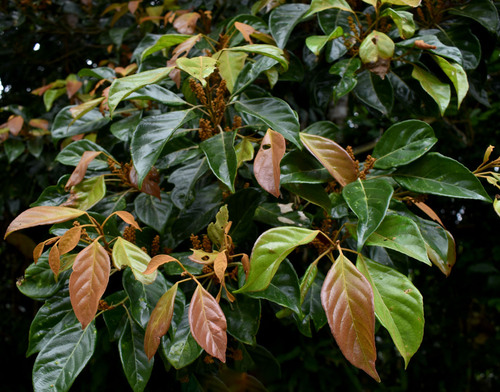
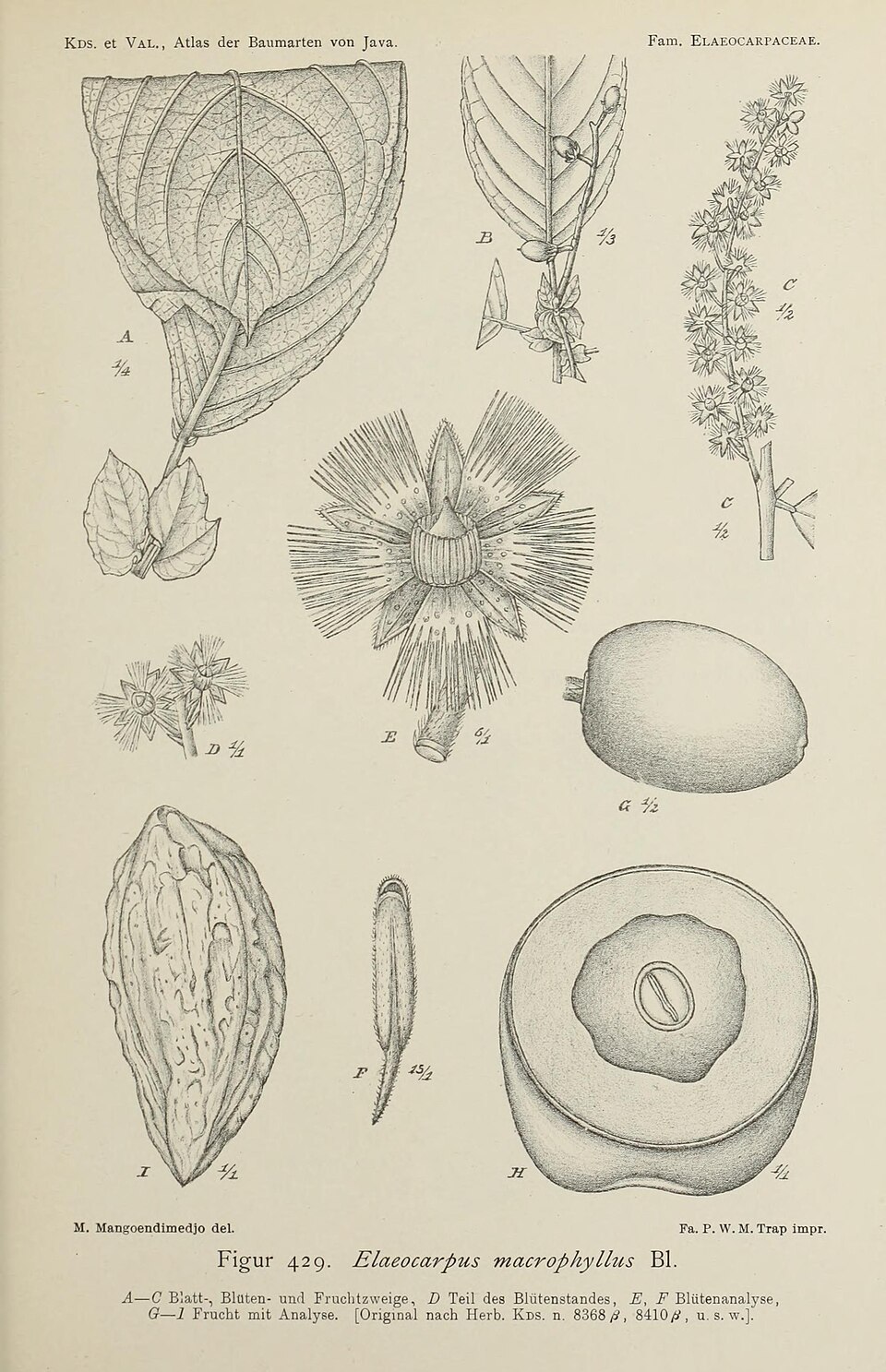
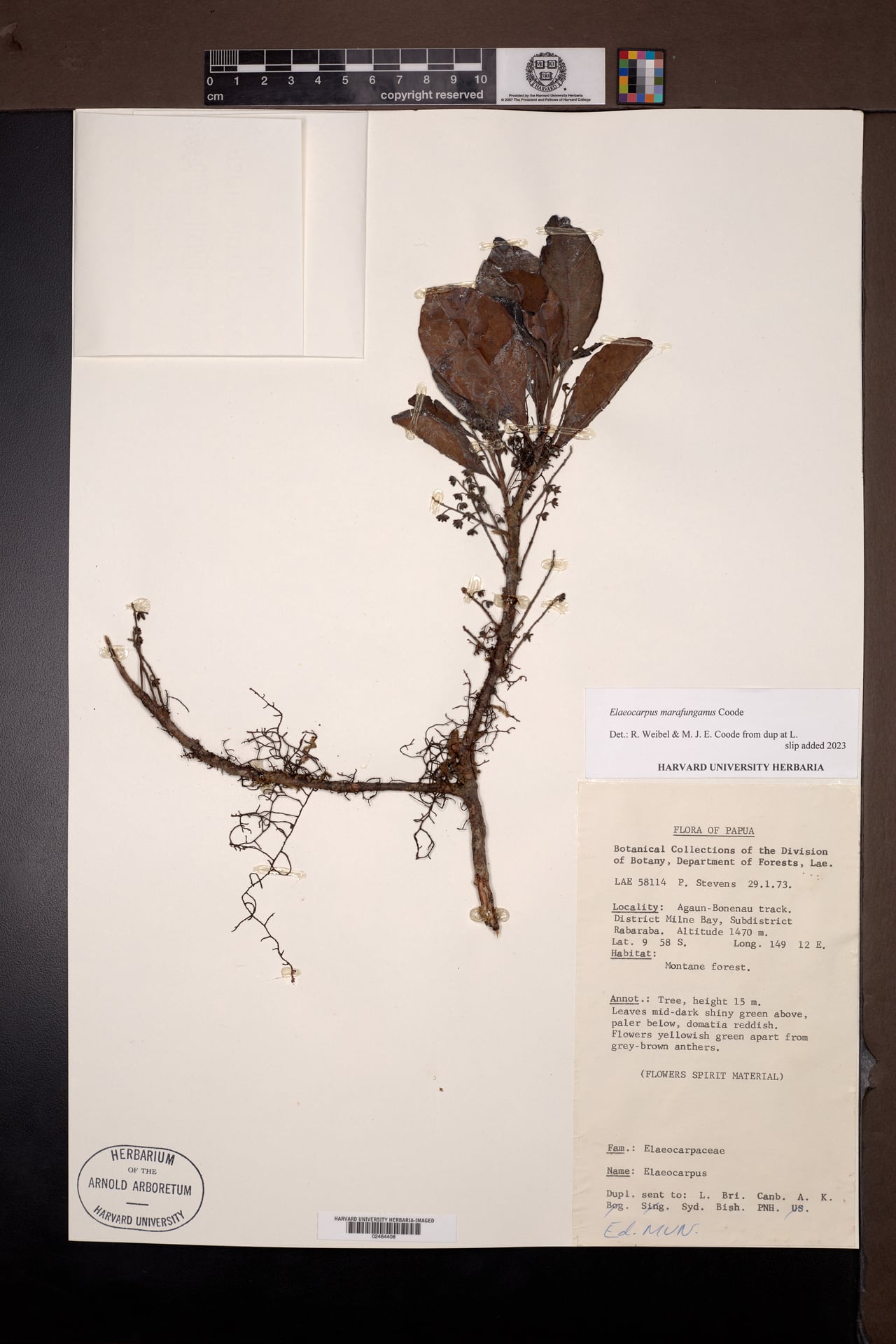
Elaeocarpus cyaneus
Sims.
Blueberry Ash
Description
Elaeocarpus cyaneus is an evergreen Tree growing to 12 m (39ft) by 12 m (39ft). See above for USDA hardiness. It is hardy to UK zone 9. It is in leaf all year. The species is hermaphrodite (has both male and female organs). Suitable for: light (sandy), medium (loamy) and heavy (clay) soils. Suitable pH: mildly acid and neutral soils and can grow in very acid soils. It can grow in semi-shade (light woodland) or no shade. It prefers moist soil.
Edible Uses
Fruit. The dark blue fruit is 8 - 10mm in diameter. No more details.
Distribution
Australia - New South Wales, Queensland, Tasmania, Victoria.
Where It Grows
AUSTRALASIA: Australia (Tasmania, New South Wales, Queensland, Victoria)
Cultivation
Prefers a fertile humus-rich well-drained soil. Other reports say that it requires a moist lime-free soil. Succeeds in full sun or partial shade. This species is hardy to at least -7°c in Australian gardens, though this cannot be translated directly to British gardens due to our cooler summers and longer, colder and wetter winters. This species is said to succeed outdoors in our mildest gardens, especially if given a sheltered position such as a south or south-west facing wall.
Propagation
Seed - sow spring in a greenhouse. Seed can be very slow to germinate, sometimes taking 2 years or more. When they are large enough to handle, prick the seedlings out into individual pots and grow them on in the greenhouse for at least their first winter. Plant them out into their permanent positions in late spring or early summer, after the last expected frosts. Cuttings of almost ripe shoots, August/September in a sandy soil in a frame. The leaves should be left on the stem.
Other Uses
Wood. Wood - close grained, fairly hard. Used for cabinet making, joinery etc.