Peripentadenia mearsii
(C.T. White) L. S. Sm.
Buff Quandong, Grey quandong
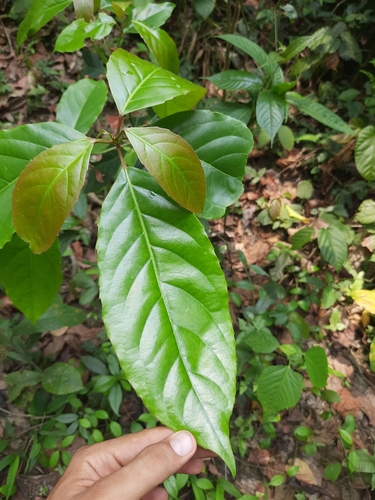
iNaturalist· cc-by
(c) M. Fagg, some rights reserved (CC BY)
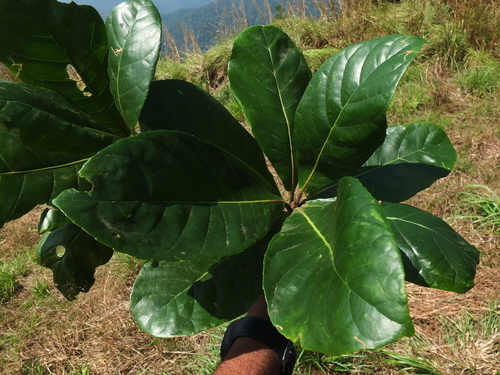
iNaturalist· cc-by
(c) Wairambar Rainforest, some rights reserved (CC BY), uploaded by Wairambar Rainforest
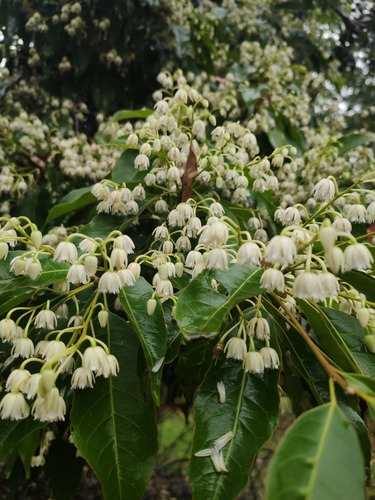
iNaturalist· cc-by
(c) M. Fagg, some rights reserved (CC BY)
Summary
Source: WikipediaPeripentadenia mearsii, commonly known as the buff quandong or grey quandong, is a plant in the family Elaeocarpaceae endemic to a small part of northeastern Queensland, Australia. It is usually seen as a multistemmed tree, and the habitat is tropical rainforest.
Description
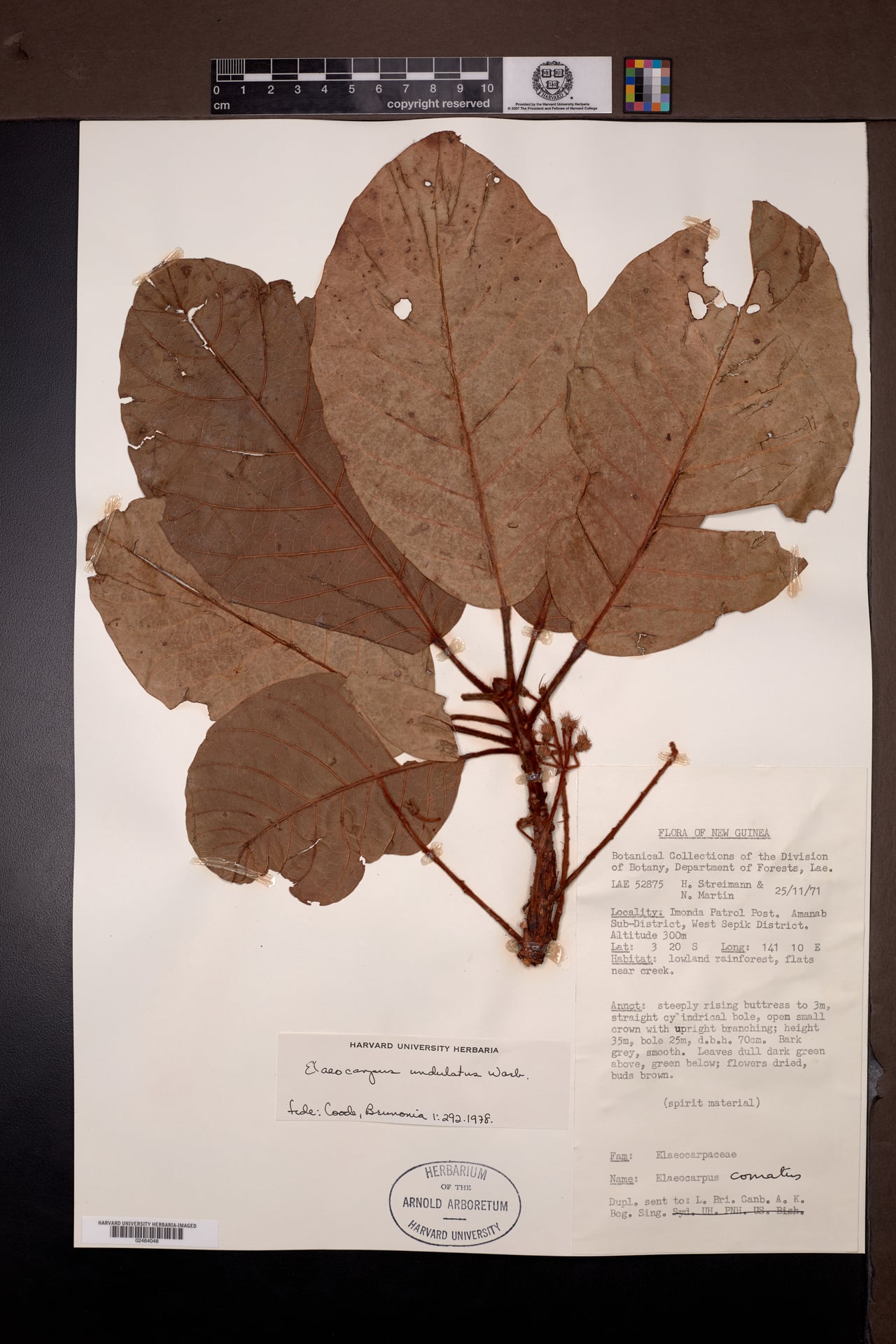
A small tree. It grows 8-12 m high and spreads 5-6 m wide. The leaves are simple and 5-15 cm long. There are usually two small glands near the leaf base on the upper side. The fruit are 30-35 mm long by 20-25 mm wide. They occur singly in the axils of leaves. There is one seed inside. The seed is 18-20 mm long by 13-17 mm wide. The seed is enclosed in a red aril. The seeds are edible in small quantities.
Edible Uses
The seeds are edible in small quantities.
Known Hazards
Seeds should be eaten only in small quantities.
Distribution
A tropical plant. It grows naturally in the rainforest in NE Queensland. In tropical Queensland it grows between 100-1120 m altitude. It suits tropical, subtropical and warm temperate regions. They need well drained acidic soil.
Where It Grows
Australia*,
Cultivation
Plants are grown from fresh seed. Seed are hard to get to grow.
Notes
There are 2 Peripentadenia species. They grow in Australia.
Synonyms
Also Known As
Boonjie
References (4)
- Cooper W & Cooper W T, 1994, Fruits of the Rain Forest. RD Press p 218
- Cooper, W. and Cooper, W., 2004, Fruits of the Australian Tropical Rainforest. Nokomis Editions, Victoria, Australia. p 163
- Elliot, W.R., & Jones, D.L., 1997, Encyclopedia of Australian Plants suitable for cultivation. Vol 7. Lothian. p 201
- Jones D, L, 1986, Ornamental Rainforest Plants in Australia, Reed Books, p 144