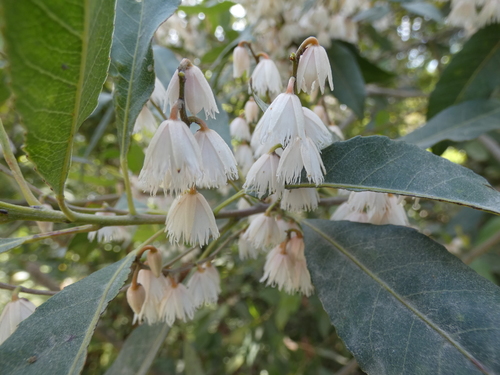
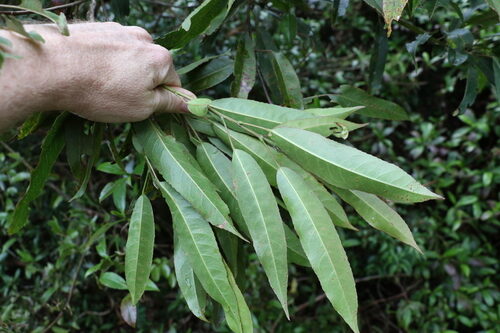
Elaeocarpus tuberculatus
Roxb.
iNaturalist· cc-by
(c) Siddarth Machado, some rights reserved (CC BY), uploaded by Siddarth Machado
iNaturalist· cc-by
(c) madhavan a.p, some rights reserved (CC BY)
Summary
Source: WikipediaElaeocarpus tuberculatus, the warty marble tree, is a species of flowering plant in the family Elaeocarpaceae and is native to Andaman Island, Bangladesh, India, Java, and Myanmar.
Description
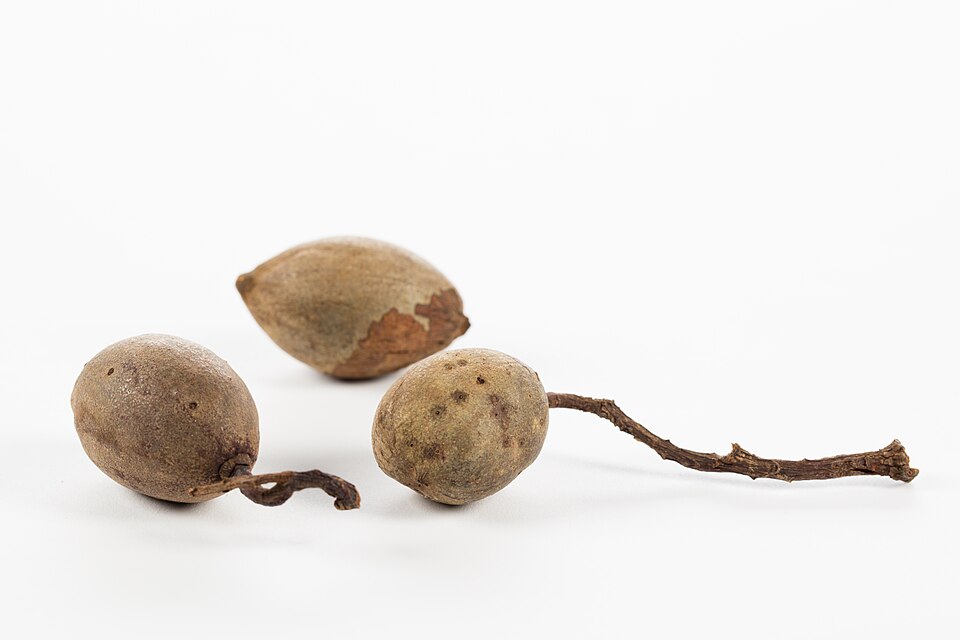
A tree. It grows 40 m tall. It has buttresses. The bark is smooth and mottled grey and white. The branches are horizontal and the small branches are thick. The leaves are simple and alternate or in spirals clustered at the ends of twigs. The leaf blade is 9-21 cm long by 5-14 cm wide. The flowers are white and in groups in or near the axils of leaves. The fruit is fleshy and oblong. It is 5 cm long by 3 cm wide. There is one seed.
Edible Uses
The fruit are eaten raw.
Traditional Uses
The fruit are eaten raw.
This uses section is brief — help expand it
Distribution
It is a tropical plant. It grows in forests and along streams up to 1,400 m above sea level.
Where It Grows
Asia, India, Myanmar, SE Asia,
Synonyms
Also Known As
Ammakkaram, Ammakorum, Badraksham, Kodavasi, Malampinnai, Pathrachi, Rudrasam, Ruthraksham
References (2)
- Ramachandran, V. S., 2007, Wild edible plants of the Anamalais, Coimbatore district, western Ghats, Tamil Nadu. Indian Journal or Traditional Knowledge. 6(1) pp 173-176
- Sasi, R. & Rajendran, A., 2012, Diversity of Wild Fruits in Nilgiri Hills of the Southern Western Ghats - Ethnobotanical Aspects. IJABPT, 3(1) p 82-87