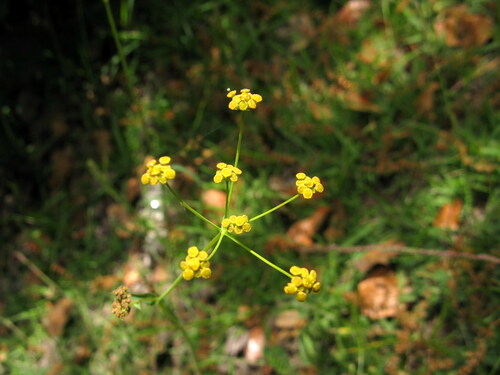
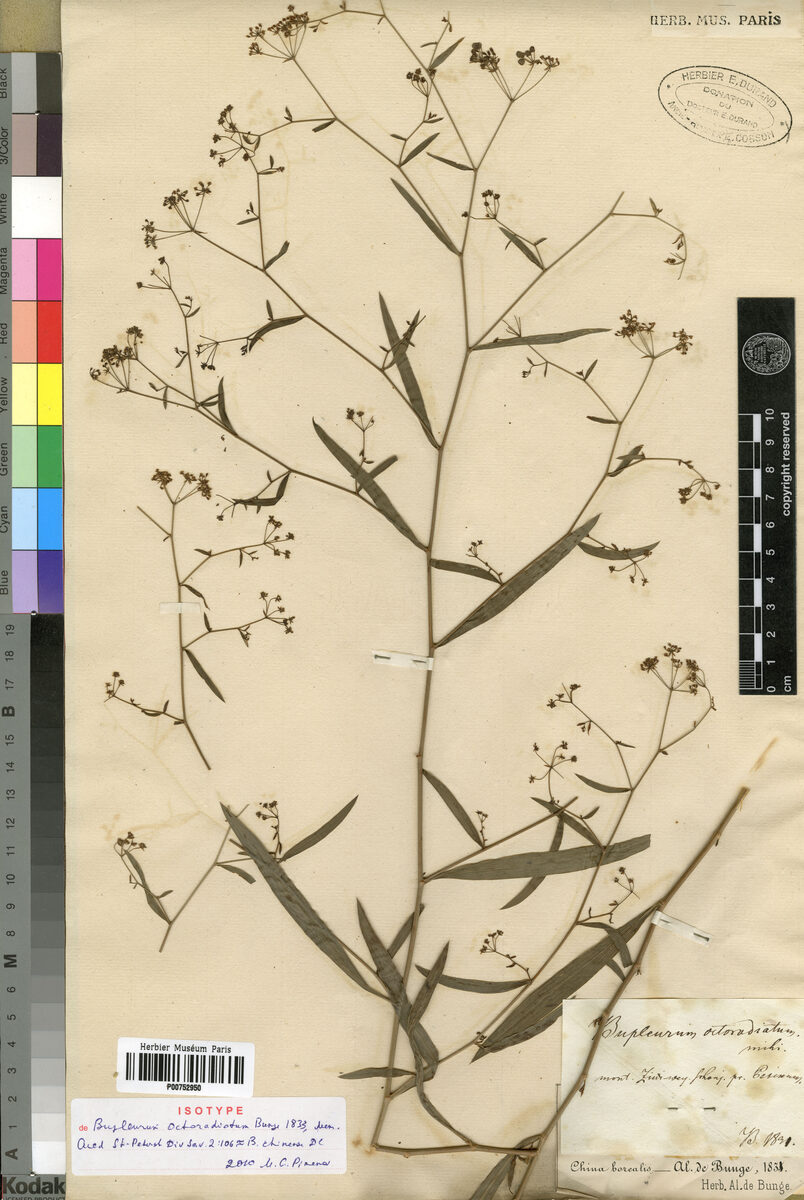
Cnidium officinale
Makino.
Description
Cnidium officinale is a PERENNIAL growing to 0.5 m (1ft 8in). It is in flower in August. The species is hermaphrodite (has both male and female organs) and is pollinated by Insects. The plant is self-fertile. Suitable for: light (sandy), medium (loamy) and heavy (clay) soils. Suitable pH: mildly acid, neutral and basic (mildly alkaline) soils. It can grow in semi-shade (light woodland) or no shade. It prefers moist soil.
Edible Uses
Young shoots - cooked. The report says that the shoots are edible after the bitterness is removed.
Medicinal Uses
Analgesic Antibacterial Antiinflammatory Antispasmodic Cholera Febrifuge Hypotensive Sedative Vasodilator. The root is analgesic, antibacterial, anticonvulsive, antiinflammatory, febrifuge, hypotensive, sedative and vasodilator. It is used especially in the treatment of headaches and also in the treatment of abnormal menstruation, dysmenorrhoea, amenorrhoea, cerebral embolism, weakness, pain and coronary heart disease. The root has an antibacterial action that inhibits the growth of E. coli, Bacillus dysenteriae, Pseudomonas, B. typhi, B. paratyphi, Vibrio cholerae and V. Proteus.
Known Hazards
Although no specific mention has been found for this plant, at least one member of this genus has a report of toxicity so some caution is advised for this species.
Distribution
E. Asia - China.
Where It Grows
Coming Soon
Cultivation
We have very little information on this species and do not know if it will be hardy in Britain, though judging by its native range it should succeed outdoors in many parts of this country. One report from Japan says that it is cultivated there and grows best in the cooler parts of that country. It is cultivated for medicinal use in Korea. Judging by the plants native habitat it is likely to require a well-drained soil in a sunny position.
Propagation
Seed - we have no details for this species but suggest sowing it as soon as it is ripe in a cold frame. Alternatively, sow stored seed in late winter in a cold frame. When large enough to handle, prick the seedlings out into individual pots and plant them out in the summer.