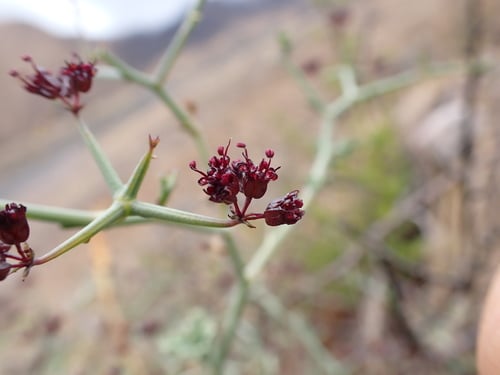
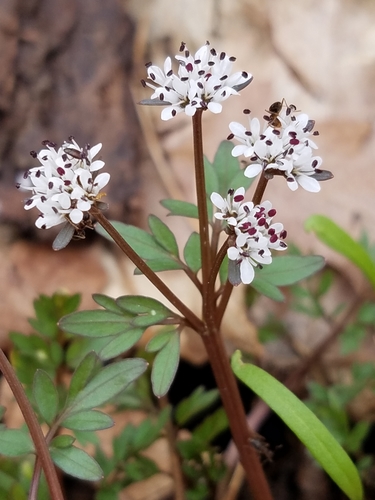
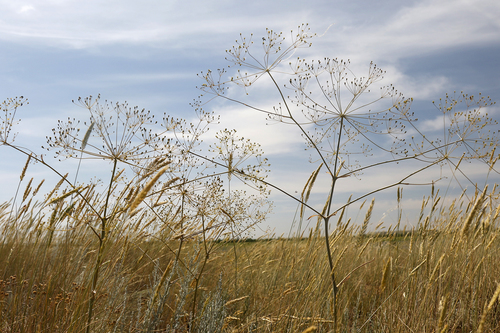
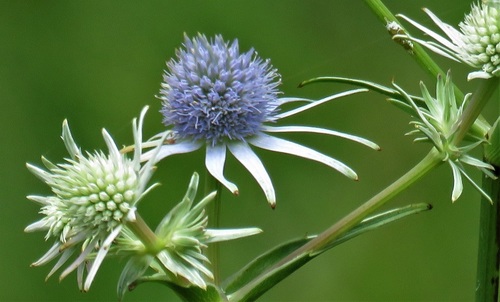
Pastinaca sativa subsp. sylvestris
(Mill.) Rouy & E. G. Camus
Wild parsnip
gbif· cc-by
Алёна Осипова
gbif· cc-by
Алёна Осипова
gbif· cc-by
Алёна Осипова
Summary
Source: WikipediaThis is incorrect, this is not the same as parsnip, it is wild parsnip, a toxic plant. Do the research. http://www.dnr.state.mn.us/invasives/terrestrialplants/herbaceous/wildparsnip.html
Description
A temperate herbaceous plant in the Apiaceae family with an edible root.
This description is brief — help expand it
Edible Uses
The root is cooked, and the cooking water is discarded before eating the root with butter and salt.
Traditional Uses
The root is cooked and the cooking water discarded before eating the root with butter and salt.
This uses section is brief — help expand it
Distribution
It is a temperate plant.
Where It Grows
Argentina, Australia, Central Asia, Chile, Europe, France, New Zealand, Norway, Peru, Scandinavia, South America, Tajikistan, Uruguay,
Dangerous Lookalikes
This plant can be confused with the following toxic species. Always verify identification carefully before consuming any wild plant.
Poison Hemlock
Conium maculatum
MPF
Wild parsnip
Pastinaca sativa subsp. sylvestris
Алёна Осипова
Poison Hemlock: Smooth stems with purple blotches, foul musty smell, white flowers.
Wild parsnip: Grooved stems, distinctive parsnip/celery scent, yellow flowers.
Hemlock Water Dropwort
Oenanthe crocata
Krzysztof Ziarnek, Kenraiz
Wild parsnip
Pastinaca sativa subsp. sylvestris
Алёна Осипова
Hemlock Water Dropwort: Grows near water, white flowers, roots exude yellowish sap when cut, causes violent convulsions.
Wild parsnip: Grows in dry/disturbed ground, grooved stem, yellow flowers.
Also Known As
Chirivia silvestre, Pastanica silvestre, Vill pastinakk
References (5)
- Fl. France 7:372. 1901
- Girard, N. J., 2020, Sustainable Foraging of Wild Edible Plants in Norway. A Biocultural Approach. M. Sc. thesis Norwegian University. p 127
- Lim, T. K., 2015, Edible Medicinal and Non Medicinal Plants. Volume 9, Modified Stems, Roots, Bulbs. Springer p 63
- Malezas Comestibles del Cono Sur, INTA, 2009, Buernos Aires
- PARMENTIER