Agrimonia pilosa
Ledeb.
Indian chestnut, Agrimony
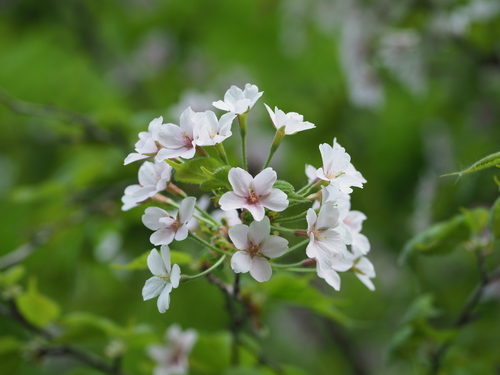
iNaturalist· cc-by-sa
(c) KENPEI, some rights reserved (CC BY-SA)
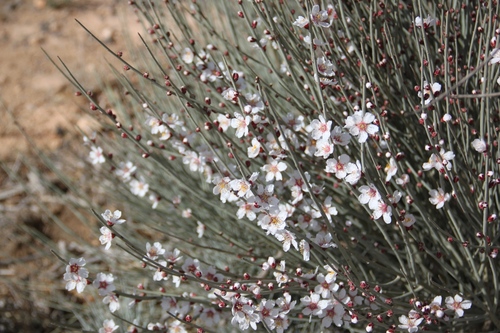
iNaturalist· cc-by-nc
(c) Мария Филатова, some rights reserved (CC BY-NC), uploaded by Мария Филатова
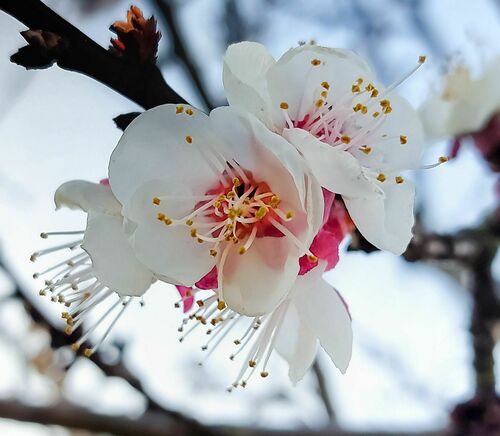
iNaturalist· cc-by-sa
(c) harum.koh, some rights reserved (CC BY-SA), uploaded by harum.koh
Summary
Source: WikipediaAgrimonia pilosa also known as hairy agrimony, is a flowering plant in the family Rosaceae. It is distributed primarily over the Korean Peninsula, Japan, China, Siberia, and Eastern Europe.
Description
A herb. It grows 60-100 cm high. It keeps growing from year to year. The leaves are divided into leaflets along the stalk. The leaflets are narrowly oval and have teeth along the edge. They are hairy on both surfaces. The flowers are yellow and in groups at the ends of the branches. The fruit is enclosed in a hard, bristly covering.
Edible Uses
Young leaves can be cooked and eaten. The seeds are dried and ground into a meal that is mixed with noodles.
Traditional Uses
The young leaves are eaten cooked. The leaves are bitter and are eaten after boiling. The seeds are dried and ground into a meal and mixed with noodles. CAUTION: It should probably only be eaten in small amounts.
Medicinal Uses
The stems and leaves are analgesic, antibacterial, anti-inflammatory, antipyretic, astringent, cardiotonic, haemostatic, hypoglycaemic, taenicide, and vasoconstrictor. The plant is used to treat abdominal pain, sore throat, headaches, bloody and mucoid dysentery, bloody and white discharge, and heat-stroke. In Korea it is used against parasitic worms, boils, and eczema. The leaves are rich in vitamin K and are used to promote blood clotting and control bleeding. The plant contains agrimonin, which is haemostatic and cardiotonic and lowers blood sugar, though it can also cause palpitations and congestion of blood in the face. The root is astringent, diuretic, and tonic, used for coughs, colds, tuberculosis, and diarrhoea. Root juice is applied in the treatment of peptic ulcer, and a paste of the root is used for stomach ache. Plants are harvested as they come into flower and can be dried for later use.
Distribution
It is a temperate climate plant. It grows naturally in the lowlands and mountains all over Japan. It does best on calcareous soils and in a sunny position. In Nepal it grows between 1,000-3,000 m altitude. In China it grows between 100-3,800 m above sea level. It grows in open forests and on mountain sides. In Sichuan and Yunnan.
Where It Grows
Asia, Australia, Bhutan, China, Europe, Himalayas, India, Indochina, Japan, Korea, Laos, Mongolia, Myanmar, Nepal, Northeastern India, Russia, SE Asia, Sikkim, Thailand, Tibet, Vietnam,
Cultivation
Fresh seed usually germinates in 2 - 6 weeks at 13°C. Seeds can be sown in a nursery then transplanted out. Plants can also be grown by division of the clump. Plants are harvested as they come into flower and can be dried for later use in medicine.
Propagation
Seed can be sown in spring or autumn, either in pots in a cold frame or directly in situ. Germination typically takes 2–6 weeks at 13°C, though rates can be low — particularly with stored seed. Cold stratification improves germination but is not essential. When raising in pots, prick out seedlings once large enough to handle and plant out in late spring or early summer. Division in autumn is very easy; divisions can be planted straight into their permanent positions.
Other Uses
None known.
Notes
There are 15 Agrimonia species. They grow in the northern temperate zones. The leaves are rich in vitamin K and are used to promote blood clotting and control bleeding. It has anticancer properties. It has Estrogen-like activity.
Synonyms
Also Known As
Chihao, Kin-Mizu-Hiki, Longgia, Mocbac Nepal, Taniom, Tanion, Tienhac
References (17)
- Ambasta S.P. (Ed.), 2000, The Useful Plants of India. CSIR India. p 22 (As Agrimonia pilosa var. nepalensis)
- Bremness, L., 1994, Herbs. Collins Eyewitness Handbooks. Harper Collins. p 139
- Hwang, H., et al, 2013, A Study on the Flora of 15 Islands in the Western Sea of Jeollanamdo Province, Korea. Journal of Asia-Pacific Biodiversity Vol. 6, No. 2 281-310
- Hwang, HS, et al, 2014, Distribution characteristics of plant in the Ungseokbong Mountain, Gyeongsangnam-do, Korea. Journal of Asia-Pacific Biodiversity. 7(2014) e164-e178
- Index sem. hort. Dorpat., suppl. 1. 1823
Show all 17 references Hide references
- Kintzios, S. E., 2006, Terrestrial Plant-Derived Anticancer Agents and Plant Species Used in Anticancer research. Critical Reviews in Plant Sciences. 25: pp 79-113
- Lee, Y. M., et al, 2012, Estrogen-like activity of aqueous extract from Agrimonia pilosa Ledeb. in MCF-7 cells. Complementray & Alternative Medicine 12:260
- Manandhar, N.P., 2002, Plants and People of Nepal. Timber Press. Portland, Oregon. p 78
- Murtem, G. & Chaudhrey, P., 2016, An ethnobotanical note on wild edible plants of Upper Eastern Himalaya, India. Brazilian Journal of Biological Sciences, 2016, v. 3, no. 5, p. 63-81 (As Agrimonia pilosa var. nepalensis)
- Plants for a Future database, The Field, Penpol, Lostwithiel, Cornwall, PL22 0NG, UK. http://www.scs.leeds.ac.uk/pfaf/
- Pham-Hoang Ho, 1999, An Illustrated Flora of Vietnam. Nha Xuat Ban Tre. p 799
- READ
- Srivastava, R. C., 2010, Traditional knowledge of Nyishi (Daffla) tribe of Arunachal Pradesh. Indian Journal of Traditional Knowledge. 9(1):26-37 (As Agrimonia pilosa var. nepalensis)
- Thothathri, K., & Pal, G.D., 1987, Further Contribution to the Ethnobotany of Subansiri District, Aranchal Pradesh. J. Econ. Tax. Bot. Vol. 10 No. 1 pp 149-157 (As Agrimonia pilosa var. nepalensis)
- Urgamal, M., Oyuntsetseg, B., Nyambayar, D. & Dulamsuren, Ch. 2014. Conspectus of the vascular plants of Mongolia. (Editors: Sanchir, Ch. & Jamsran, Ts.). Ulaanbaatar, Mongolia. “Admon“ Press. 334pp. (p. 143-158).
- Wang, J., et al, 2020, An ethnobotanical survey of wild edible plants used by the Yi people of Liangshan Prefecture, Sichuan Province, China. Journal of Ethnobiology and Ethnomedicine 16:10 p 9
- Wujisguleng, W., & Khasbagen. K., 2010, An integrated assessment of wild vegetable resources in Inner Mongolian Autonomous Region, China. Journal or Ethnobiology and Ethnomedicine 6:34