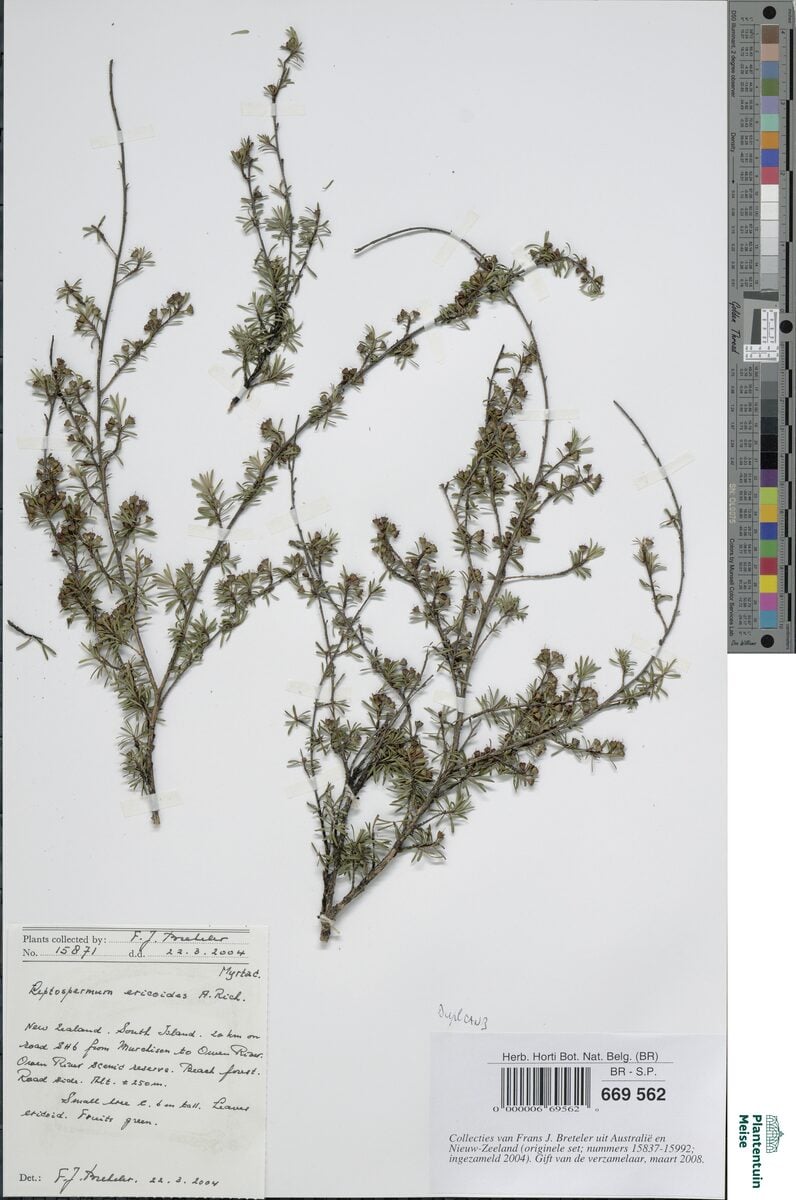
Eugenia brasiliensis
Lamk.
Grumichama, Brazil-cherry
iNaturalist· cc-by-nc
(c) francinetebraz, some rights reserved (CC BY-NC)
iNaturalist· cc-by-nc
(c) Geovane Siqueira, some rights reserved (CC BY-NC)
iNaturalist· cc-by-nc
(c) Geovane Siqueira, some rights reserved (CC BY-NC)
Summary
Source: WikipediaEugenia brasiliensis is an evergreen shrub growing to 8 m tall and 8 m wide at a slow rate. Hardy to UK zone 10, it grows in light sandy, medium loamy, and heavy clay soils with good drainage. It tolerates mildly acid, neutral, and very acid soils and can grow in semi-shade or full sun. The plant prefers moist soil and is noted for attracting wildlife, with flowers pollinated by bees and birds.
Description
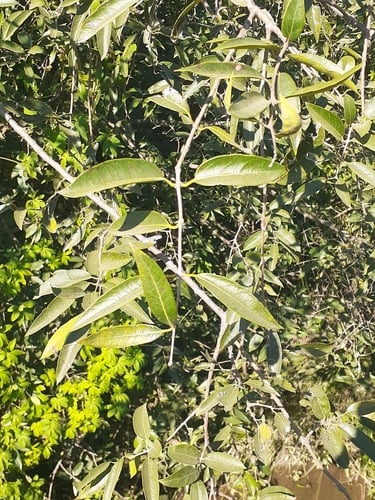
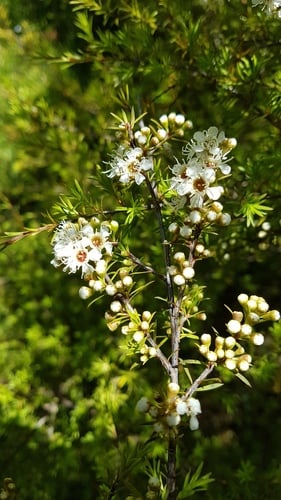
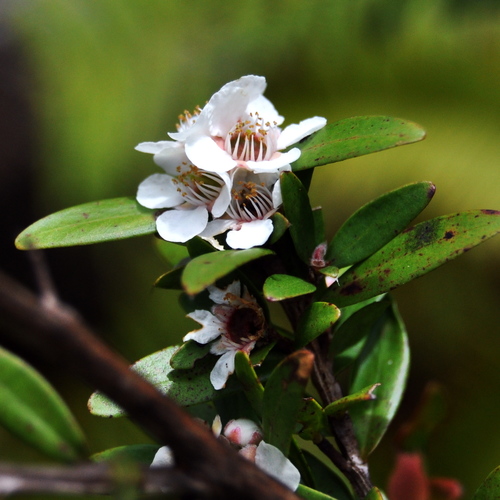
A tree up to 15 m tall. It is a small compact tree. It is smaller in cooler areas (6m). The bark is grey. It has glossy leaves. They are opposite and oval to oblong. The leaves are 8-10 cm long and 3-5 cm wide. New leaves are a wine red colour. The leaf stalks are 3-4 mm long. It has small white flowers. The flowers occur singly in the axils of leaves. They are 2.5 cm wide. Clusters of fruit hang down on long stems. The fruit are round and dark purple. They can also be yellow. The flesh is soft. The fruit are 2-3 cm across and purplish black in colour. There is one large seed inside.
Edible Uses
The deep crimson fruit can be eaten raw or used in jams and jellies. It has a thin, delicate skin, soft and melting pulp, and a mild subacid flavour that resides largely in the skin. It is excellent eaten fresh. The persistent sepals — sometimes called 'rabbit ears' — and a modest flesh-to-seed ratio limit the fruit's appeal somewhat. The fruit is a globose to oblate berry, up to 3–5cm in diameter.
Traditional Uses
Fruit can be eaten fresh when ripe. It is used for pies or jam when half ripe.
This uses section is brief — help expand it
Medicinal Uses
An infusion of 10g of leaves or bark in 300ml of water is used in Brazil as an aromatic, astringent diuretic and as a treatment for rheumatism.
Distribution
A tropical plant. It grows in humid tropical and subtropical regions. It can grow in the lowlands and highlands. It can survive temperatures down to -3°C for short periods. It requires neutral soils as both acid and alkaline soils cause leaves to turn yellow due to mineral deficiencies. It requires plenty of moisture. Optimum rainfall is 1,200-2,500 mm. It cannot tolerate drought. Young plants benefit from shade until established. It suits hardiness zones 9-12.
Where It Grows
Africa, Amazon, Angola, Asia, Australia, Brazil*, Cameroon, Central Africa, Central America, Costa Rica, Cuba, Fiji, Hawaii, Honduras, Indonesia, Jamaica, Mauritius, Mexico, New Zealand, North America, Pacific, Paraguay, Peru, Philippines, Puerto Rico, Sao Tome and Principe, SE Asia, Singapore, South America, Taiwan, USA, West Indies,
Cultivation
is a cultivated tree. The fruit are popular. The grumichama requires a humid, tropical to subtropical climate, growing best at very low elevations of 90 metres or less. The temperature range for growth is reported to be 15 - 38°c with the optimum between 21 - 32°c. Mature trees tolerate frost to -3°c for short periods, but young shoots are affected. The annual rainfall range for growth is reported to be 800 - 3,500mm with the optimum between 1,200 - 2,500mm. The plant is adversely affected by a long, dry season. Succeeds in full sun or part day shade. Adaptable to a range of soil types, but intolerant of alkaline soils. Prefers high levels of organic matter in the soil, especially when grown on light soils. Prefers a position sheltered from strong winds. Generally slow-growing, the plants can commence flowering and fruiting when 4 years old from seed. In the subtropics the trees flower synchronously in spring. The fruit ripens within one month and the harvest is over in a matter of days. In the tropics flowering and fruiting extend over several months. The fruits can vary considerably in colour and two distinct forms have been described. The species type has a black-skinned fruit; E. Brasiliensis leucocarpa has yellow fruits; E. Brasiliensis erythrocarpa has red-skinned fruits that are sweeter than the other forms. Flowering Time: "Late Summer/Early Fall Mid Fall". Blooming Color: White/Near White. This plant is attractive to bees, butterflies and/or birds.
Propagation
Seed loses viability quickly — within about 6 weeks — and should be sown as soon as possible. Sow in a lightly shaded position in a nursery seedbed or in individual containers. Germination rates are usually low, with sprouting occurring within 30–60 days. Seedlings grow very slowly. A tree spacing of 4m is suitable and little pruning is necessary. Cuttings and air layering are both easy options. Grafting is also possible.
Other Uses
The bark and leaves contain large amounts of tannins, reportedly among the highest found in any plant — 34% in the bark. The bark and leaves also contain 1.5% of an essential oil and have an attractive aromatic smell. The wood is cross-grained, compact, hard, moderately heavy, not very elastic, brittle, and of medium durability when exposed. It is easy to work and is used for lathe work, cabinet making, general carpentry, linings, and boxes.
Production
Trees take four or five years to start producing fruit. Fruit takes one month to mature after flowering. Fruit weigh 3-5 g.
Other Information
It is a cultivated tree. The fruit are popular.
Notes
There are about 550 Eugenia species. They are mostly in tropical and subtropical South America.
Nutrition
| Part | Moisture | kJ | kcal | Protein | Vit A | Vit C | Iron | Zinc |
|---|---|---|---|---|---|---|---|---|
| Fruit | 85.3 | 221 | 53 | 0.6 | 30 | 19 | 0.5 | — |
Synonyms
Also Known As
Amla, Aula, Cerisier de Brazil, Cumbixaba, Grumixaba, Grumixama, Grumixameira, Guamichama, Ibaporoti, Oula, Pohon jambu brazil, Sinaili
References (46)
- Alimenticias - FloraSBS
- Bodkin, F., 1991, Encyclopedia Botanica. Cornstalk publishing, p 458
- Burkill, I.H., 1966, A Dictionary of the Economic Products of the Malay Peninsula. Ministry of Agriculture and Cooperatives, Kuala Lumpur, Malaysia. Vol 1 (A-H) p 976
- Cavalcante, P.B. 1991. Frutas comestíveis da Amazônia. Edições CEJUP. (As Eugenia dombeyi)
- Coronel, R.E., 1982, Fruit Collections in the Philippines. IBPGR Newsletter p 6 (As Eugenia dombeyi)
Show all 46 references Hide references
- Darley, J.J., 1993, Know and Enjoy Tropical Fruit. P & S Publishers. p 130
- Ebert, A.W., & Ebert, I. C. M., 2011, Brazil cherry (Eugenia dombeyi) - an underutilized fruit species of the American tropics. Fruits, Vol. 66, p. 217-223
- Etherington, K., & Imwold, D., (Eds), 2001, Botanica's Trees & Shrubs. The illustrated A-Z of over 8500 trees and shrubs. Random House, Australia. p 311
- Facciola, S., 1998, Cornucopia 2: a Source Book of Edible Plants. Kampong Publications, p 157 (As Eugenia dombeyi)
- Fouqué, A., 1972, Espèces fruitières d'Amérique tropicale. Institut français de recherches fruitierès outre-mer (As Eugenia dombeyi)
- Garner, R.J., and Chaudhri, S.A., (Ed.) 1976, The Propagation of Tropical fruit Trees. FAO/CAB. p 344 (As Eugenia dombeyi)
- Grandtner, M. M. & Chevrette, J., 2013, Dictionary of Trees, Volume 2: South America: Nomenclature, Taxonomy and Ecology. Academic Press p 236
- Hardwick, G., 2001, Economically Useful Plants for Northern Australia: Master Species List. Crusader eBooks.
- Hedrick, U.P., 1919, (Ed.), Sturtevant's edible plants of the world. p 296
- Hermandez Bermejo, J.E., and Leon, J. (Eds.), 1994, Neglected Crops. 1492 from a different perspective. FAO Plant Production and Protection Series No 26. FAO, Rome. p16
- Hibbert, M., 2002, The Aussie Plant Finder 2002, Florilegium. p 99
- Hunter, D., et al, 2019, The potential of neglected and underutilized species for improving diets and nutrition. Planta (2019) 250:709-729
- INFOODSUpdatedFGU-list.xls (As Eugenia dombeyi)
- Jansen, A. A. J., et al, (Eds), 1990, Food and Nutrition in Fiji. Volume One. p 43
- Jardin, C., 1970, List of Foods Used In Africa, FAO Nutrition Information Document Series No 2.p 135 (As Eugenia dombeyi)
- John, L., & Stevenson, V., 1979, The Complete Book of Fruit. Angus & Robertson p 286 (As Eugenia dombeyi)
- Kiple, K.F. & Ornelas, K.C., (eds), 2000, The Cambridge World History of Food. CUP p 1782 (As Eugenia dombeyi)
- J. B. A. P. M. de Lamarck & L. A. J. Desrousseaux, Encycl. 3:203. 1789
- Leal, M. L. et al, 2018, Knowledge, use, and disuse of unconventional food plants. Journal of Ethnobiology and Ethnomedicine (2018) 14:6
- Le Bellec, F et V. Renard. 1997. Le grand livre des fruits tropicaux. Orphie ed.
- Llamas, K.A., 2003, Tropical Flowering Plants. Timber Press. p 285
- Lorenzi, H., 2002, Brazilian Trees. A Guide to the Identification and Cultivation of Brazilian Native Trees. Vol. 01 Nova Odessa, SP, Instituto Plantarum p 274
- Lorenzi, H., Bacher, L., Lacerda, M. & Sartori, S., 2006, Brazilian Fruits & Cultivated Exotics. Sao Paulo, Instituto Plantarum de Estuados da Flora Ltda. p 191
- Martin, F.W., C.W. Campbell and R.M. Ruberté, 1987, Perennial edible fruits of the tropics - An inventory. United States Department of Agriculture, Agricultural Research Service, Agriculture Handbook No. 642. Washington, D.C., USA (As Eugenia dombeyi) p 40
- Miguel, E., et al, 1989, A checklist of the cultivated plants of Cuba. Kulturpflanze 37. 1989, 211-357 (As Eugenia dombeyi)
- Morton, Julia F., 1987, Fruits of Warm Climates. Creative Resources Systems, Inc. . p. 390
- Paz, F. S., et al, 2021, Edible Fruit Plant Species in the Amazon Forest Rely Mostly on Bees and Beetles as Pollinators. Journal of Economic Entomology, XX(XX), 2021, 1–13
- PROSEA (Plant Resources of South East Asia) handbook, Volume 2, 1991, Edible fruits and nut. p 98 (As Eugenia dombeyi)
- Recher, P, 2001, Fruit Spirit Botanical Gardens Plant Index. www.nrg.com.au/~recher/ seedlist.html p 2 (As Eugenia dombeyi)
- Segura, S., et al, 2018, The edible fruit species in Mexico. Genet Resour Crop Evol (2018) 65:1767–1793
- Silva, S y H. Tassara.1996. Frutas no Brasil. Empresa das Artes. São Paulo (As Eugenia dombeyi)
- Staples, G.W. and Herbst, D.R., 2005, A tropical Garden Flora. Bishop Museum Press, Honolulu, Hawaii. p 423
- Sukarya, D. G., (Ed.) 2013, 3,500 Plant Species of the Botanic Gardens of Indonesia. LIPI p 274
- Tankard, G., 1990, Tropical fruit. An Australian Guide to Growing and using exotic fruit. Viking p 44
- USDA, ARS, National Genetic Resources Program. Germplasm Resources Information Network - (GRIN). [Online Database] National Germplasm Resources Laboratory, Beltsville, Maryland. Available: www.ars-grin.gov/cgi-bin/npgs/html/econ.pl (10 April 2000)
- van Wyk, B., 2005, Food Plants of the World. An illustrated guide. Timber press. p 192 (As Eugenia dombeyi)
- Vivien, J., & Faure, J.J., 1996, Fruitiers Sauvages d'Afrique. Especes du Cameroun. CTA p 235
- World Checklist of Useful Plant Species 2020. Royal Botanic Gardens, Kew
- www.colecionandofrutas.org
- www.tradewindsfruit.com
- www.worldagroforestrycentre.org/treedb/ (As Eugenia dombeyi)