Eucalyptus deglupta
Blume
Rainbow eucalyptus, Mindanao gum
iNaturalist· cc-by-nc
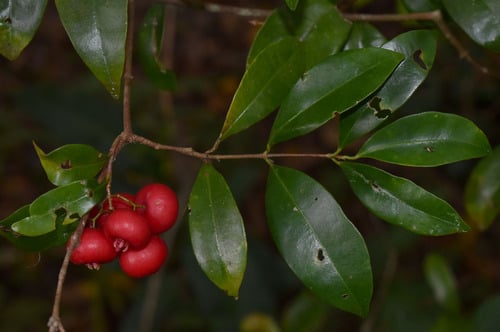
(c) renger, some rights reserved (CC BY-NC)
iNaturalist· cc-by
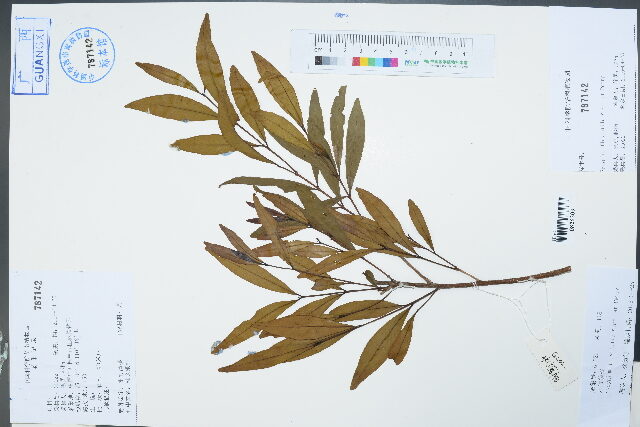
(c) garywwilson, some rights reserved (CC BY), uploaded by garywwilson
iNaturalist· cc-by-nc
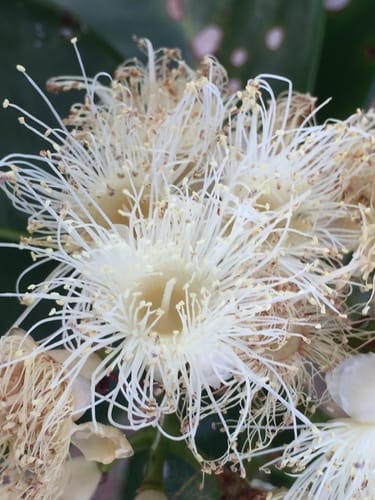
(c) Dean Nicolle, some rights reserved (CC BY-NC), uploaded by Dean Nicolle
Summary
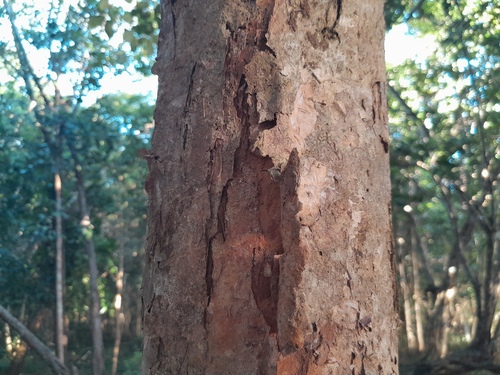
Source: WikipediaEucalyptus deglupta is a species of tall tree, commonly known as the rainbow eucalyptus, Mindanao gum, or rainbow gum that is native to the Philippines, Indonesia and Papua New Guinea. It is the only Eucalyptus species that usually lives in rainforest, with a natural range that extends into the Northern Hemisphere. It is characterized by multi-coloured bark.
Description
A tree. It grows 65-70 m tall. The trunk can be 240 cm across. The bark sheds in strips.
This description is brief — help expand it
Known Hazards
Citronellal, an essential oil found in most Eucalyptus species is reported to be mutagenic when used in isolation. In large doses, oil of eucalyptus, like so many essential oils has caused fatalities from intestinal irritation. Death is reported from ingestion of 4 - 24 ml of essential oils, but recoveries are also reported for the same amount. Symptoms include gastroenteric burning and irritation, nausea, vomiting, diarrhoea, oxygen deficiency, ,weakness, dizziness, stupor, difficult respiration, delirium, paralysis, convulsions, and death, usually due to respiratory failure.
Distribution
It is a tropical plant. It grows from sea level to 1,800 m above sea level.
Where It Grows
Central America, Hawaii, Indonesia, Nicaragua, Papua New Guinea, PNG, Philippines, SE Asia, USA,
Cultivation
This is the only species of Eucalyptus that is adapted to lowland and lower montane rainforest habitats in the humid tropics. It does not grow naturally in areas with a pronounced dry season but occurs in those where the annual rainfall is very high and the monthly rainfall usually exceeds 150 mm. It is found at elevations from sea level to 1,800 metres in areas where the mean annual temperature is in the range 23 - 31°c and the mean annual rainfall is 2,500 - 5,000 mm. Plants are intolerant of frost. Requires a sunny position with full overhead light. Best growth occurs on deep, moderately fertile, well-drained, sandy alluvial loams with adequate soil moisture. Plants can grow successfully on coarse-textured sands and loamy soils, volcanic ash and limestone-derived soils. Prefers a pH in the range 6 - 7.5. The tree does not withstand prolonged flooding. The tree is highly sensitive to fires. Flowering may occur within the 1st year but more often it takes place after 2 years and annually thereafter. Flowering can occur in all months of the year, depending on the locality. The seeds are often dispersed by rivers. The flooding rivers in the wet season deposit the seeds mixed with humus on uncolonized alluvium in full sunlight. This constitutes ideal conditions for germination. Growth is usually rapid, the annual volume increment in plantations is 15 cubic m/ha, but occasionally it is as much as 50 cubic m/ha. At the age of 25 years, the trees reach an average height of 42 metres and an average bole diameter of 40 cm. The tree does not coppice vigorously. Eucalyptus species have not adopted a deciduous habit and continue to grow until it is too cold for them to do so. This makes them more susceptible to damage from sudden cold snaps. If temperature fluctuations are more gradual, as in a woodland for example, the plants have the opportunity to stop growing and become dormant, thus making them more cold resistant. A deep mulch around the roots to prevent the soil from freezing also helps the trees to survive cold conditions. The members of this genus are remarkably adaptable however, there can be a dramatic increase in the hardiness of subsequent generations from the seed of survivors growing in temperate zones. Eucalyptus monocultures are an environmental disaster, they are voracious, allelopathic and encourage the worst possible attitudes to land use and conservation.
Propagation
Seed - surface sow in a sunny position and make sure the compost is not allowed to dry out. Species that come from high altitudes appreciate 6 - 8 weeks cold stratification at 2°c. Seeds germinate in 4 - 20 days with a germination rate of 50 - 60%. Pot up the seedlings into individual pots as soon as the second set of seed leaves has developed, if left longer than this they might not move well. The seedlings are ready for planting in the field when they are 25 - 30 cm tall, usually after 3 - 4 months. The seed has a long viability. Vegetative propagation is possible from branch cuttings taken from trees less than 2 years old. Best results are obtained from cuttings containing a stem node and a segment of a leaf. Hormones such as indole-acetic acid, indole-butyric acid or nephthalene acid will improve the success rate.
Other Uses
The essential oils of the plant have been characterized but they occur in such small quantities (0.2% dry weight in the leaves) that they are not of commercial importance. The heartwood varies from light red, light brown, to dark red brown; the sapwood is whitish, not always distinctly marked off from the heartwood. The wood is light to dark brown with a slight lustre, more like coarse-grained rainforest wood than an eucalypt. It is of moderate strength but is not durable. It works well with hand and machine tools, although it has a slight tendency to tear out in machining and boring and to slight chipping of sharp edges in turning. The wood is useful for furniture, moulding, flooring, construction lumber, boat building, veneer and plywood. The wood is good for making paper. It makes a strong sulphate pulp that can be bleached to a high brightness. Kraft pulping of the wood gives a yield of 50%, and a pulp of good brightness and satisfactory handsheet strength properties. The wood is also used for particleboard, hardboard and wood-wool board. Used to a limited extent for firewood and charcoal. However, it is normally considered too valuable for firewood. Trees more than 15 years old yield good charcoal. The energy value of the wood is 18 500-21 100 kJ/kg. The tree is capable of colonizing land eroded by landslides and areas of recent volcanic activity. It has been used in reforestation and in enriching planting trials in logged-over forest, where it has shown considerable potential.
Synonyms
References (1)
- World Checklist of Useful Plant Species 2020. Royal Botanic Gardens, Kew