Eucalyptus dives
Schauer
Native peppermint, Broad-leaved peppermint
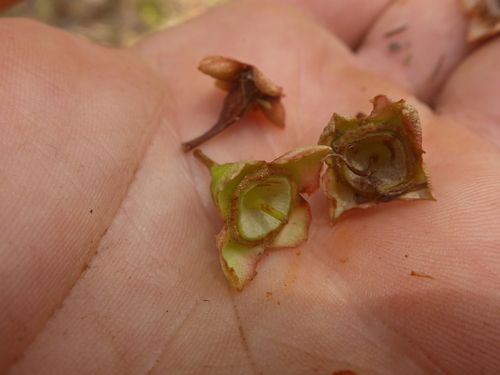
iNaturalist· cc-by-nc
(c) Wayne Martin, some rights reserved (CC BY-NC), uploaded by Wayne Martin
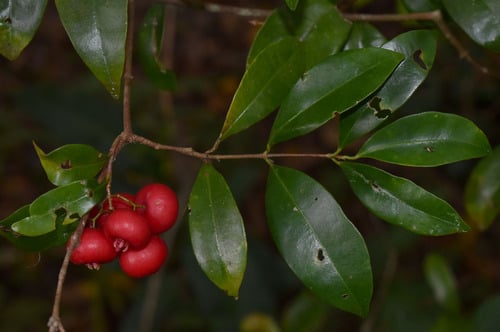
iNaturalist· cc-by-nc
(c) Vireya Jacquard, some rights reserved (CC BY-NC), uploaded by Vireya Jacquard
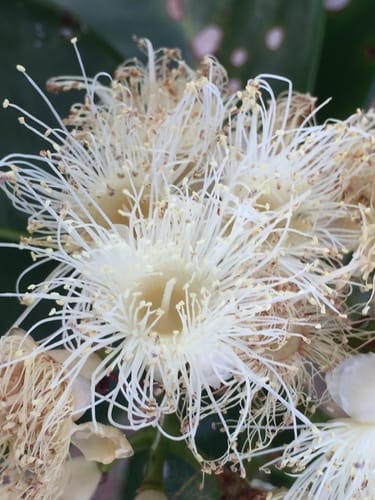
iNaturalist· cc-by-nc
(c) Vireya Jacquard, some rights reserved (CC BY-NC), uploaded by Vireya Jacquard
Summary
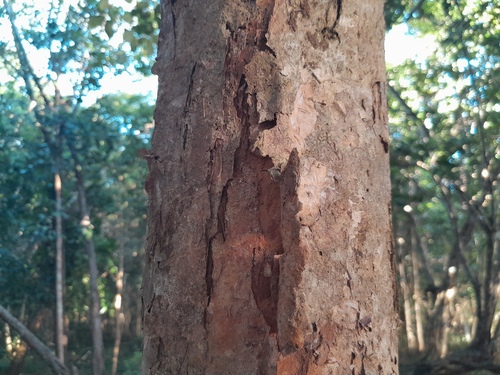
Source: WikipediaEucalyptus dives, commonly known as the broad-leaved peppermint or blue peppermint, is a species of tree that is endemic to south-eastern Australia. It has rough, finely fibrous bark on the trunk and larger branches, smooth bark above, lance-shaped or curved adult leaves, flower buds in groups of eleven or more, white flowers and cup-shaped, hemispherical or conical fruit.
Description
A tree with a short trunk. It grows 25 m tall and spreads 15-20 m wide. The young leaves do not have stalks and are heart shaped. The older leaves are sword shaped and 15 cm long. The flowers are small and white.
Edible Uses
The fresh or dried leaves are used for seasoning and as a source of essential oil for flavoring sauces, dressings, desserts, and dairy foods. Dried leaves are used to make tea.
Traditional Uses
The fresh or dried leaves are used for seasoning. They are also the source of an essential oil. This is used to favour sauces, dressings, desserts and dairy foods. The dried leaves are used for tea. Caution: Eucalyptus oil is poisonous.
Known Hazards
Eucalyptus oil is poisonous.
Distribution
It is a temperate plant. It is native to NSW and Victoria in Australia.
Where It Grows
Australia*, North America, South Africa, Sri Lanka, USA,
References (6)
- Alice, L. & O'Quinn, T., Australian Bush Superfoods. Explore Australia p 122
- Brown, D., 2002, The Royal Horticultural Society encyclopedia of Herbs and their uses. DK Books. p 207
- Facciola, S., 1998, Cornucopia 2: a Source Book of Edible Plants. Kampong Publications, p 140
- Robins,
- Seidemann J., 2005, World Spice Plants. Economic Usage, Botany, Taxonomy. Springer. p 150
Show all 6 references Hide references
- Walp., Repert. bot. syst. 2:926. 1843