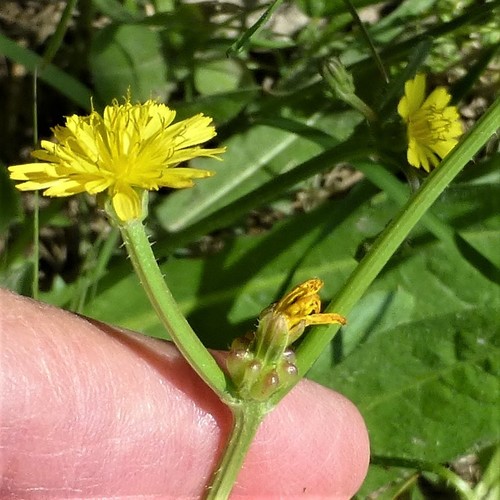
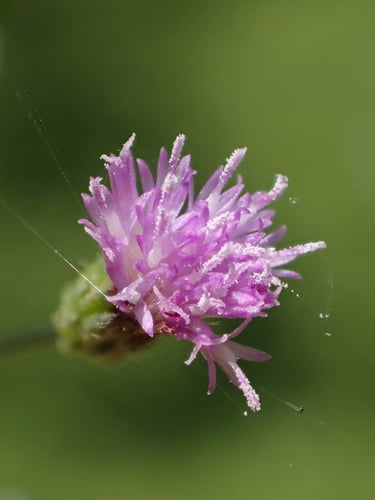
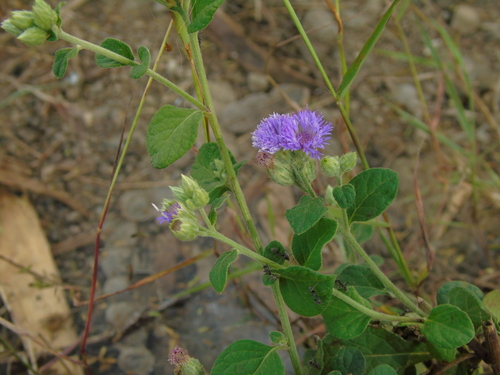
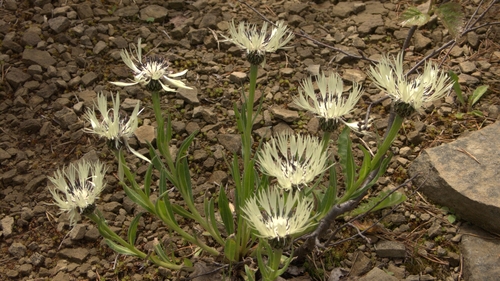
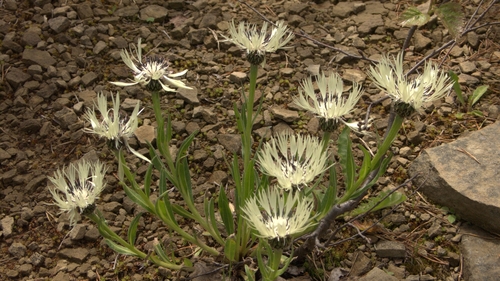
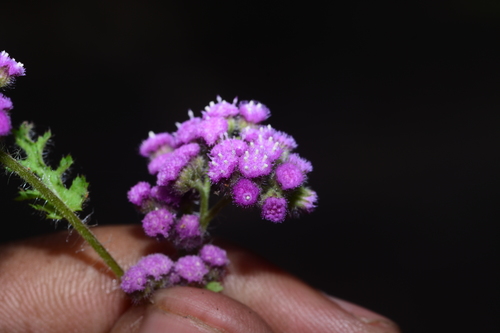
Atractylodes lancea - (Thunb.)DC.
(Thunb.)DC.
Cang Zhu
gbif· cc-by-nc
Caiyongchen
gbif· cc-by-nc
orientalstork
gbif· cc-by-nc
orientalstork
Description
Atractylodes lancea is a PERENNIAL growing to 1 m (3ft 3in). It is in flower from July to October, and the seeds ripen from August to October. The species is dioecious (individual flowers are either male or female, but only one sex is to be found on any one plant so both male and female plants must be grown if seed is required). . Suitable for: light (sandy), medium (loamy) and heavy (clay) soils and prefers well-drained soil. Suitable pH: mildly acid, neutral and basic (mildly alkaline) soils. It can grow in semi-shade (light woodland) or no shade. It prefers moist soil.
Edible Uses
Root - raw or cooked. Exceedingly rich in vitamin A, it also contains 1.5% essential oils.
Medicinal Uses
Antidiarrhoeal Antiemetic Antirheumatic Appetizer Digestive Diuretic Expectorant Stomachic Tonic. This plant is widely used in traditional Chinese medicine. The root is a bitter-sweet tonic herb that acts mainly upon the digestive system. The root is antibacterial, antiemetic, appetizer, digestive, diuretic, hypoglycaemic, sedative, stomachic and tonic. It is often used in conjunction with other herbs such as Codonopsis tangshen and Glycyrrhiza uralensis. It is used in the treatment of poor appetite, digestive disorders such as dyspepsia, abdominal distension and chronic diarrhoea, rheumatoid arthritis, oedema, spontaneous sweating and night blindness. The roots are harvested in the autumn and baked for use in tonics.
Distribution
E. Asia - Central China.
Where It Grows
TEMPERATE ASIA: Russian Federation (Primorye), China (Anhui Sheng, Zhejiang Sheng, Heilongjiang Sheng, Henan Sheng, Hebei Sheng, Hunan Sheng, Hubei Sheng, Gansu Sheng, Jiangxi Sheng, Jiangsu Sheng, Jilin Sheng, Liaoning Sheng, Shanxi Sheng, Shandong Sheng, Shaanxi Sheng, Nei Mongol Zizhiqu), Korea, Japan (Honshu, Kyushu)
Cultivation
We have very little information on this species and do not know if it will be hardy in Britain, though judging by its native range it could succeed outdoors in many parts of this country. This species is closely related to A. japonica. It is being investigated in China for the viability of growing it as a commercial crop. The following notes are based on the general needs of the genus. Succeeds in any well-drained soil in sun or partial shade. This species is dioecious. Both male and female plants need to be grown if seed is required.
Propagation
Seed - sow spring in a cold frame and only just cover the seed. Prick out the seedlings when they are large enough to handle and plant them out into their permanent positions in the following spring or early summer.