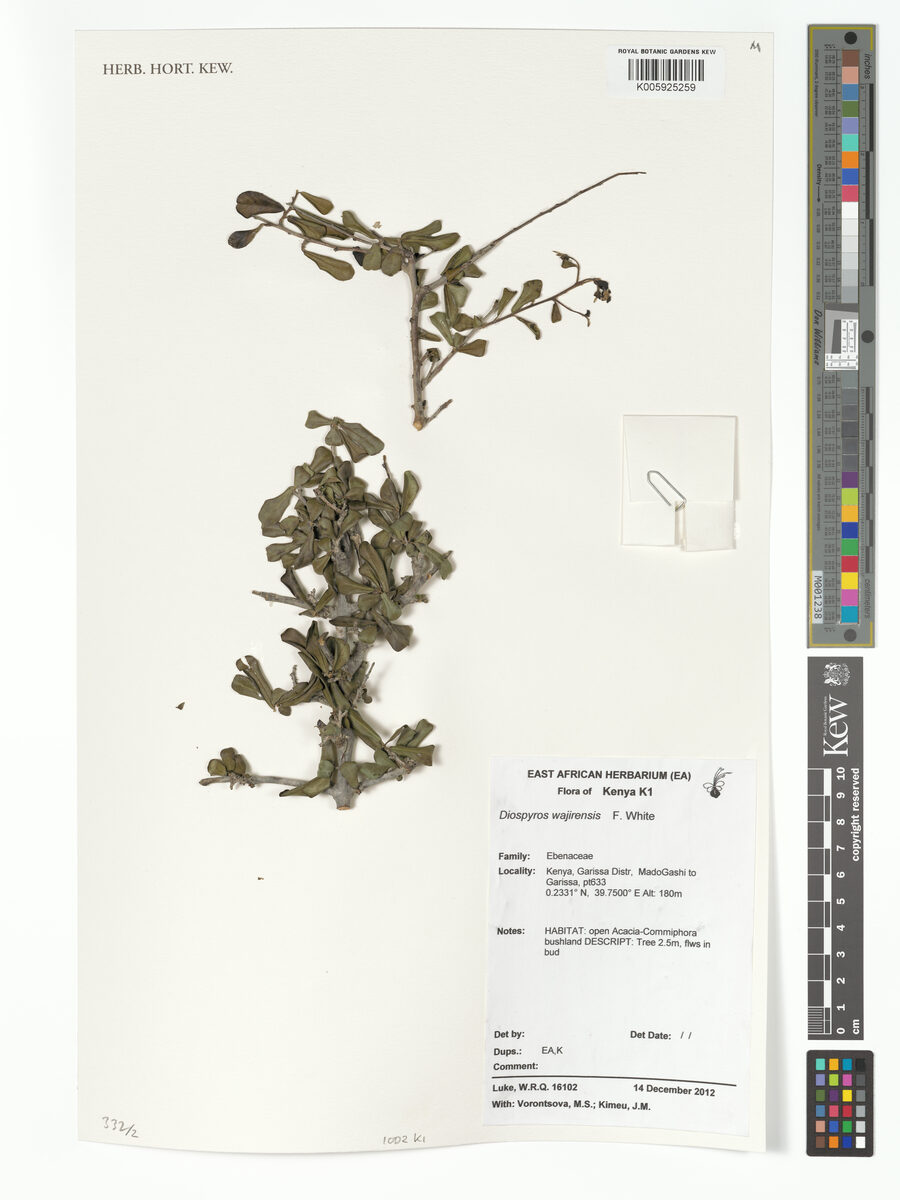
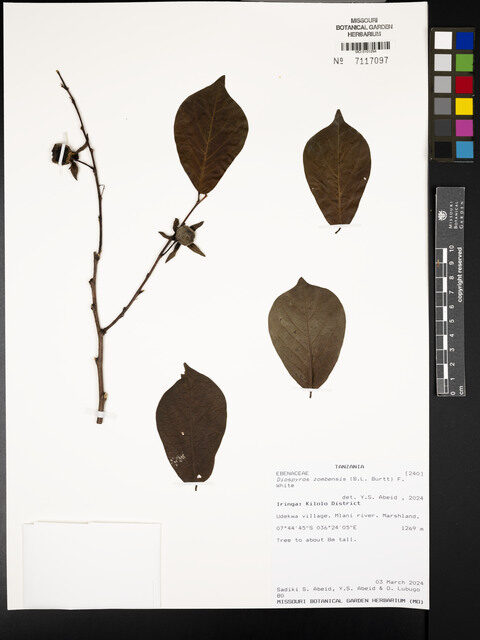
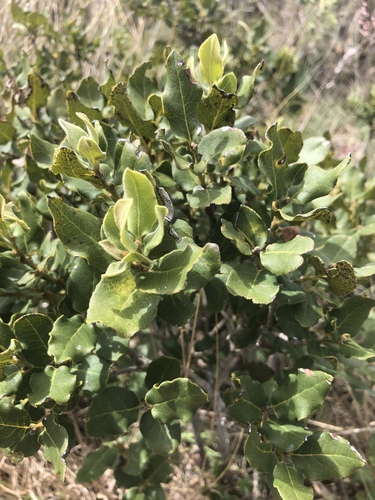
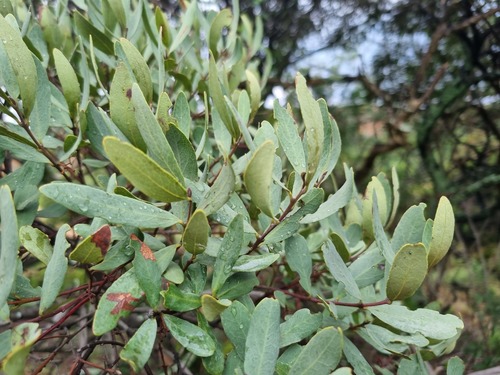
Euclea pseudebenus
E. Mey. ex A. DC.
Black ebony, Cape ebony, Ebony tree
iNaturalist· cc-by-nc-sa
(c) David Hoare, some rights reserved (CC BY-NC-SA), uploaded by David Hoare
iNaturalist· cc-by-nc
(c) faluke, some rights reserved (CC BY-NC), uploaded by faluke
iNaturalist· cc-by-nc
(c) faluke, some rights reserved (CC BY-NC), uploaded by faluke
Summary
Source: WikipediaEuclea pseudebenus (Cape ebony, Ebony guarri, Afrikaans: Ebbehout-ghwarrie) is a tree native to Angola, Namibia and the Cape Province region of South Africa. It is classified as a protected tree in South Africa.
Description
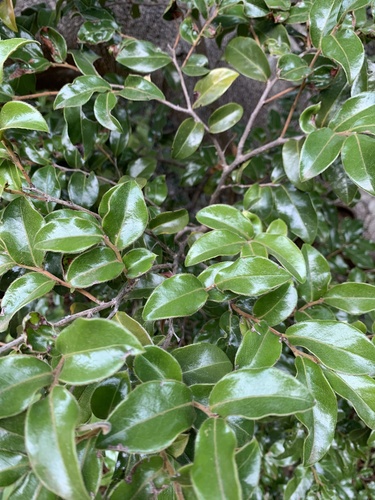
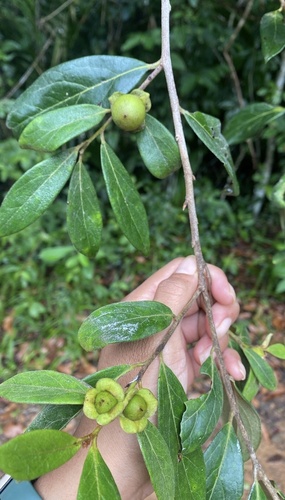
A small tree. It grows 4.5-9 m tall. The branches are slender and drooping. The trunk is 30 cm across. The bark is rough and dark grey. It is deeply cracked. The leaves are slender and leathery. They are often slightly curved. They are 1.3-5 cm long by 2-5 cm wide. The narrow at both ends and the tip is pointed. The leaf stalk is short. The flowers have male and female flowers on separate trees. The male flowers are usually in small groups and the female flowers single. The fruit are round and pea sized and black when ripe. They usually have one seed inside. They are edible.
Edible Uses
The fleshy, glaucous, brownish fruits, the size of a pea, are a little juicy, sweet and slightly astringent. The fruits are about 6m in diameter and contain a single large seed surrounded by a thin flesh.
Traditional Uses
The fruit are eaten. They have a bitter-sweet flavour.
This uses section is brief — help expand it
Medicinal Uses
An infusion of the root may help for headache and toothache.
Distribution
It is a subtropical plant. It grows in desert and semidesert regions in Africa. It is often along dry creek beds, forming a dark green ribbon along the banks. It can grow in arid places.
Where It Grows
Africa, Angola, Central Africa, Namibia, South Africa, Southern Africa,
Cultivation
A dioecious species, both male and female forms need to be grown if fruit and seeds are required.
Other Uses
The root and branches are used as chewing sticks (toothbrush) in dental care. The wood is used for furniture and general carpentry. It is also used for carving because of it pitch black core. The wood makes a excellent firewood.
Nutrition
| Part | Moisture | kJ | kcal | Protein | Vit A | Vit C | Iron | Zinc |
|---|---|---|---|---|---|---|---|---|
| Fruit | 68.5 | 498 | 119 | 1.6 | — | 0.3 | 0.3 | 0.4 |
Synonyms
Also Known As
Abikwa, Ebbehout, Embolo, Omuzema
References (15)
- Fox, F. W. & Young, M. E. N., 1982, Food from the Veld. Delta Books. p 187
- Hedrick, U.P., 1919, (Ed.), Sturtevant's edible plants of the world. p 295
- INFOODS:FAO/INFOODS Databases (As Euclea pseudobenus)
- Jardin, C., 1970, List of Foods Used In Africa, FAO Nutrition Information Document Series No 2.p 135
- Palgrave, K.C., 1996, Trees of Southern Africa. Struik Publishers. p 739
Show all 15 references Hide references
- Palmer, E and Pitman, N., 1972, Trees of Southern Africa. Vol. 3. A.A. Balkema, Cape Town p 1767
- Peters, C. R., O'Brien, E. M., and Drummond, R.B., 1992, Edible Wild plants of Sub-saharan Africa. Kew. p 106
- Prodr. 8:217. 1844
- Royal Botanic Gardens, Kew (1999). Survey of Economic Plants for Arid and Semi-Arid Lands (SEPASAL) database. Published on the Internet; http://www.rbgkew.org.uk/ceb/sepasal/internet [Accessed 16th April 2011]
- Ruiters-Welcome, A. K., 2019, Food plants of southern Africa. Ph.D. thesis. Univ. of Johannesburg p 53
- Van Damme, P et al, 1922, Plant Uses by the Topnaar of the Kuiseb Valley Namib Desert. Afrika Focus Vol. 8(3-4):223-252
- van Wyk, B, van Wyk, P, and van Wyk B., 2000, Photographic guide to Trees of Southern Africa. Briza. p 141
- Wehmeyer, A. S, 1986, Edible Wild Plants of Southern Africa. Data on the Nutrient Contents of over 300 species
- Welcome, A. K. & Van Wyk, B.-E., 2019, An inventory and analysis of the food plants of southern Africa. South African Journal of Botany 122 (2019) 136–179
- World Checklist of Useful Plant Species 2020. Royal Botanic Gardens, Kew