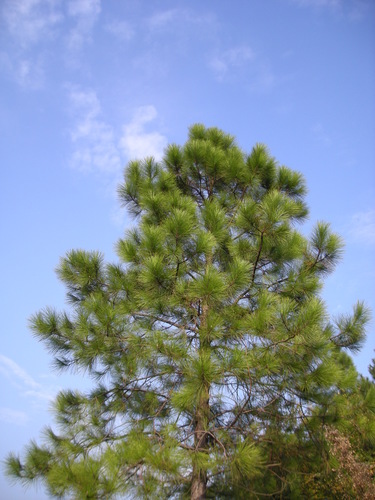
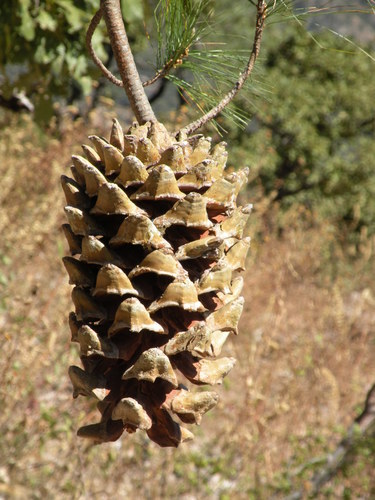
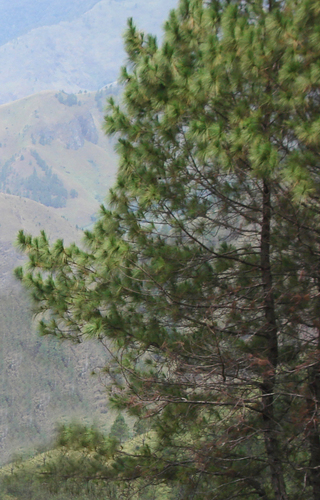
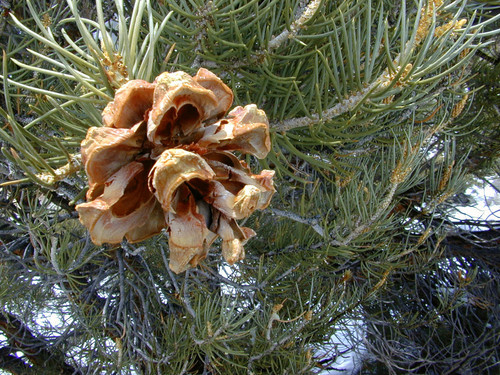
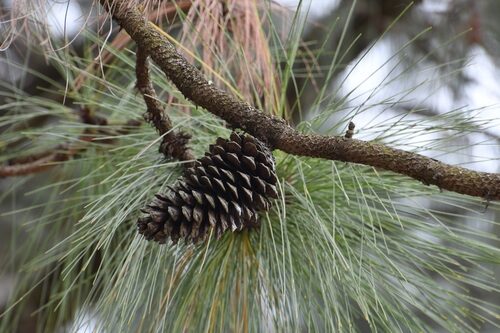
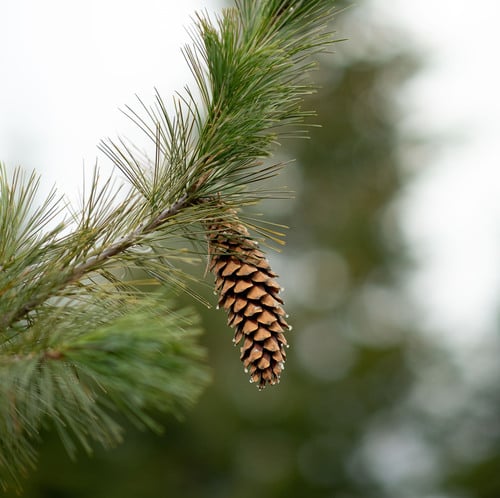
Abies concolor - (Gordon.&Glend.)Lindl. ex Hildebrand.
(Gordon.&Glend.)Lindl. ex Hildebrand.
Colorado Fir, White fir
gbif· cc0
Ben Sims
gbif· cc0
Ben Sims
gbif· cc-by-nc
Wyowild
Description
Abies concolor is an evergreen Tree growing to 45 m (147ft) by 8 m (26ft) at a fast rate. See above for USDA hardiness. It is hardy to UK zone 4 and is not frost tender. It is in leaf all year, in flower in April, and the seeds ripen from September to October. The species is monoecious (individual flowers are either male or female, but both sexes can be found on the same plant) and is pollinated by Wind. Suitable for: light (sandy), medium (loamy) and heavy (clay) soils and can grow in heavy clay and nutritionally poor soils. Suitable pH: mildly acid and neutral soils. It can grow in full shade (deep woodland) semi-shade (light woodland) or no shade. It prefers dry or moist soil.
Edible Uses
The inner bark (cambium) of white fir is the most useful edible part, available year-round. It can be eaten fresh in strips, chewed for a mild flavor and soft texture, or dried and ground into a flour. This flour is best mixed with seed or root flours, as it is very high in fiber and hard to digest on its own. The resinous sap (pitch) is technically edible but has an acrid, overpowering taste, and was more often used medicinally or as a chewing gum. When hardened, it becomes concentrated in nutrients but is sticky and strongly flavored. The young needles are too resinous to eat but make a refreshing tea when used in small amounts. The tea is aromatic, with citrus-like notes, and is sometimes used as a lung tonic. The young shoots can be chewed in very small amounts, but their resin content makes them bitter and unpleasant. The cones are not generally palatable, but when very young and green they can be chewed for their sticky, nutrient-rich centers. The seeds inside are tiny and difficult to collect; they are of little food value for humans though eaten by wildlife. In practice, white fir is more a survival or supplementary food than a staple, valued for its bark and tea in times of scarcity rather than regular consumption.
Medicinal Uses
Antirheumatic Pectoral Poultice TBThe pitch from the trunk has been used as an antiseptic poultice for cuts, wounds etc. An infusion of the pitch, or the bark, has been used in the treatment of TB An infusion of the foliage has been used in a bath for relieving rheumatism. An infusion of the pitch and leaves has been used in the treatment of pulmonary complaints.
Distribution
South-western N. America - Oregon to California, to Arizona and New Mexico.
Where It Grows
NORTHERN AMERICA: United States (Colorado, Idaho, Oregon, New Mexico, Arizona, California, Nevada, Utah), Mexico (Chihuahua, Sonora, Baja California (Norte))
Cultivation
Prefers a good moist but not water-logged soil. Grows well in heavy clay soils. Plants are very shade tolerant but growth is slower in dense shade. Intolerant of atmospheric pollution. Prefers slightly acid conditions down to a pH of about 5. Prefers growing on a north-facing slope. Trees succeed on poor dry sites in the wild. Trees are shallow rooted and therefore liable to be wind-blown in exposed sites. Trees grow almost as well in S. Britain as they do in cooler areas of the country. They are at their best in the Perthshire valleys of Scotland and in N.E. England, trees in the south and east of the country tend to be thin in the crown and soon lose their shape. Trees in the west grow better but also lose their shape after a while. New growth is from mid-May to July and trees are virtually never damaged by late frosts or aphis. Most trees of this species that are grown in Britain are in fact the sub-species A. concolor lowiana. (Gordon.)Lemmon. This form tends to grow better in Britain than the type. There are 2 basic forms of this sub-species, those from the north of the range are vigorous in height growth whilst the southern form is vigorous in girth growth. They both have a potential for forestry use in Britain. Trees should be planted into their permanent positions when they are quite small, between 30 and 90cm in height. Larger trees will check badly and hardly put on any growth for several years. This also badly affects root development and wind resistance. Plants are strongly outbreeding, self-fertilized seed usually grows poorly. They hybridize freely with other members of this genus. A very ornamental tree. The crushed leaves have a strong lemony scent.
Propagation
Seed - sow early February in a greenhouse or outdoors in March. Germination is often poor, usually taking about 6 - 8 weeks. Stratification is said to produce a more even germination so it is probably best to sow the seed in a cold frame as soon as it is ripe in the autumn. The seed remains viable for up to 5 years if it is well stored. When large enough to handle, prick the seedlings out into individual pots and grow them on for at least their first winter in pots. Plant them out into their permanent positions in late spring or early summer, after the last expected frosts. Alternatively, if you have sufficient seed, it is possible to sow in an outdoor seedbed. One report says that it is best to grow the seedlings on in the shade at a density of about 550 plants per square metre whilst another report says that they are best grown on in a sunny position.
Other Uses
Dye WoodA tan coloured dye can be obtained from the bark. Wood - very light, not strong, coarse grained, soft, not durable. Used mainly for pulp, cases etc. It is sometimes used in framing small houses but is not strong enough to be used in larger buildings. The wood lacks a distinctive odour and so does not impart a flavour to items stored in it. Thus it can be used for making tubs for storing food items.