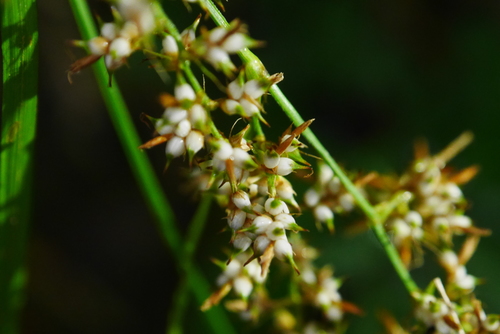
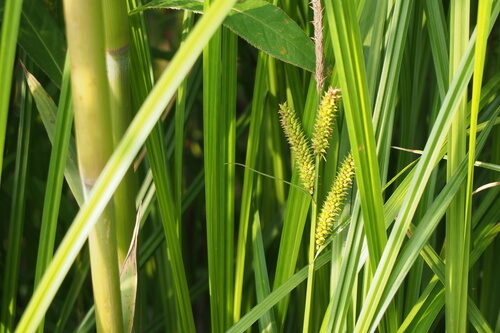
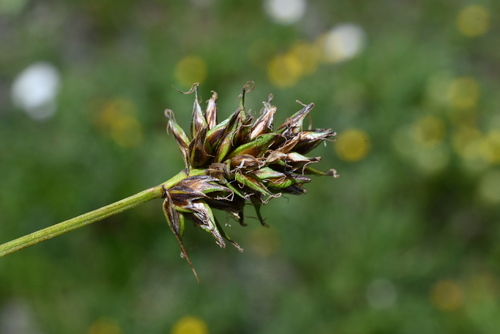
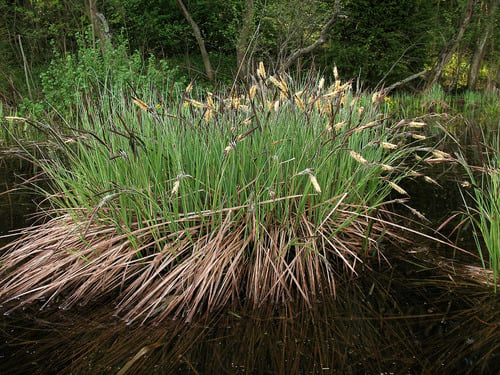
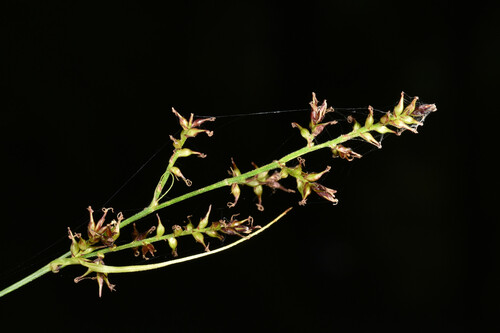
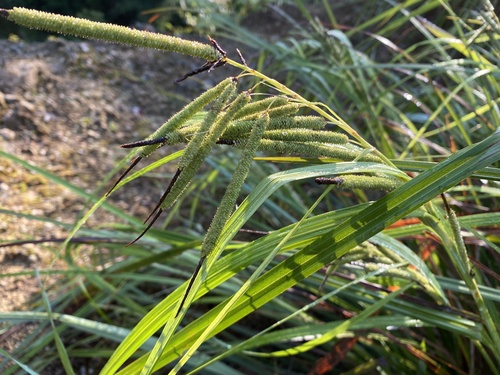
Scirpus nevadensis
S.Watson.
Nevada Bulrush
gbif· cc0
Ingrid P. Lin
gbif· cc0
Ingrid P. Lin
gbif· cc-by-nc
Arizona State University Vascular Plant Herbarium (ASU-Plants)
Description
Scirpus nevadensis is a PERENNIAL growing to 0.3 m (1ft). The seeds ripen from July to August. The species is hermaphrodite (has both male and female organs) and is pollinated by Wind. Suitable for: light (sandy), medium (loamy) and heavy (clay) soils. Suitable pH: mildly acid, neutral and basic (mildly alkaline) soils and can grow in very alkaline soils. It can grow in semi-shade (light woodland) or no shade. It prefers moist or wet soil and can grow in water.
Edible Uses
Root - raw or cooked[46, 61, 105, 161, 177, 257]. Rich in starch. It is usually peeled before being eaten.
Distribution
Western N. America - California to Canada.
Where It Grows
NORTHERN AMERICA: Canada (Saskatchewan, Alberta, British Columbia), United States (Nebraska, North Dakota, Montana, Oregon, Washington, Wyoming, California, Utah) SOUTHERN AMERICA: Argentina, Chile
Cultivation
We have very little information on this species and do not know if it will be hardy in Britain, though judging by its native range it should succeed outdoors in most parts of this country. The following notes are based on the general needs of the genus. Succeeds in any wet to moisture retentive ground, pond margins and shallow water in full sun or shade.
Propagation
Seed - sow in a cold frame as soon as it is ripe in a pot standing in 3cm of water. Only just cover the seed with soil. The seed usually germinates fairly quickly. Prick out the plants when large enough to handle and plant out in their permanent positions in early summer. Division in spring. Very easy, larger divisions can be planted out direct into their permanent positions. We have found it best to pot up the smaller divisions and grow them on in a lightly shaded position in a cold frame, planting them out once they are well established in the summer.
Other Uses
Weaving. The stems have been woven into mats and used like blankets.