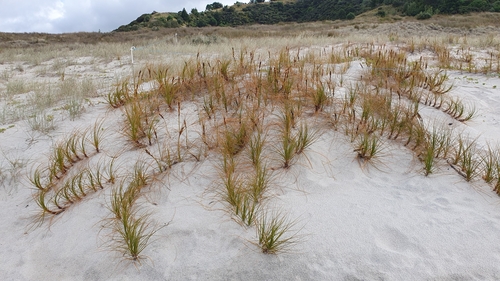
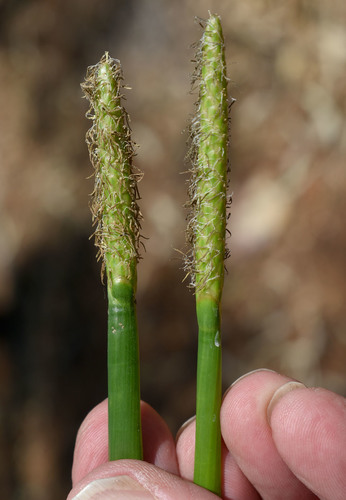
Eriophorum angustifolium
Honckeny
Tall Cotton grass
iNaturalist· cc-by-nc-sa
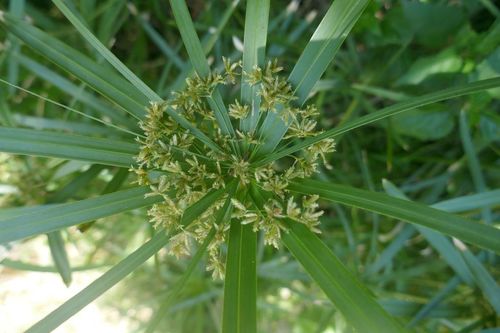
(c) Bogdan V. Kryzhatyuk, some rights reserved (CC BY-NC-SA), uploaded by Bogdan V. Kryzhatyuk
iNaturalist· cc-by-nc
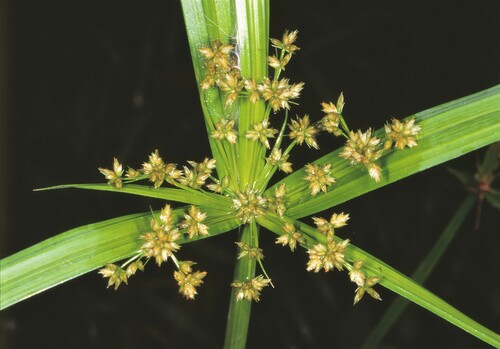
(c) Sarah Nagel, some rights reserved (CC BY-NC), uploaded by Sarah Nagel
iNaturalist· cc-by-nc
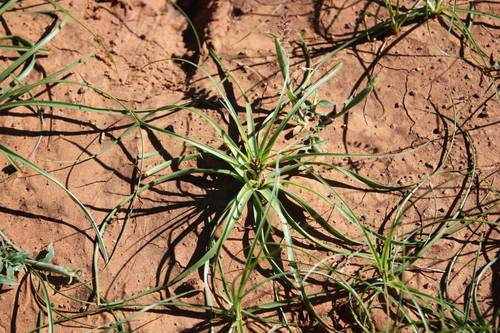
(c) Boris Bolshakov, some rights reserved (CC BY-NC), uploaded by Boris Bolshakov
Summary
Source: WikipediaEriophorum angustifolium, commonly known as common cottongrass or common cottonsedge, is a species of flowering plant in the sedge family, Cyperaceae. Native to North America, North Asia, and Europe, it grows on peat or acidic soils, in open wetland, heath or moorland. It begins to flower in April or May and, after fertilisation in early summer, the small, unremarkable brown and green flowers develop distinctive white bristle-like seed-heads that resemble tufts of cotton; combined with its ecological suitability to bog, these characteristics give rise to the plant's alternative name, bog cotton. Eriophorum angustifolium is a hardy, herbaceous, rhizomatous, perennial sedge, able to endure in a variety of environments in the temperate, subarctic and arctic regions of Earth. Unlike Gossypium, the genus from which cotton is derived, the bristles of E. angustifolium are unsuited to textile manufacturing. Nevertheless, in Northern Europe, they were used as a substitute in the production of paper, pillows, candle-wicks, and wound-dressings. The indigenous peoples of North America use the plant in cooking and in the treatment of digestive problems. Following a vote in 2002, Plantlife International designated E. angustifolium the County Flower of Greater Manchester, as part of its British County Flowers campaign.
Description
A grass like herb. It does not occur in tufts. It has a creeping rootstock. The leaves are flat and keeled. It produces tassels and white cotton-like flowers. These are on short stems 30 cm long and which do not have leaves. They droop from the base of leaf-like bracts.
Edible Uses
Young stem bases can be eaten raw or cooked, and are usually cooked with oil. The root is also edible raw or cooked, but the blackish outer covering should be removed before eating.
Traditional Uses
The young stems are eaten. The black root hairs can be removed by pouring boiling water over them. They can be eaten raw or cooked. They can also be stored in oil. The roots are also boiled and eaten or can be stored in oil.
Medicinal Uses
The leaves and roots are strongly astringent and have historically been used to treat diarrhoea. Some Native North American tribes ate the stems raw as a general tonic to restore good health in people who were in a weakened condition.
Distribution
A cold temperate plant. It grows on acid moorlands. It can be covered with water 5 cm deep at the roots. It grows in Arctic regions.
Where It Grows
Alaska, Arctic, Australia, Britain, Canada, Europe, Korea, Luxembourg, Mongolia, North America, Slovenia, USA,
Cultivation
Requires boggy conditions or a pond margin and an acid soil. Grows well in heavy clay soils. Quite invasive.
Propagation
Sow in situ in spring in moist soil in light shade. Germination typically occurs within 2 to 6 weeks at 15°C. If seed is scarce, sow in pots in a cold frame and place the pots in a tray of water to keep the compost moist. Prick seedlings into individual pots when large enough to handle and plant out in summer. Division in spring or autumn is very easy, and divisions can be replanted directly into their permanent positions.
Other Uses
The cottony seed hairs are used to make candle wicks, stuff pillows, produce paper, and serve as tinder. Experiments have been conducted using these hairs as a cotton substitute, but they are more brittle than cotton and do not bear twisting as well. The dried leaves and stems have been woven into soft mats or covers.
Production
Often the stems are buried by mice and then harvested from their burrows in Alaska. They are then washed.
Notes
There are 20 Eriophorum species.
Synonyms
Also Known As
Anlleret, Cheecheekok, Eetaht, Eetaluk, Eetuk, Etak, Etok, Iitaat, Melquruaq, Ozkolistni munec, Pekneq, Qitmiruat
References (11)
- Ager, T. A. & Ager, L. P., 1980, Ethnobotany of the eskimos of Nelson Island, Alaska. Arctic Anthropology Vol 17. No. 1 pp 26-48
- Heller, C. A., 1962, Wild Edible and Poisonous Plants of Alaska. Univ. of Alaska Extension Service. p 62
- Hibbert, M., 2002, The Aussie Plant Finder 2002, Florilegium. p 94
- Jernigan, K. (Ed.), 2012, A Guide to the Ethnobotany of the Yukon-Kuskokwim Region. Draft.
- Jones, A., 2010, Plants that we eat. University of Alaska Press. p 148
Show all 11 references Hide references
- Kuhnlein, H. V. and Turner, N. J., 1991, Traditional Plant Foods of Canadian Indigenous Peoples. Food and Nutrition in History and Anthropology Volume 8. Gordon and Breach. p 49
- Moerman, D. F., 2010, Native American Ethnobotany. Timber Press. p 225
- Plants for a Future database, The Field, Penpol, Lostwithiel, Cornwall, PL22 0NG, UK. http://www.scs.leeds.ac.uk/pfaf/
- Simpson, D. A. & Inglis, C. A., 2001, Cyperaceae of Economic, Ethnobotanical and Horticultural Importance: A checklist. Kew Bulletin Vol. 56, No. 2 (2001), pp. 257-360
- Slocum, P.D. & Robinson, P., 1999, Water Gardening. Water Lilies and Lotuses. Timber Press. p 94
- Urgamal, M., Oyuntsetseg, B., Nyambayar, D. & Dulamsuren, Ch. 2014. Conspectus of the vascular plants of Mongolia. (Editors: Sanchir, Ch. & Jamsran, Ts.). Ulaanbaatar, Mongolia.