Rubus croceanthus
Lév.
No photos yet for Rubus croceanthus
Sign in to contribute a photoDescription
Rubus croceanthus is a deciduous Shrub. The species is hermaphrodite (has both male and female organs) and is pollinated by Insects. Suitable for: light (sandy), medium (loamy) and heavy (clay) soils and prefers well-drained soil. Suitable pH: mildly acid, neutral and basic (mildly alkaline) soils. It can grow in semi-shade (light woodland) or no shade. It prefers moist soil.
Edible Uses
Fruit - raw or cooked.
Distribution
E. Asia - C. and S. Japan, Korea.
Where It Grows
Coming Soon
Cultivation
We have very little information on this species and do not know if it will be hardy in Britain, though judging by its native range it could succeed outdoors in many parts of this country. The following notes are based on the general needs of the genus. The name is given as R. croceacanthus according to the Royal Botanical Garden at Edinburgh. Easily grown in a good well-drained loamy soil in sun or semi-shade. Plants in this genus are notably susceptible to honey fungus.
Propagation
Seed - requires stratification and is best sown in early autumn in a cold frame. Stored seed requires one month stratification at about 3°c and is best sown as early as possible in the year. Prick out the seedlings when they are large enough to handle and grow on in a cold frame. Plant them out into their permanent positions in late spring of the following year. Cuttings of half-ripe wood, July/August in a frame. Tip layering in July. Plant out in autumn. Division in early spring or just before leaf-fall in the autumn.
Other Uses
DyeA purple to dull blue dye is obtained from the fruit.
Synonyms
More from Rosaceae
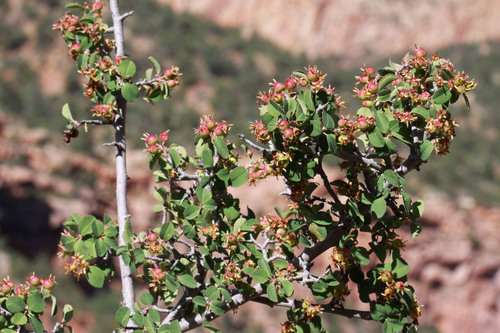
Amelanchier pumila
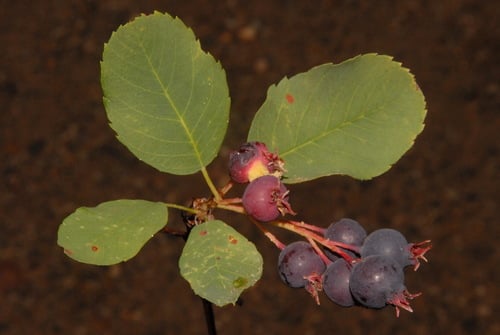
Amelanchier sanguinea
Roundleaf Serviceberry, Shore Shad bush, Roundleaf Juneberry
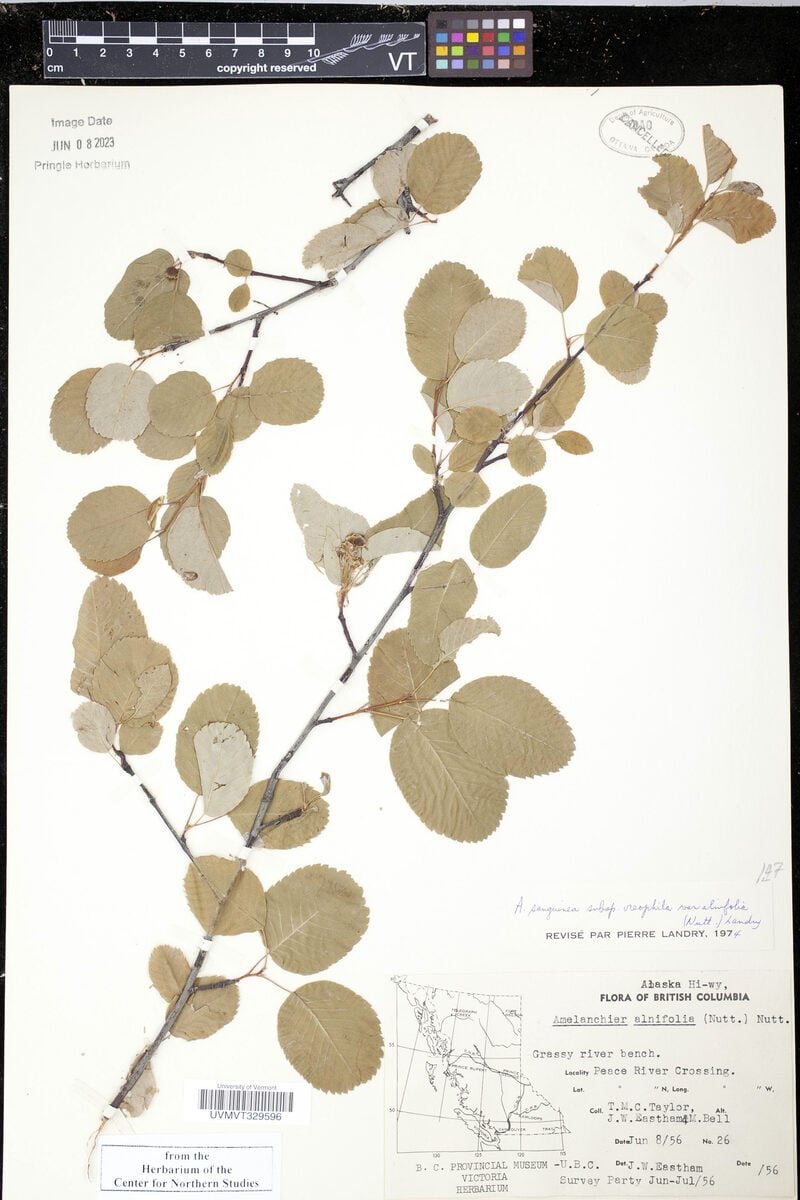
Amelanchier sanguinea var. alnifolia
Saskatoon serviceberry, Western Shad bush
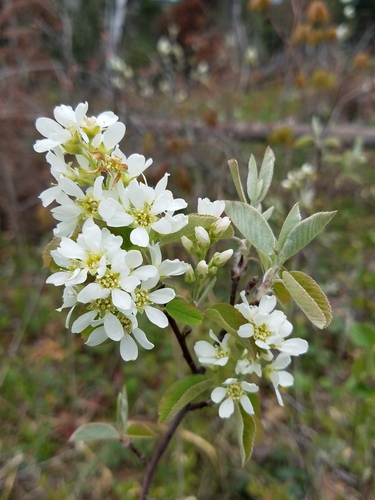
Amelanchier spicata
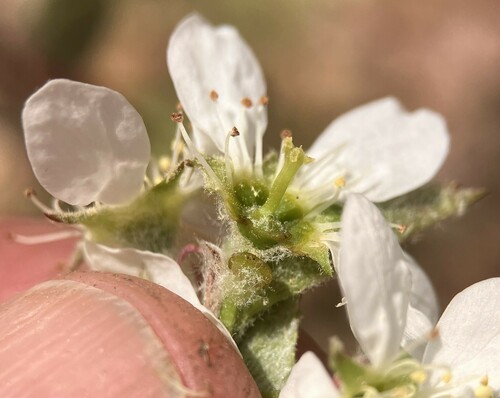
Amelanchier stolonifera
Quebec berry, Running juneberry, Running serviceberry, Dwarf juneberry
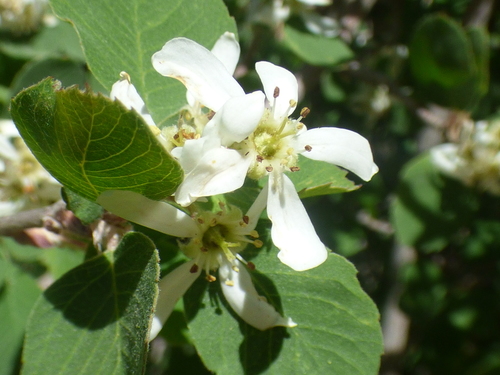
Amelanchier utahensis
Utah serviceberry