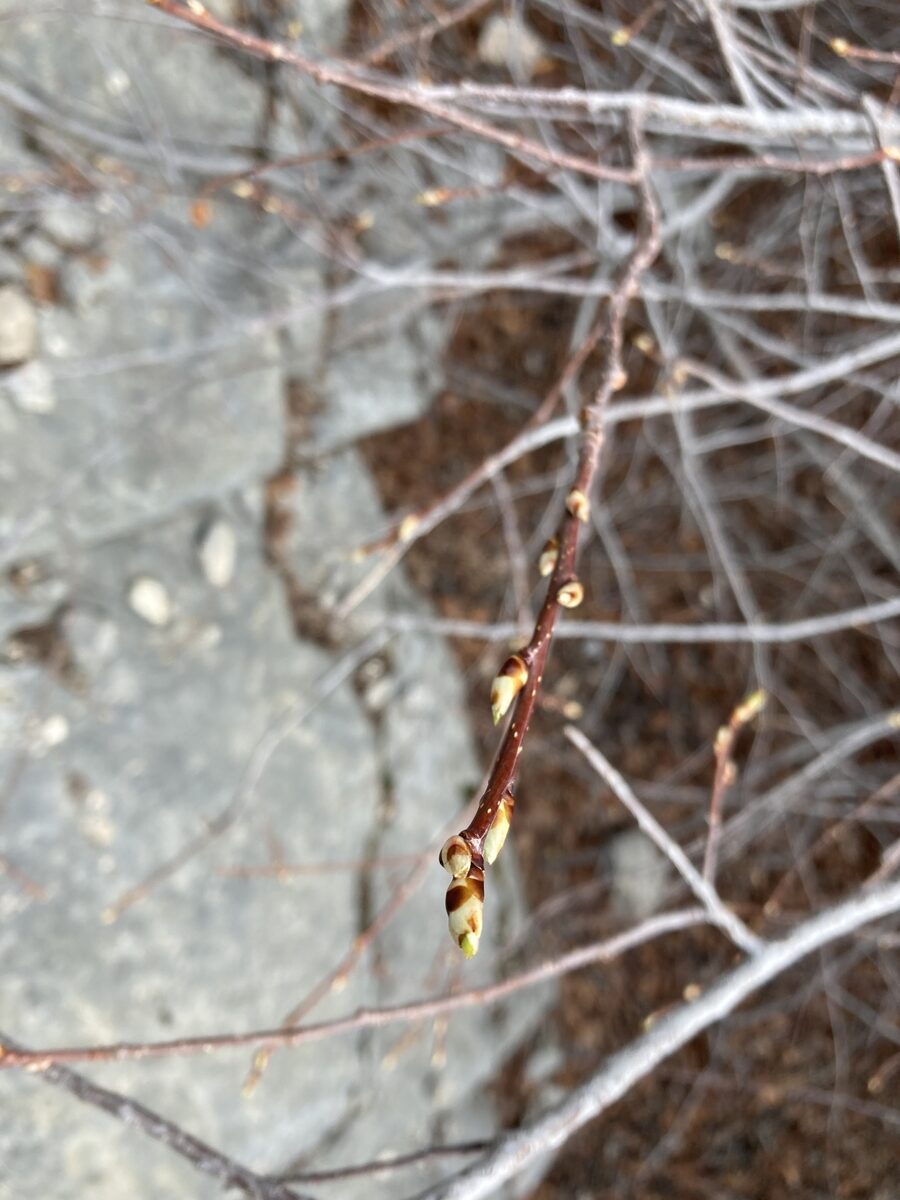
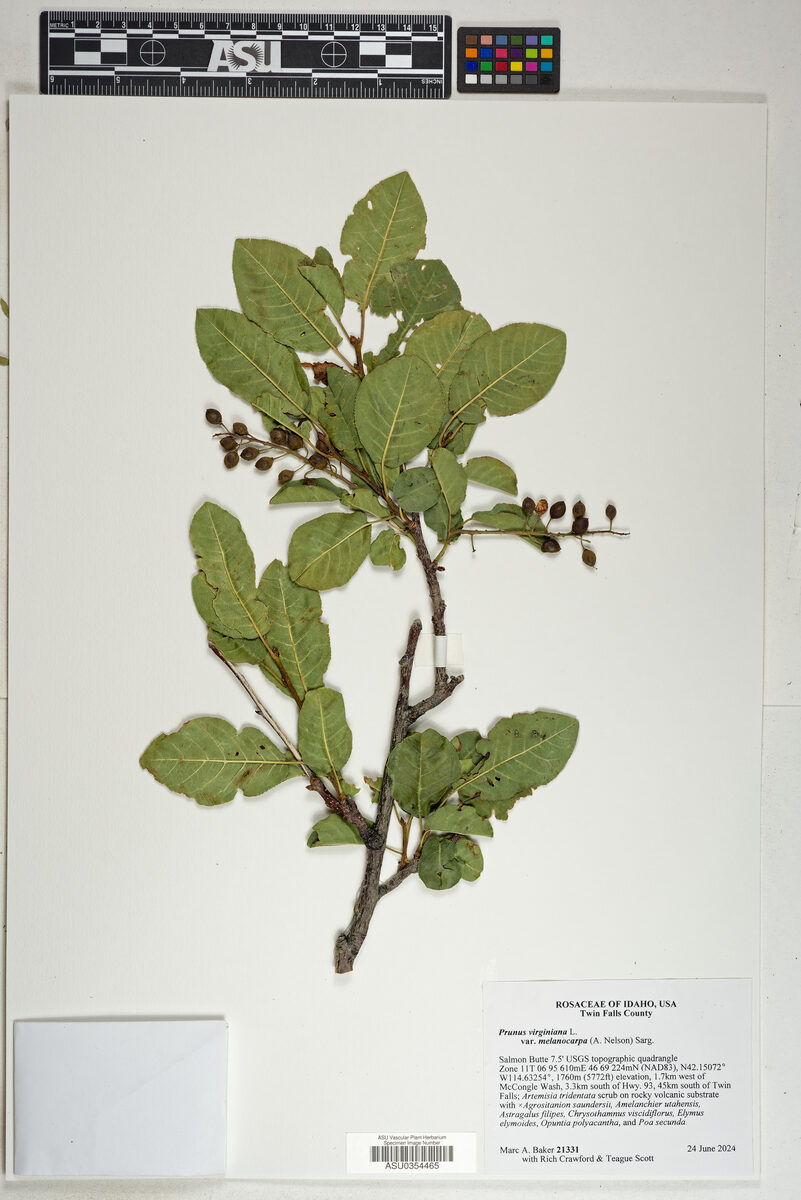
Amelanchier sanguinea
(Pursh.) DC.
Roundleaf Serviceberry, Shore Shad bush, Roundleaf Juneberry
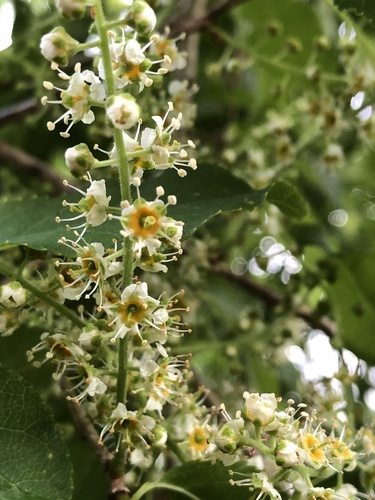
iNaturalist· cc-by-sa
(c) Brian Finzel, some rights reserved (CC BY-SA), uploaded by Brian Finzel
iNaturalist· cc-by-nc
(c) Dina Nesterkova, some rights reserved (CC BY-NC), uploaded by Dina Nesterkova
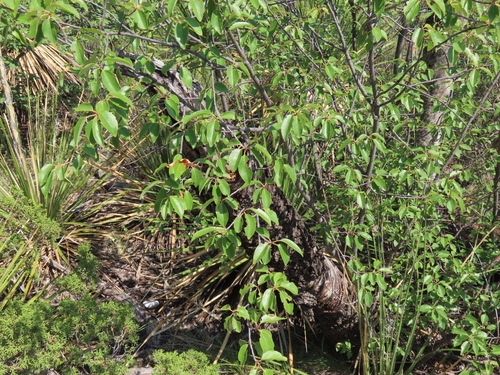
iNaturalist· cc-by-nc
(c) Tina, some rights reserved (CC BY-NC), uploaded by Tina
Summary
Source: WikipediaAmelanchier sanguinea, known as red-twigged shadbush or roundleaf serviceberry, is a shrub native to eastern and central North America. Its native range stretches from New Brunswick to Saskatchewan south as far as northern Georgia. It is most common in eastern Canada, the northeastern United States, and the Great Lakes region. Amelanchier sanguinea is a shrub that can grow up to 3 metres (9.8 ft) tall, and has edible sweet-flavored fruits that are red when young and become purple or dark-blue when they ripen. Like all Amelanchier fruit, these resemble berries, but are technically pomes. Varieties Amelanchier sanguinea var. gaspensis Wiegand Amelanchier sanguinea var. grandiflora (Wiegand) Rehder Amelanchier sanguinea var. sanguinea
Description
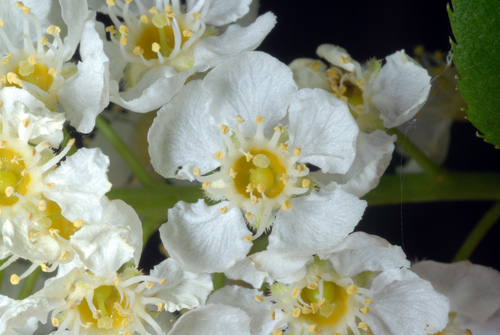
A shrub to 3-10 m high. Plants produce suckers and form thickets. The leaves are oval or roundish and 3-7 cm across. They have coarse teeth. There are about 18-20 per side. The flowers occur in drooping clusters. They are 3-8 cm long. Fruit are produced in clusters. The fruit are 11 mm across. They are dark purple and juicy. The stalks are 10-30 mm long.
Edible Uses
The fruit can be eaten raw or cooked and has a sweet flavour. It grows in small clusters and reaches up to 11mm in diameter. The fruit is rich in iron and copper.
Traditional Uses
Fruit are eaten raw or cooked.
This uses section is brief — help expand it
Medicinal Uses
None known.
Distribution
It is a temperate plant. It grows naturally in open woods, rocky slopes and river banks on neutral to slightly calcareous soils in Eastern N. America from Maine to New Jersey, west to Minnesota and Iowa. It is resistant to frost but sensitive to drought.
Where It Grows
Australia, Canada, North America, USA,
Cultivation
It can be grown from seed, layering or suckers. Unless fresh seed are used, seed can take 18 months to germinate and layers can take 18 months to form roots.
Propagation
Seed is best harvested green — when fully formed but before the seed coat has hardened — and sown immediately in pots outdoors or in a cold frame. Stored seed obtained early enough in autumn can be given 4 weeks of warm stratification before being left out over winter, and should germinate in spring. Otherwise, germination can be very slow, potentially taking 18 months or more. When large enough to handle, prick seedlings out into individual pots and grow on in a sheltered outdoor position, planting out once they reach 20cm or more. Where seed is plentiful, sow thinly in an outdoor seedbed and grow on for two years before planting into permanent positions during winter. Layering in spring takes 18 months. Suckers can be divided in late winter, but must have been growing for 2 years to have formed roots. They can be planted directly into permanent positions if needed.
Other Uses
None known.
Notes
There are about 25-30 Amelanchier species.
Synonyms
References (8)
- Bircher, A. G. & Bircher, W. H., 2000, Encyclopedia of Fruit Trees and Edible Flowering Plants in Egypt and the Subtropics. AUC Press. p 23
- Bodkin, F., 1991, Encyclopedia Botanica. Cornstalk publishing, p 75
- Farrar, J.L., 1995, Trees of the Northern United States and Canada. Iowa State University press/Ames p 368
- Fisk, J. R. & Hoover, E., 2015, Wild Fruits of Minnesota. A Filed Guide. University of Minnesota p 8
- Little, E.L., 1980, National Audubon Society Field Guide to North American Trees. Alfred A. Knopf. p 461
Show all 8 references Hide references
- Lord, E.E., & Willis, J.H., 1999, Shrubs and Trees for Australian gardens. Lothian. p 47
- Plants for a Future database, The Field, Penpol, Lostwithiel, Cornwall, PL22 0NG, UK. http://www.scs.leeds.ac.uk/pfaf/.
- Prodr. 2:633. 1825