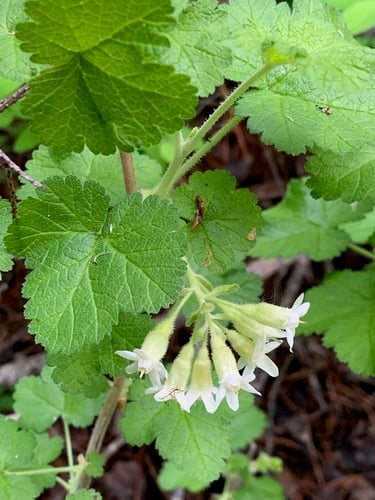
Ribes sanguineum glutinosum - (Benth.)Loudon.
(Benth.)Loudon.
Flowering Currant
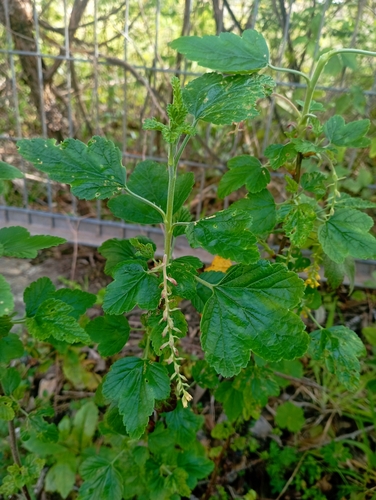
gbif· cc-by-nc
Sue Lindner
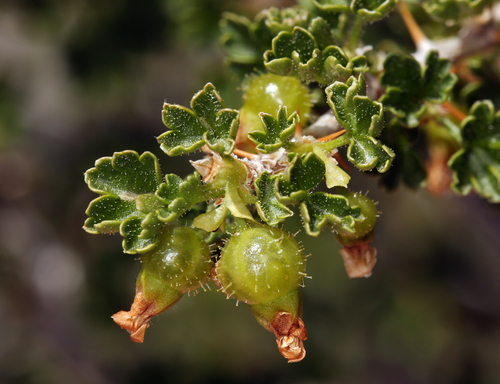
gbif· cc-by-nc
Sue Lindner
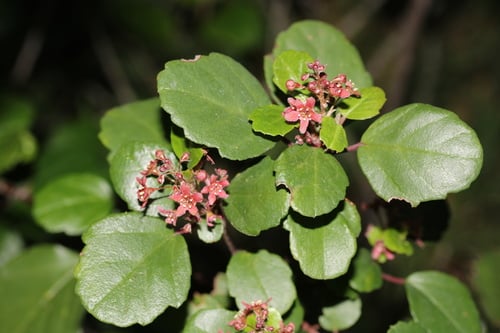
gbif· cc-by-nc
Karisma Wilson
Description
Ribes sanguineum glutinosum is a deciduous Shrub growing to 2.7 m (8ft 10in). See above for USDA hardiness. It is hardy to UK zone 6 and is not frost tender. It is in flower from April to May, and the seeds ripen from August to October. The species is hermaphrodite (has both male and female organs) and is pollinated by Bees. Suitable for: light (sandy), medium (loamy) and heavy (clay) soils, prefers well-drained soil and can grow in heavy clay soil. Suitable pH: mildly acid, neutral and basic (mildly alkaline) soils. It can grow in semi-shade (light woodland) or no shade. It prefers moist soil. The plant can tolerate maritime exposure.
Edible Uses
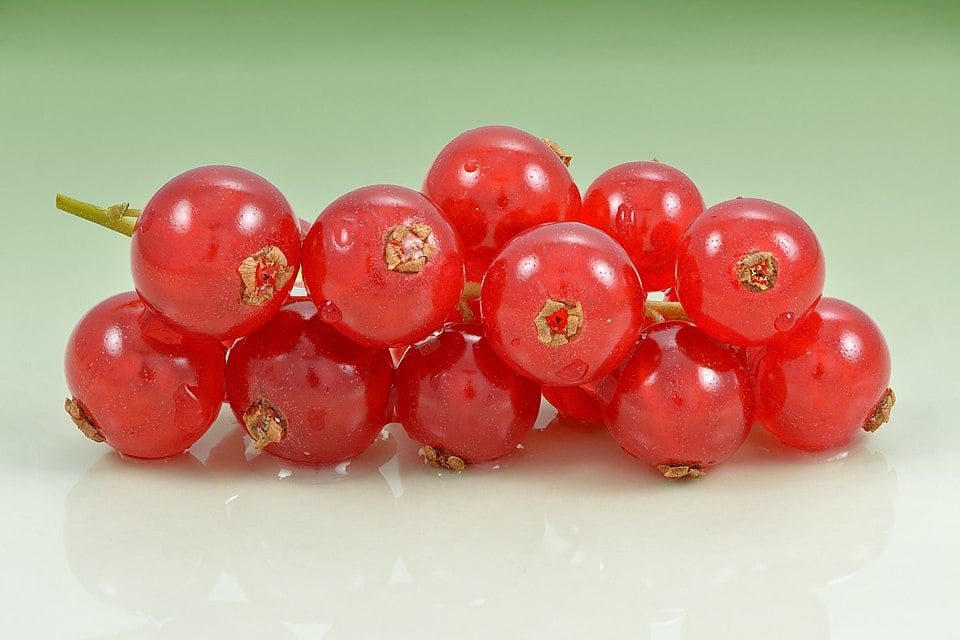
Fruit - raw or cooked. It does not have a wonderful flavour, but is tolerable raw. It can be harvested when still firm in August and when stored carefully will keep until November, by which time the flavour has improved slightly. The fruit is about 10mm in diameter.
Distribution
South-western N. America - California.
Where It Grows
Coming Soon
Cultivation
Easily grown in a moisture retentive but well-drained loamy soil of at least moderate quality. Grows well in heavy clay soils. Succeeds in full sun, it is also quite tolerant of shade though it does not fruit so well in such a position. Tolerates maritime exposure. Hardy to about -20°c. There is some confusion over the correct name for this species, it is considered to be a species in its own right by some authorities (R. glutinosum. Benth.) whilst others see it as a sub-species of R. sanguineum. A very ornamental plant. A disease-resistant plant, it is being used in blackcurrant breeding programmes. Plants can harbour a stage of white pine blister rust, so should not be grown in the vicinity of pine trees. Plants in this genus are notably susceptible to honey fungus.
Propagation
Seed - best sown as soon as it is ripe in the autumn in a cold frame. Stored seed requires 3 months cold stratification at between 0 and 5°c and should be sown as early in the year as possible. Under normal storage conditions the seed can remain viable for 17 years or more. Prick out the seedlings into individual pots when they are large enough to handle and grow them on in a cold frame for their first winter, planting them out in late spring of the following year. Cuttings of half-ripe wood, 10 - 15cm with a heel, July/August in a frame. Cuttings of mature wood of the current year's growth, preferably with a heel of the previous year's growth, November to February in a cold frame or sheltered bed outdoors.
Other Uses
Hedge Hedge. Tolerates maritime exposure and can be grown as an informal hedge. It provides reasonable shelter when in leaf but is rather bare and gives little protection in winter.