Ribes viburnifolium
A. Gray
Island Gooseberry, Santa Catalina Currant
iNaturalist· cc-by-nc
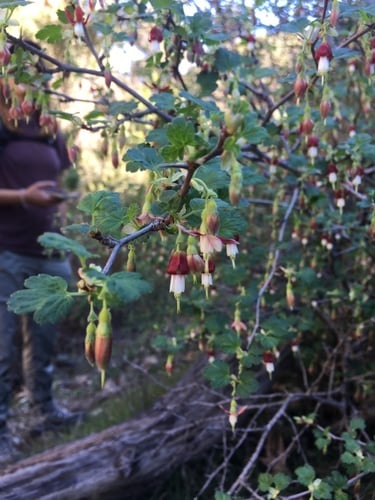
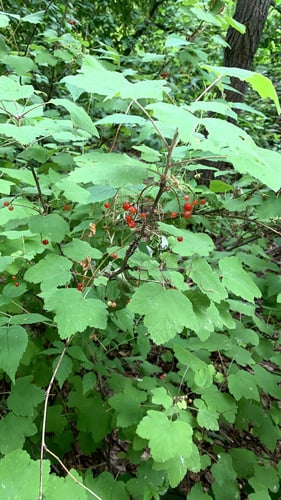
(c) hsug1747, some rights reserved (CC BY-NC)
iNaturalist· cc-by-nc
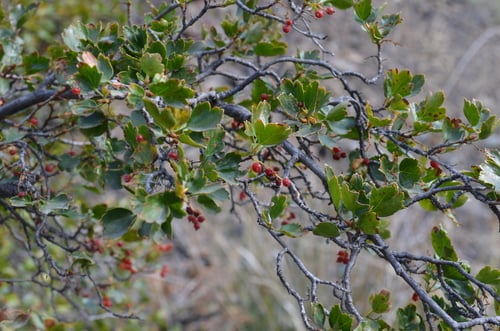
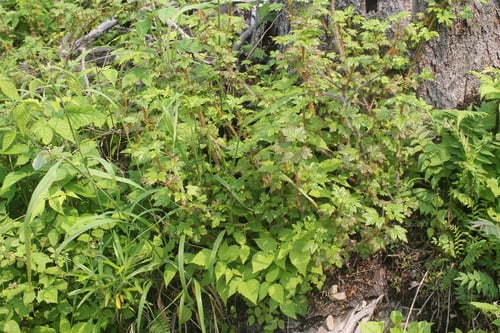
(c) nathantay, some rights reserved (CC BY-NC)
iNaturalist· cc-by-nc
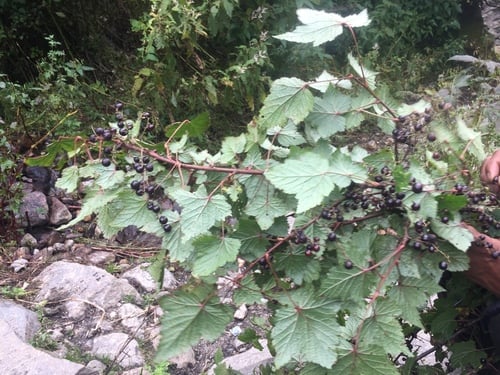
(c) nathantay, some rights reserved (CC BY-NC)
Summary
Source: WikipediaRibes viburnifolium, is an uncommon North American species in the gooseberry family. It is known by the common names Catalina currant, Santa Catalina Island currant, island gooseberry and evergreen currant.
Description
An evergreen shrub. It grows 1.5 m high and spreads 1.5 m wide. The stems are smooth. The stems droop and develop roots. The leaves have a strong aroma. The flowers are pink and erect. The fruit are red.
Edible Uses
The fruit can be eaten raw or cooked and measures about 8mm in diameter.
Medicinal Uses
None known.
Distribution
It is a warm temperate plant. It suits hardiness zones 8-10.
Where It Grows
Australia, Mexico, North America, USA,
Cultivation
Easily grown in a moisture retentive but well-drained loamy soil of at least moderate quality. Plants are quite tolerant of shade though do not fruit so well in such a position. This species is not very hardy outdoors in most of Britain. The plants tolerate temperatures down to about -5°c and can be grown successfully in the light shade of a woodland garden in the milder areas of the country. They can also be grown against a sunny wall in many parts of the country. The aromatic leaves and shoots smell like turpentine when they are crushed. The scent has a most refreshing pine-like aroma according to another report. Plants can harbour a stage of 'white pine blister rust', so they should not be grown near pine trees. Plants in this genus are notably susceptible to honey fungus. It is particularly well-suited for coastal areas and dry, shady spots. It is drought-tolerant and often used in xeriscaping. This species is mostly grown as an ornamental plant, but its berries are also edible. Most Ribes species, including black, red, and white currants, are self-fertile, meaning they can produce fruit without needing cross-pollination. However, cross-pollination with another Ribes plant can improve fruiting. Currants are usually harvested in mid to late summer, from June to August (Northern Hemisphere), depending on the species and local climate. Ribes species generally flower in spring, around April to June (Northern Hemisphere) , with flowering occurring before or as the leaves emerge. Currant plants are relatively fast-growing, reaching maturity in about 2 to 3 years. They typically grow to a height of 1 to 2 meters (3 to 6 feet) and can be quite productive.
Propagation
Seed is best sown as soon as it is ripe in autumn in a cold frame. Stored seed requires 2–3 months of cold stratification at 1–5°C and should be sown as early in the year as possible. Under normal storage conditions seed remains viable for 17 years or more. Prick out seedlings into individual pots when large enough to handle, grow on in a cold frame through their first winter, and plant out in late spring the following year. Take cuttings of half-ripe wood, 10–15cm with a heel, in July or August in a frame. Cuttings of mature wood from the current year's growth, preferably with a heel of the previous year's growth, can be taken from November to February in a cold frame or sheltered outdoor bed.
Other Uses
Currants are useful in agroforestry systems as a shrub layer within mixed-species plantings. Their flowers are rich in nectar and pollen, attracting bees and other beneficial insects. The berries provide food for birds and small mammals, while the dense shrub growth offers cover, shelter, and nesting sites for wildlife. Leaf litter and dense growth also provide overwintering sites and shelter for invertebrates and contribute to ground cover.
Notes
There are about 150 Ribes species.
Also Known As
Grosella santa catalina
References (5)
- Cundall, P., (ed.), 2004, Gardening Australia: flora: the gardener's bible. ABC Books. p 1207
- Plants for a Future database, The Field, Penpol, Lostwithiel, Cornwall, PL22 0NG, UK. http://www.scs.leeds.ac.uk/pfaf/
- Proc. Amer. Acad. Arts 17:202. 1882
- Segura, S., et al, 2018, The edible fruit species in Mexico. Genet Resour Crop Evol (2018) 65:1767–1793
- World Checklist of Useful Plant Species 2020. Royal Botanic Gardens, Kew