Pyrus elaeagnifolia kotschyana - (Decne.)Boiss.
(Decne.)Boiss.
gbif· cc-by-nc-sa
MBG
Description
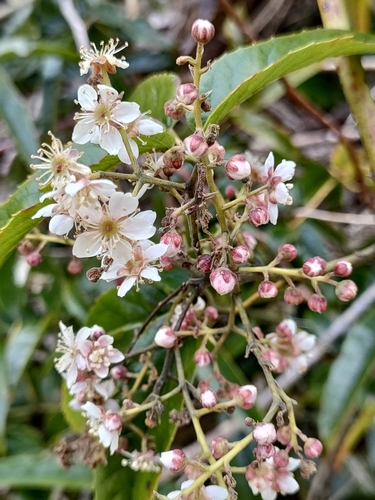
Pyrus elaeagnifolia kotschyana is a deciduous Tree. See above for USDA hardiness. It is hardy to UK zone 5. It is in flower in April. The species is hermaphrodite (has both male and female organs) and is pollinated by Insects. Suitable for: light (sandy), medium (loamy) and heavy (clay) soils, prefers well-drained soil and can grow in heavy clay soil. Suitable pH: mildly acid, neutral and basic (mildly alkaline) soils. It can grow in semi-shade (light woodland) or no shade. It prefers dry or moist soil and can tolerate drought. It can tolerate atmospheric pollution.
Edible Uses
Fruit - raw or cooked. The flesh is rather tough and gritty, but has a reasonable flavour when it is fully ripe. The fruit is up to 2cm long.
Distribution
W. Asia.
Where It Grows
Coming Soon
Cultivation
Prefers a good well-drained loam in full sun. Grows well in heavy clay soils. Tolerates light shade but does not fruit so well in such a position. Tolerates atmospheric pollution, excessive moisture and a range of soil types if they are moderately fertile. Established plants are drought tolerant. Plants are hardy to at least -15°c. This sub-species differs from P. eleagrifolia in having thornless branches. Closely related to P. georgica.
Propagation
Seed - best sown in a cold frame as soon as it is ripe in the autumn, it will then usually germinate in mid to late winter. Stored seed requires 8 - 10 weeks cold stratification at 1°c and should be sown as early in the year as possible. Temperatures over 15 - 20°c induce a secondary dormancy in the seed. Prick out the seedlings into individual pots when they are large enough to handle and grow them on in light shade in a cold frame or greenhouse for their first year. Plant them out in late spring or early summer of the following year.