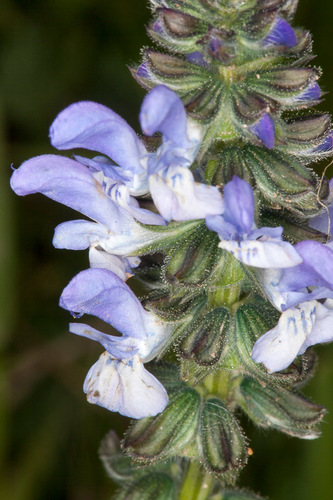
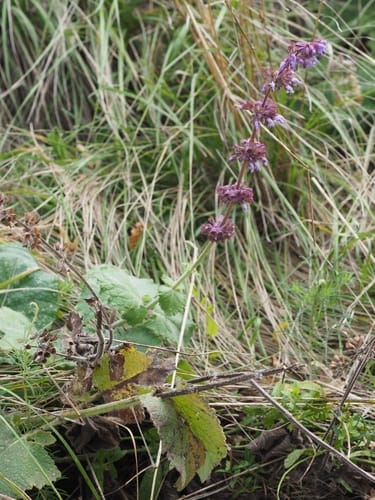
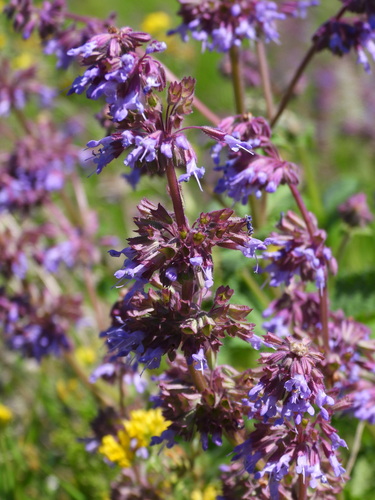
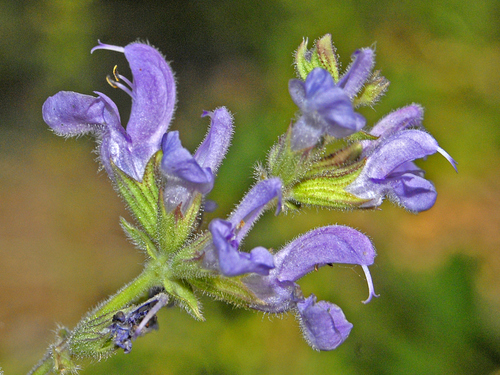
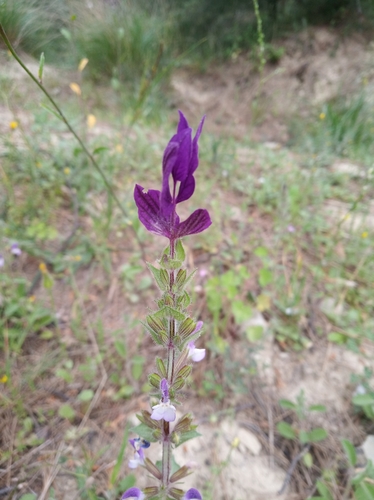
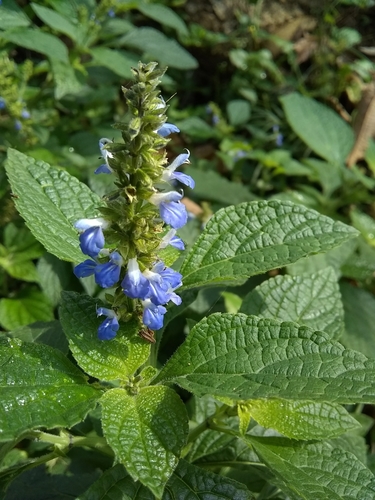
Pogogyne douglasii parviflora - (Benth.)J.T.Howell.
(Benth.)J.T.Howell.
Mesamint
gbif· cc-by-nc-nd
David Greenberger
gbif· cc-by-nc-nd
David Greenberger
gbif· cc-by-nc-nd
David Greenberger
Description
Pogogyne douglasii parviflora is a ANNUAL/PERENNIAL growing to 0.3 m (1ft). The species is hermaphrodite (has both male and female organs). Suitable for: light (sandy), medium (loamy) and heavy (clay) soils. Suitable pH: mildly acid, neutral and basic (mildly alkaline) soils. It can grow in semi-shade (light woodland) or no shade. It prefers moist soil.
Edible Uses
Tea. The leaves are used as a sweet and aromatic flavouring for wheat and barley piñole. The leaves are used as a tea substitute. Seed - raw or cooked. It is used as an aromatic ingredient of wheat and barley piñole. Highly prized by the native American Indians, it is gathered in surprisingly large quantities.
Medicinal Uses
Stomachic. The leaves have been used as a counter-irritant in the treatment of stomach and bowel pains.
Distribution
South-western N. America - California.
Where It Grows
Coming Soon
Cultivation
We have very little information on this species but believe that it can be grown as a half-hardy annual in Britain. It is likely to need a sunny position in a light or medium well-drained soil.
Propagation
Seed - sow early to mid spring in a warm greenhouse. When they are large enough to handle, prick the seedlings out into individual pots and plant them out into their permanent positions in late spring or early summer, after the last expected frosts.
Other Uses
Repellent. The leaves have been used against fleas. The report does not specify if this is as a repellent or insecticide.