Salvia verbenaca
L.
Wild English Clary
iNaturalist· cc-by
(c) Drepanostoma, some rights reserved (CC BY), uploaded by Drepanostoma
iNaturalist· cc-by-nc
(c) Daniel Gaona Carrilero, some rights reserved (CC BY-NC)
iNaturalist· cc-by
(c) Thomas Dreux, some rights reserved (CC BY)
Summary
Source: WikipediaSalvia verbenaca, also known as wild clary or wild sage, is native to the British Isles, the Mediterranean region in Southern Europe, North Africa, and Near East, and in the Caucasus. It can be found as an introduced species that has naturalized in many parts of the world, including the Eastern United States, California, Mexico, Argentina, Uruguay, Southern Africa, Tasmania, New Zealand and China. S. verbenaca is a tall perennial herb with hairy stems and branches that erectly sprawl out. Its leaves are basal and toothed that vary from 3 to 10 cm (1.2 to 3.9 in) long. It has soft purple to violet flowers in mid summer. It is in flower from June to September, and the seeds ripen from July to October. The flowers are bisexual and are pollinated by bees. Some are also cleistogamous and pollinate themselves. The plant is noted for attracting pollinators and wildlife. It prefers neutral and alkaline soils and needs full sun. This aromatic sage is used as a flavoring in foods and to make tea; the flowers can be added to salads. In China, where it has been known by the synonym Salvia weihaiensis, it grows along the seashore in Shandong province.
Description
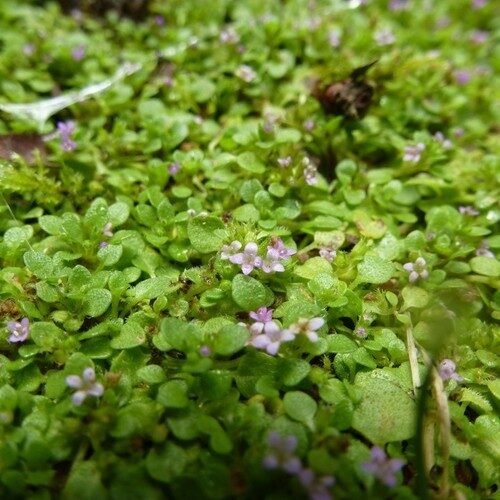
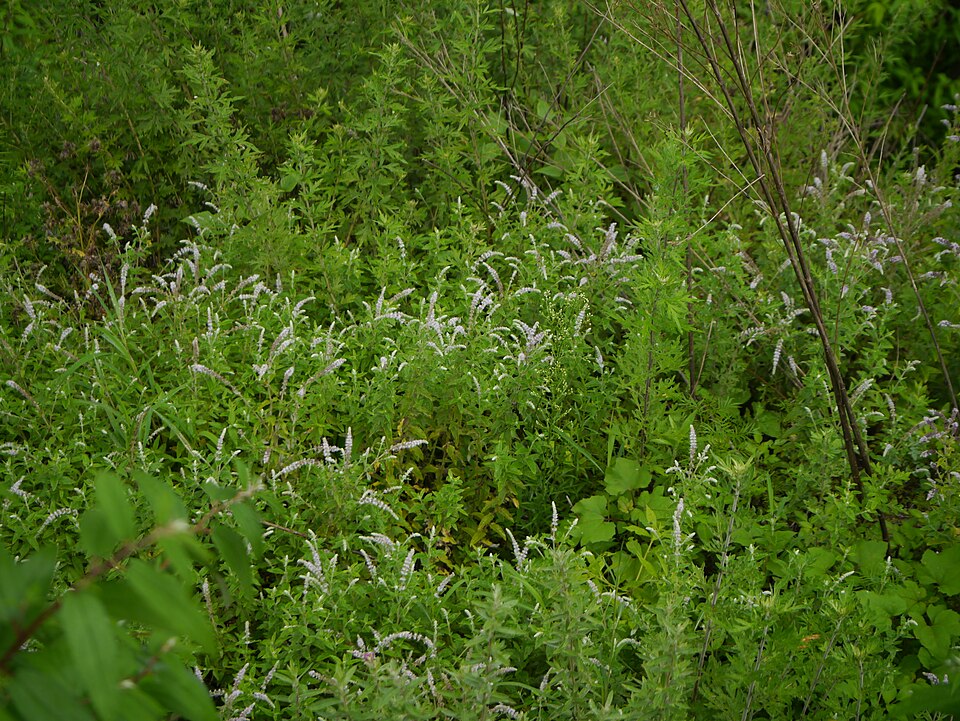
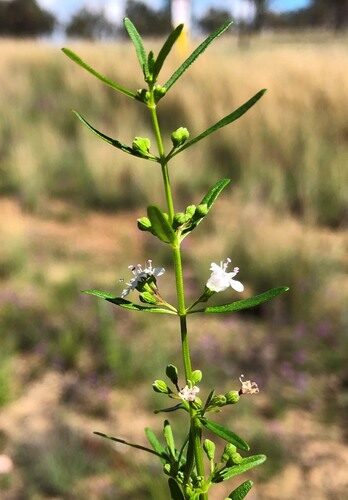
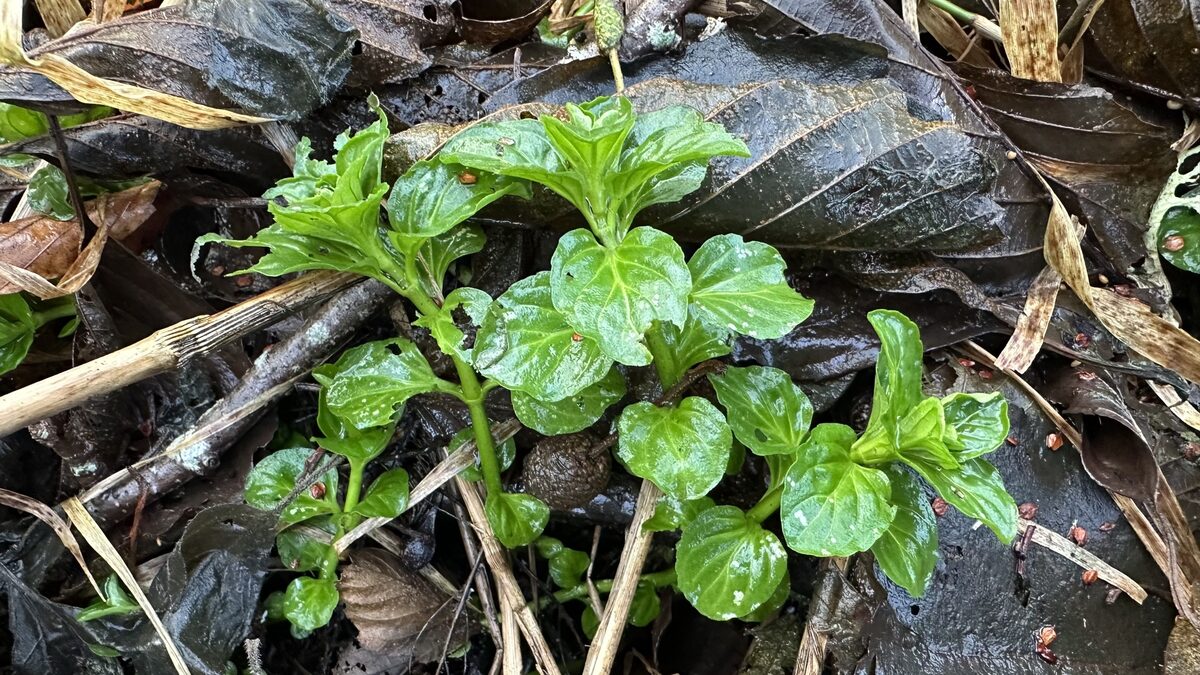
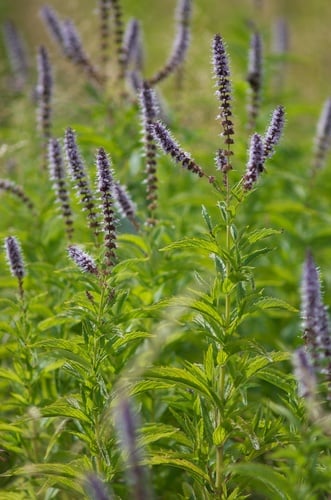
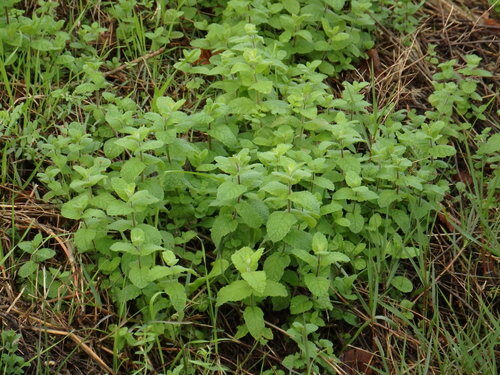
An erect herb. It keeps growing from year to year. It has a stout taproot. It grows 60-100 cm high. The leaves are oval and 10 cm long. The edges are wavy. The flowers are blue-violet. There are 6 almost in a ring. The outer ring of flower parts is tinged with purple and covered with hairs. The petals have an upper part with 2 lobes and a lower part with 3 lobes.
Edible Uses
The leaves can be eaten raw or cooked, most commonly as an aromatic flavouring in cooked dishes. Young leaves may also be fried or candied. A herbal tea made from the leaves is said to aid digestion. The flowers are eaten raw and used as a flavouring in salads.
Traditional Uses
The leaves are used for salads and soups. They are also fried, candied and cooked in omelettes. The flowers are used to flavour salads.
This uses section is brief — help expand it
Medicinal Uses
When soaked in water for a few minutes, the seed forms a thick mucilage that is effective at removing small dust particles from the eyes.
Distribution
It is a temperate plant. It will grow in most soils and positions. It is resistant to frost and sensitive to drought. In Argentina it grows from sea level to 2,500 m above sea level. It suits hardiness zone 5-10. Tasmania Herbarium.
Where It Grows
Africa, Algeria, Argentina, Australia, Balkans, Bosnia, Britain, Bulgaria, Chile, Croatia, Europe*, France, Greece, Israel, Italy, Libya, Mediterranean, Middle East, Morocco, Norfolk Island, North Africa, Portugal, South America, Spain, Syria, Tasmania, Turkey, Türkiye, Uruguay,
Cultivation
Requires a very well-drained light sandy soil in a sunny position. Prefers a rich soil. Plants can be killed by excessive winter wet. This species is well suited to the wild garden, growing well in the summer meadow. A good bee plant. Members of this genus are rarely if ever troubled by browsing deer.
Propagation
Sow seed in March or April in a greenhouse; germination typically occurs within 2 weeks. Prick seedlings into individual pots when large enough and plant out in early summer. In marginal climates, overwinter young plants under glass and plant out the following late spring. Division can also be carried out in spring.
Other Uses
None known
Other Information
It is sold in local markets.
Notes
There are about 900 Salvia species.
Synonyms
Also Known As
Bertonica, Elmakekigi, Gallocresta, Hormino silvestre, Khayyata, Khwiwita, Verbena Sage, Vervain, Wild Sage
References (23)
- Blamey, M and Grey-Wilson, C., 2005, Wild flowers of the Mediterranean. A & C Black London. p 402
- Bodkin, F., 1991, Encyclopedia Botanica. Cornstalk publishing, p 905
- Dashorst, G.R.M., and Jessop, J.P., 1998, Plants of the Adelaide Plains & Hills. Botanic Gardens of Adelaide and State Herbarium. p 126
- Ertug, F, Yenen Bitkiler. Resimli Türkiye Florası -I- Flora of Turkey - Ethnobotany supplement
- Facciola, S., 1998, Cornucopia 2: a Source Book of Edible Plants. Kampong Publications, p 136
Show all 23 references Hide references
- Flora of Australia Volume 49, Oceanic Islands 1, Australian Government Publishing Service, Canberra. (1994) p 320
- Hussey, B.M.J., Keighery, G.J., Cousens, R.D., Dodd, J., Lloyd, S.G., 1997, Western Weeds. A guide to the weeds of Western Australia. Plant Protection Society of Western Australia. p 170
- Irving, M., 2009, The Forager Handbook, A Guide to the Edible Plants of Britain. Ebury Press p 221
- Jardin, C., 1970, List of Foods Used In Africa, FAO Nutrition Information Document Series No 2.p 99
- Lamp, C & Collet F., 1989, Field Guide to Weeds in Australia. Inkata Press. p 253
- Lawton, B.P., 2002, Mints. A Family of Herbs and Ornamentals. Timber Press, Portland, Oregon. p 192
- Lazarides, M. & Hince, B., 1993, Handbook of Economic Plants of Australia, CSIRO. p 210
- Luczaj et al, 2013, Wild vegetable mixes sold in the markets of Dalmatia (southern Croatia). Journal of Ethnobiology and Ethnomedicine. 8:2
- Luczaj, L. et al, 2014, Wild Food Plants of Dalmatia (Croatia). in A. Pieroni, C. L. Quave (eds.), Ethnobotany and Biocultural Diversities in the Balkans, p 143
- Malezas Comestibles del Cono Sur, INTA, 2009, Buernos Aires
- Martin, F.W. & Ruberte, R.M., 1979, Edible Leaves of the Tropics. Antillian College Press, Mayaguez, Puerto Rico. p 196
- Morley, B.D., & Toelken, H.R., (Eds), 1983, Flowering Plants in Australia. Rigby. p 292
- Ozbucak, T. B. et al, 2006, The Contribution of Wild Edible Plants to Human Nutrition in the Black Sea Region of Turkey. Ethnobotanical Leaflets 10: 98-103
- Paczkowska, G. & Chapman, A.R., 2000, The Western Australian Flora. A Descriptive Catalogue. Western Australian Herbarium. p 276
- Pieroni, A., 1999, Gathered wild food plants in the Upper Valley of the Serchio River (Garfagnana), Central Italy. Economic Botany 53(3) pp 327-341
- Plants for a Future database, The Field, Penpol, Lostwithiel, Cornwall, PL22 0NG, UK. http://www.scs.leeds.ac.uk/pfaf/
- Sp. pl. 1:25. 1753
- Tasmanian Herbarium Vascular Plants list p 36