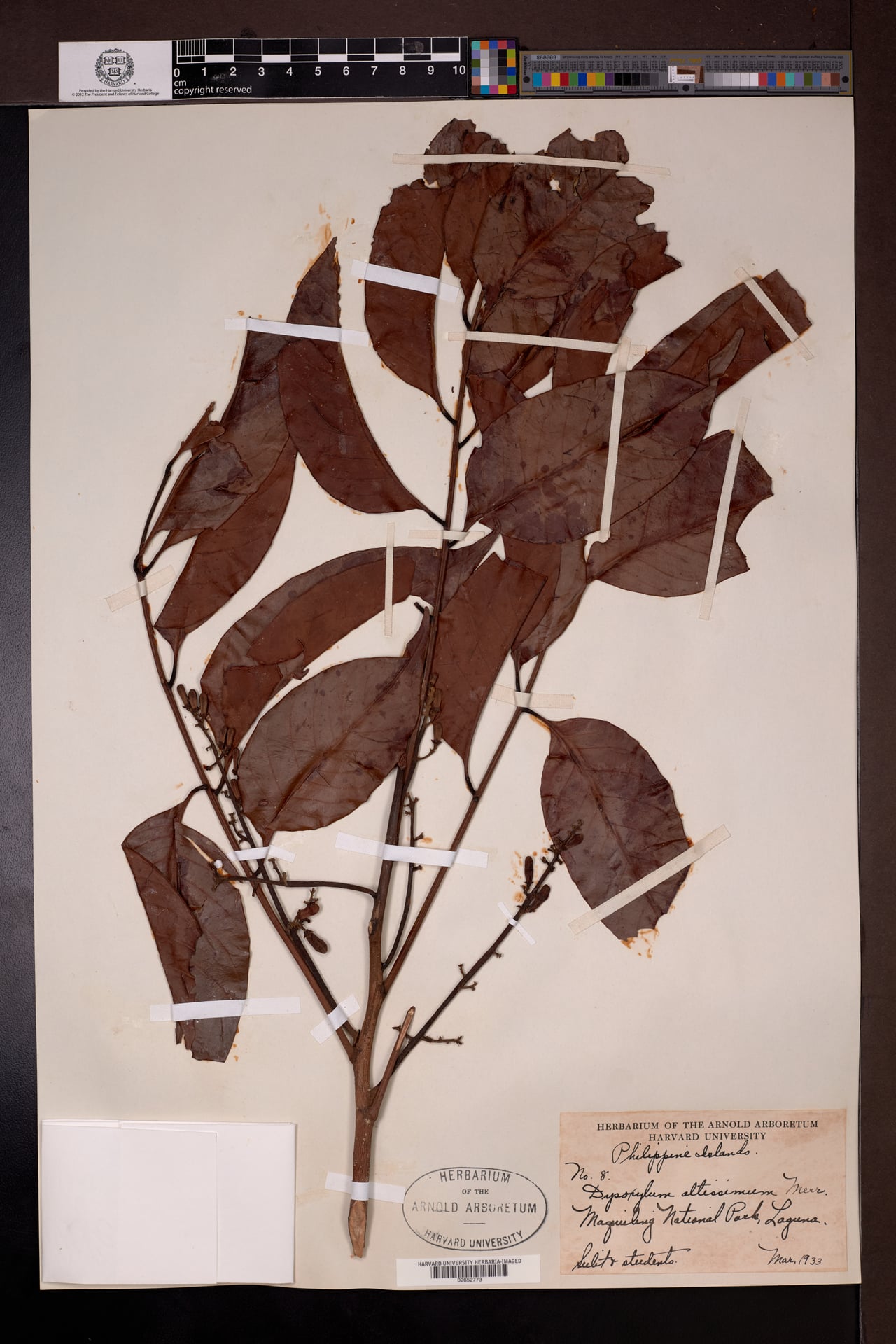
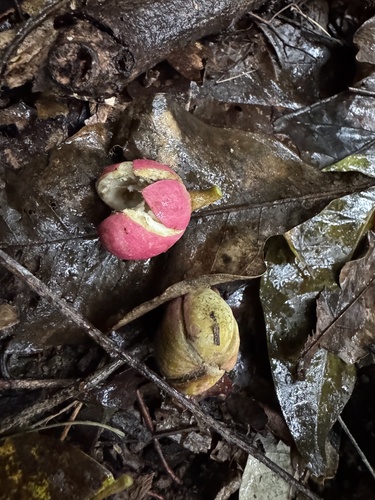
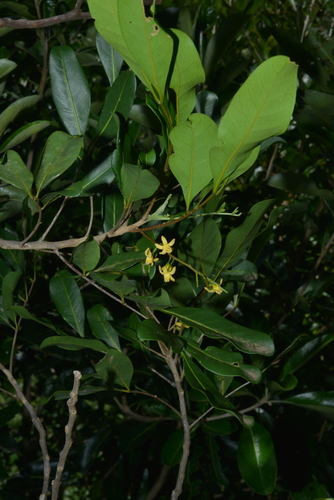
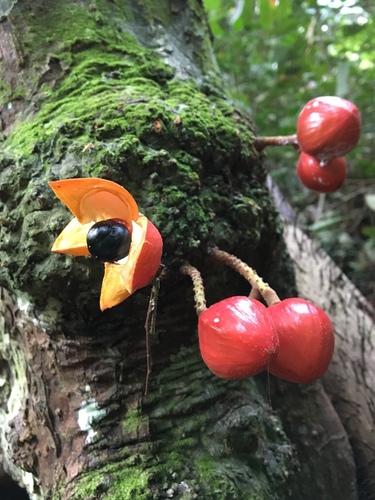
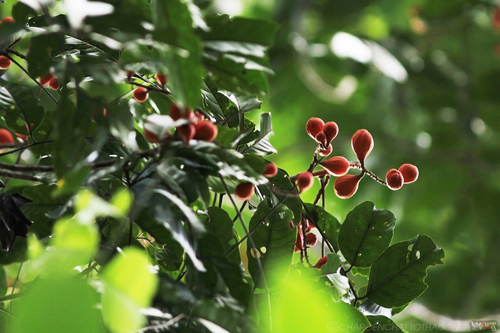
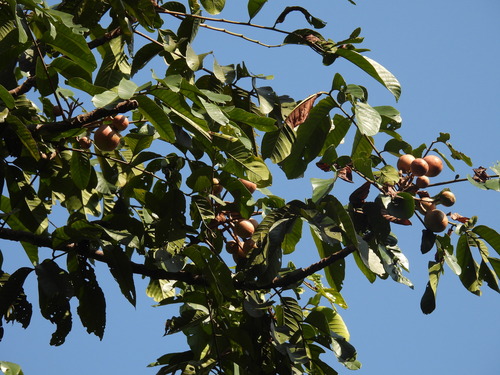
Khaya senegalensis - (Desr.) A.Juss.
(Desr.) A.Juss.
Dryzone Mahogany
gbif· cc-by-nc
Sefi George
gbif· cc-by-nc
Stephen Fricker
gbif· cc-by-nc
bnhis-lowliongleong
Description
Khaya senegalensis is a deciduous Tree growing to 25 m (82ft) by 20 m (65ft) at a fast rate. See above for USDA hardiness. It is hardy to UK zone 10. Suitable for: light (sandy), medium (loamy) and heavy (clay) soils. Suitable pH: mildly acid and neutral soils and can grow in very acid soils. It can grow in semi-shade (light woodland) or no shade. It prefers moist or wet soil and can tolerate drought.
Edible Uses
Oil. The seeds have an oil content of 67% and are rich in oleic acid (66%). The oil is used in West Africa for cooking.
Medicinal Uses
Antidermatosic Aphrodisiac Depurative Disinfectant Emmenagogue Febrifuge Laxative Leprosy Vermifuge. The very bitter bark has a considerable reputation in its natural range as a fever remedy. It is also used as a laxative, vermifuge, taenicide, depurative and for treating syphilis. The bark extract is used for treating jaundice, dermatoses, scorpion bite, allergies, infection of the gums, hookworm, bleeding wounds (disinfectant). The crushed bark and seeds are regarded as an emmenagogue. The seeds and leaves are used for treating fevers and headache. The roots are used as a treatment against sterility, for the treatment of mental illness, against syphilis, leprosy and as an aphrodisiac.
Known Hazards
Used in Cote d’Ivoire as an ingredient in arrow poison. Bark scales are sometimes used as a fish poison.
Distribution
Tropical Africa - Senegal to Sudan and Uganda.
Where It Grows
AFRICA: Sudan, Chad, Uganda, Central African Republic, Benin, Côte D‘Ivoire, Guinea, Gambia, Guinea-Bissau, Mali, Niger, Nigeria, Senegal, Sierra Leone, Togo
Cultivation
A plant of the moist tropics, where it is found at elevations up to 1,800 metres. It grows best in areas where annual daytime temperatures are within the range 29 - 38°c, but can tolerate 13 - 42°c. It prefers a mean annual rainfall in the range 800 - 1,300mm, but tolerates 650 - 1,500mm. It grows wild in areas with a dry season of 4 - 7 months. Plants are moderately shade tolerant, especially when young, though older trees prefer sunny positions. Grows best in a deep, fertile, moist soil. Very resistant to flooding, the tree can be considered for planting on swampy soils. Prefers a pH in the range 5 - 6, tolerating 4.5 - 7.5. Established plants are very drought resistant. Young trees have a fast rate of growth. During the first year, the seedling develops a strong, deep taproot, which makes it the most drought hardy of all the members of this genus. Except where selectively removed by logging, dry-zone mahogany remains a dominant species in most of its range. Successful plantations of dry-zone mahogany in other parts of the world have generally been in areas with short dry seasons and high rainfall. Trees begin to bear seed when 20 - 25 years old. The tree coppices well. Natural regeneration by seed is poor, though the tree produces suckers and can regrow from these. Although older trees are resistant to fire, seedlings are fairly susceptible.
Propagation
Seed - it can remain viable for a year or more, but germination is much better from seed sown fresh, when it can often be nearly 100%. Sowing in lightly shaded nursery seedbeds has been shown to give better results than sowing in containers. Germination can begin in about 3 weeks. Seedlings are potted up into individual containers when they are about 5cm tall and are then grown on for about 12 months until they are 30cm tall and ready for planting out. The tree has been successfully planted as bare rooted, but use of containerized seedlings yields better results. Seed capsules are clipped from trees when the capsules begin to split. The capsules are sun dried until they split and then shelled by hand. The seed is further dried and then stored in sealed containers in a refrigerator, because viability is lost quickly at ambient air temperatures
Other Uses
Charcoal Disinfectant Fuel Oil Repellent Tannin Wood. Other Uses The presence of oleoresin in the vessels of Khaya species accounts for the durability of the timber and its resistance to insect and fungal attack. The bark is used in tanning. Young twigs are used as toothbrushes, whilst the peeled stem or root are used as chew-sticks to maintain oral hygeine. The seeds have an oil content of 67% and are rich in oleic acid (66%). Wood ashes are used for conserving millet seed. The heartwood an attractive dark red-brown, often with a purple tint; it is usually, but not always, clearly demarcated from the 3 - 8cm wide band of pinkish-tan sapwood. The texture is medium; the grain interlocked; the wood lustrous. The wood is fairly hard to hard; moderately heavy; moderately durable, being resistant to the attacts of dry wood borers, moderately resistant to fungi, but susceptible to termites. The wood seasons normally, with only a slight risk of checking or distortion when in the presence of highly interlocked grain and tension wood; once dried it is stable in service. The timber works well with nornal tools, though these need to be sharp since there is a tendency to be woolly in cross grain; nailing and screwing are good, though pre-boring is recommended; gluing is correct. The wood is favoured for good quality furniture, high-class joinery, trim and boat building. The wood is also used locally for railroad ties, flooring, turnery and veneer. Because of its decorative appearance, the wood is a very popular timber. The wood is used in West Africa for pulp. Only limited quantities are available for fuel wood, and trees of larger dimensions are undesirable because of difficulties with splitting and crosscutting. Hence, even if fuel wood is in short supply, larger-diameter sections are not utilized. The gross energy value of the wood is 19 990 kJ/kg.
Synonyms
Also Known As
Dryzone Mahogany, Acajou, Acajou-du-Senegal, Bentia, Bentiene, Betenhete, Betone, Biaierre, Bissilao, Bissilon, Bussilo, Cae, Caicedrat, Djalo, Embale, Fame, Iacume, Kuntunkuri, Tagmi, Taminii, Unchomro, Utime