Corymbia intermedia
(R. Baker) K. D. Hill & L. A. S. Johnson
Pink Bloodwood
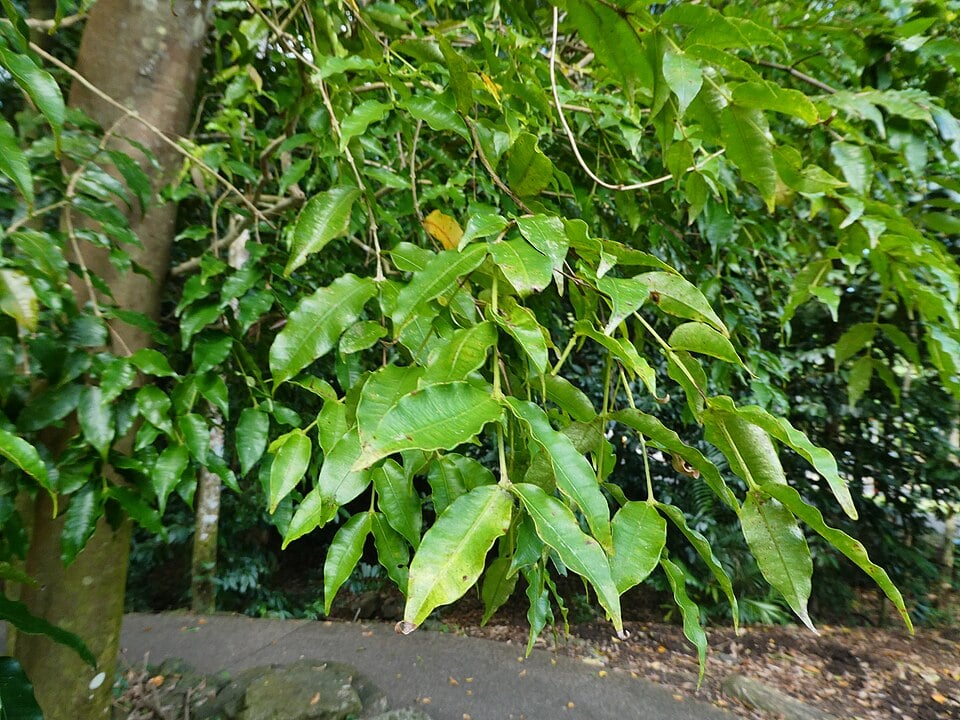
iNaturalist· cc-by
(c) Tatiana Gerus, some rights reserved (CC BY)
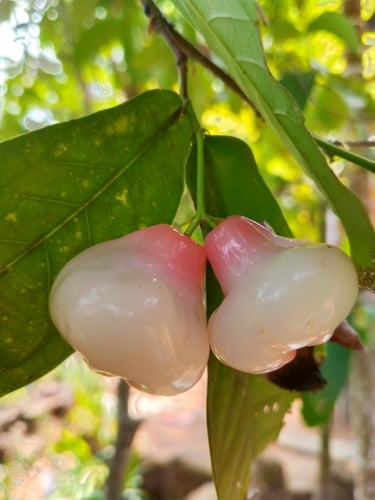
iNaturalist· cc-by-nc
(c) Russell Cumming, some rights reserved (CC BY-NC), uploaded by Russell Cumming
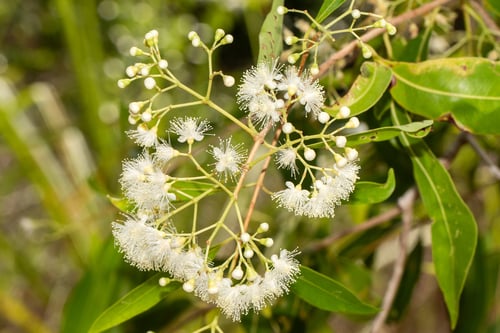
iNaturalist· cc-by-nc
(c) Martin Bennett, some rights reserved (CC BY-NC), uploaded by Martin Bennett
Summary
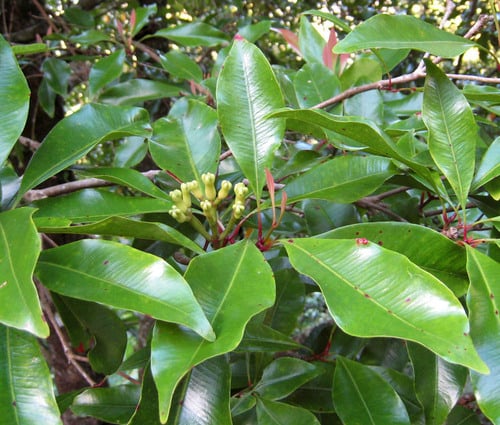
Source: WikipediaCorymbia intermedia, commonly known as pink bloodwood, is a species of medium to tall tree that is endemic to north-eastern Australia. It has rough, tessellated bark on the trunk and branches, flower buds in groups of seven, white flowers and oval to barrel-shaped fruit.
Description
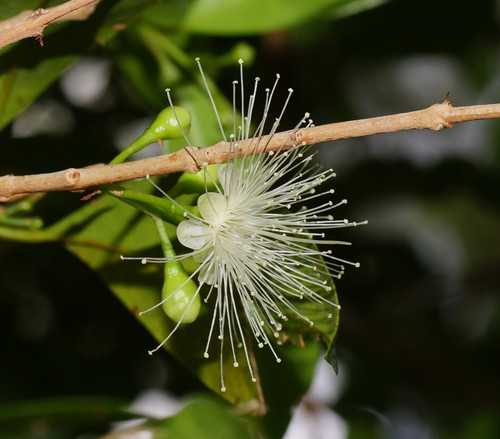
A medium to tall tree. It grows 15-30 m high. It spreads 10-20 m wide. The bark is grey-brown and cracked into squares. The leaves are sword shaped and glossy. The juvenile leaves are 4-18 cm long by 2-6 cm wide. The adult leaves are 8-15 cm long by 2-3 cm wide. The flowers are cream and occur in masses.
Edible Uses
The flowers produce copious quantities of a sweet nectar. This can be sucked direct from the flowers as a snack, or can be harvested and mixed with water to make a sweet drink.
Traditional Uses
The nectar can be sucked from the flowers. It can also be mixed with water to make a drink.
This uses section is brief — help expand it
Medicinal Uses
Kino resin, obtained from the trunk, is very astringent. Diluted, it can be taken internally as an effective treatment for dysentery, working because it is not absorbed at all from the stomach and only very slowly from the intestine, and is thus able to directly treat the lower part of the intestine. It can be used as a gargle and mouthwash to treat relaxed throat, loose teeth. Applied externally as a wash, it is an effective styptic and can used to treat cuts and skin problems.
Distribution
It grows in warm temperate regions. It can grow in the tropics and subtropics. In tropical Queensland it grows from sea level to 1100 m altitude. It needs well drained soil. It can grow in full sun or light shade.
Where It Grows
Australia*,
Cultivation
Corymbia intermedia is a plant of the moist tropics and subtropics of eastern Australia, where it is found at elevations up to 1,000 metres. It grows best in areas where annual daytime temperatures are within the range 18 - 28°c, but can tolerate 8 - 38°c. It experiences some mild frosts in parts of its range. It prefers a mean annual rainfall in the range 1,000 - 2,000mm, but tolerates 750 - 2,200mm. Most rainfall within its native range falls in the summer season. Grows best in a sunny position. Succeeds in most soils so long as they are well drained. Prefers a pH in the range 5 - 6, tolerating 4.5 - 6.5. The plant develops a lignotuber - this is a woody tuber that starts to develop near the base of seedlings and can become massive in the mature plants of some species. It possesses embedded vegetative buds, allowing the plant to regenerate following crown destruction, for example by fire.
Propagation
Seed - surface sow in a seedtray in a sunny position and do not allow the compost to dry out. Species that come from high altitudes appreciate 6 - 8 weeks cold stratification at 2°c. Pot up the seedlings into individual pots as soon as the second set of seed leaves has developed, if left longer than this they might not move well. Seedlings are planted out in the field when they reach a height of about 25 cm. This should coincide with the onset of the rainy season in tropical countries. The seed has a long viability.
Other Uses
An essential oil is obtained from the leaves. Total quantity of the oil, and its composition, can vary widely from plant to plant, but we have reports that the fresh leaves contain around 0.1 - 0.5% essential oil. The main components include alpha and beta pinene (around 67% in total), eudesmol. We have no details on quantities, bu a kino resin is found the trunk. Kino resins are rich in tannins and are very astringent. Soluble in water, they can be used medicinally; in tanning; as well as for preserving and dyeing natural fibres. When boiled in an iron pot they produce a thick, dark liquid that can be used as an ink. The resin oozes naturally from wounds in the trunk and can be tapped by making incisions in the bark. At first it is a thick liquid, but soon hardens upon exposure to the air and sun, typically drying to an amber-like material that consists of dark red angular fragments, rarely larger than a pea. Freshly exuded kino is more effective than kino that has been on the tree for a long while, since the soluble portion can be more or less washed out and the action of the sun can alter their chemical composition. The heartwood is deep pink to dark red-brown. The wood is hard, strong and very durable, but contains gum veins. It is not often sawn, but is used in the round for fencing, mining timber and heavy constructions such as bridge work. The flowers are a good source of nectar and pollen for bees.
Notes
There are a 110 Corymbia species mostly originally in Australia.
Synonyms
References (11)
- Bodkin, F., 1991, Encyclopedia Botanica. Cornstalk publishing, p 429
- Cooper, W. and Cooper, W., 2004, Fruits of the Australian Tropical Rainforest. Nokomis Editions, Victoria, Australia. p 343
- Cribb, A.B. & J.W., 1976, Wild Food in Australia, Fontana. p 182
- Elliot, W.R., & Jones, D.L., 1992, Encyclopedia of Australian Plants suitable for cultivation. Vol 4. Lothian. p 117
- Facciola, S., 1998, Cornucopia 2: a Source Book of Edible Plants. Kampong Publications, p 141 (As Eucalyptus intermedia)
Show all 11 references Hide references
- Hibbert, M., 2002, The Aussie Plant Finder 2002, Florilegium. p 75
- Jackes, B.R., 2001, Plants of the Tropics. Rainforest to Heath. An Identification Guide. James Cook University. p 69
- Lazarides, M. & Hince, B., 1993, Handbook of Economic Plants of Australia, CSIRO. p 102
- Molyneux, B. and Forrester, S., 1997, The Austraflora A-Z of Australian Plants. Reed. p 86
- Telopea 6:247. 1995
- Townsend, K., 1994, Across the Top. Gardening with Australian Plants in the tropics. Society for Growing Australian Plants, Townsville Branch Inc. p 192