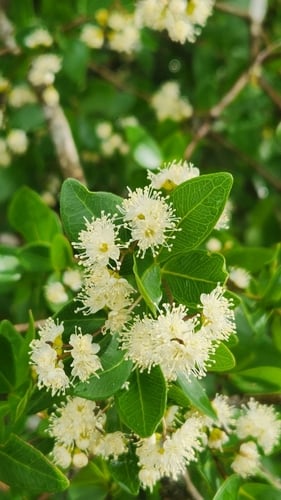
Syzygium hemisphericum
(Wight) Alston
Hemispheric rose-apple
iNaturalist· cc-by
(c) Aparna Krishnan, some rights reserved (CC BY), uploaded by Aparna Krishnan
iNaturalist· cc-by-sa
(c) Dinesh Valke, some rights reserved (CC BY-SA)
iNaturalist· cc-by
(c) Siddarth Machado, some rights reserved (CC BY), uploaded by Siddarth Machado
Summary
Source: WikipediaSyzygium hemisphericum is a flowering plant species in the family Myrtaceae, commonly called the hemispheric rose-apple. It is also known as teal-naval, vellanara, vellai-naval, goljamb, vennaval, redi jambul, makki nerale, payanjaval, vennjara, vellanjara, ven-nyara, venjara, tholnjaval, venyara and kaadu pannerale. This plant grows in abundance in the Western Ghats of India. It is also found in South and Central Maharashtra, Sahyadris, and Sri Lanka. It prefers evergreen and shola forests.
Description
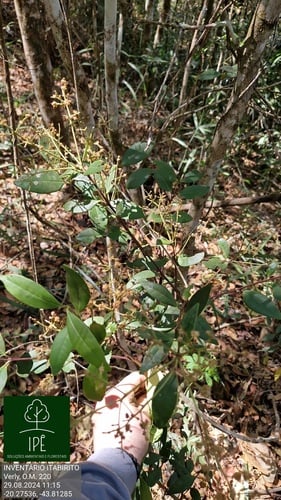
A tree. It grows 20 m tall. The bark is smooth and greyish-brown. The leaves are simple and opposite. The leaf blade is 8-19 cm long by 3-8 cm wide. The flowers are large and white. They are in groups at the ends of the branches. The fruit is a berry 2-3 cm across. They are flattened and purple with a crown on top.
Edible Uses
The fruit are eaten fresh.
Traditional Uses
The fruit are eaten.
This uses section is brief — help expand it
Medicinal Uses
It is used in folk medicine.
Distribution
A tropical plant. It grows in evergreen forests up to 1,400 m above sea level.
Where It Grows
Asia, India, Sri Lanka,
Synonyms
Also Known As
Bana nerale, Bennerale, Pannerale, Payanjaval, Teal-naval, Tholnjaval, Vellainaval, Vellai nyaral, Vellanjara, Vennjara
References (3)
- Ambasta, S.P. (Ed.), 2000, The Useful Plants of India. CSIR India. p 614
- Chandrashekara, U. M., 2009, Tree species yielding edible fruit in the coffee-based homegardens of Kerala, India: their diversity, uses and management. Food Sec. 1:361-370
- Jose, D. T. & Sasidharan, N., 2016, Checklist of wild edible plants of Aralam Wildlife sanctuary, Kerala, India. South Indian Journal Of Biological Sciences 2016; 2(1); 141‐144