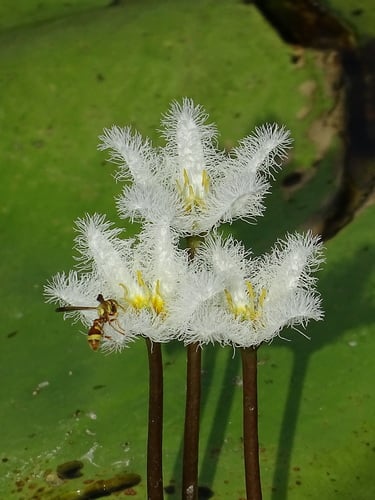
Nymphoides peltata - (Gmelin.)Kuntze.
(Gmelin.)Kuntze.
Water Fringe, Yellow floatingheart
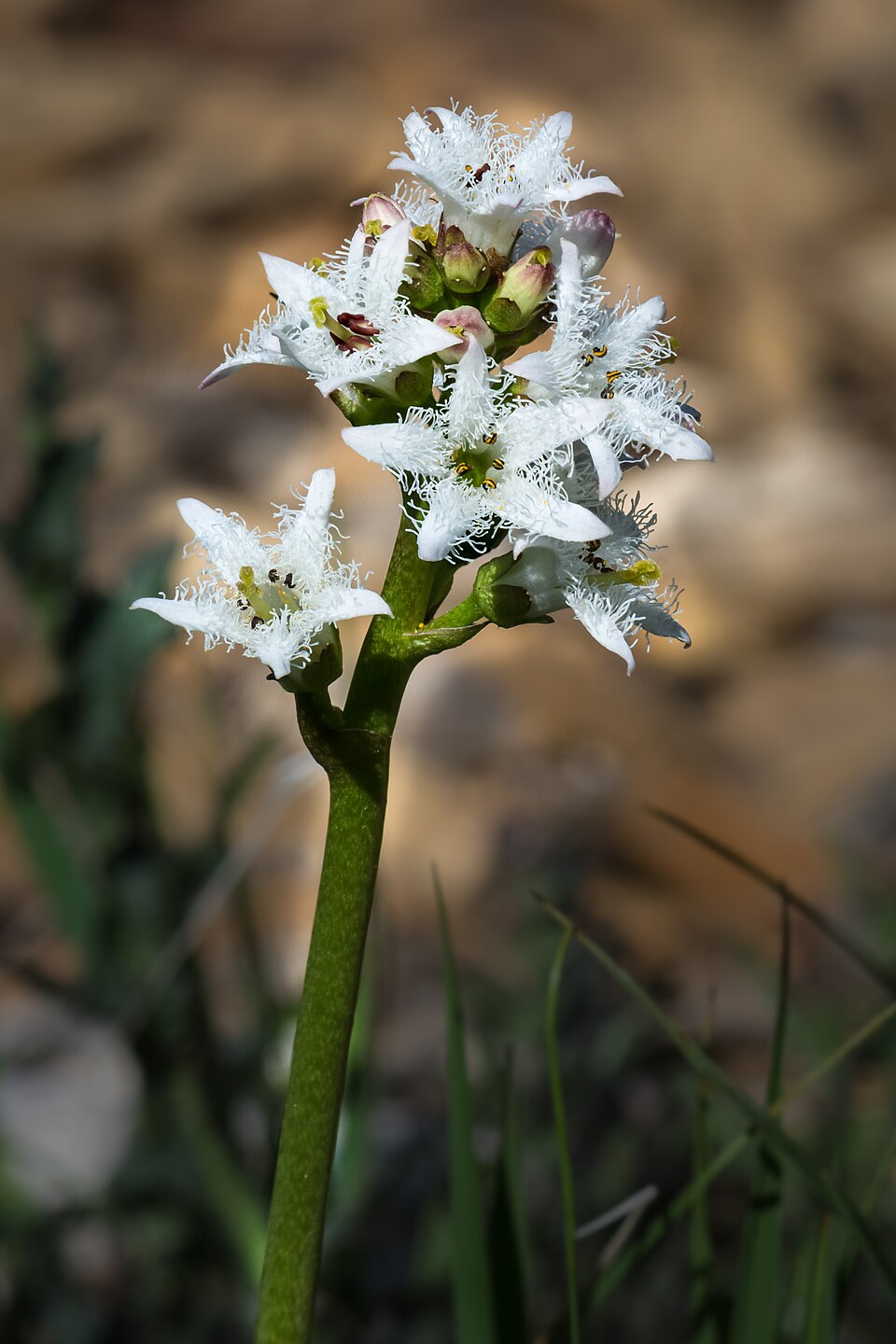
gbif· cc-by-nc
Hugo Sun
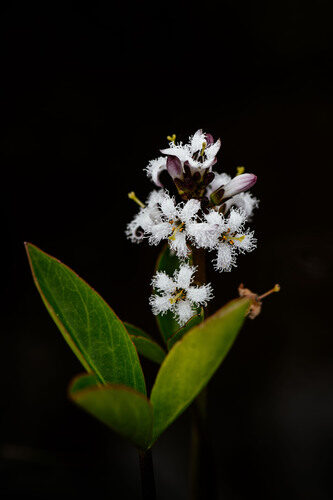
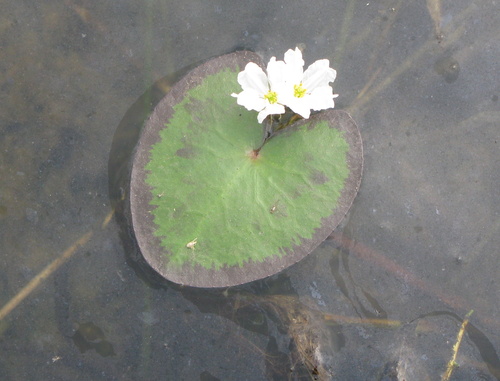
gbif· cc-by-nc-nd
Han Driessen
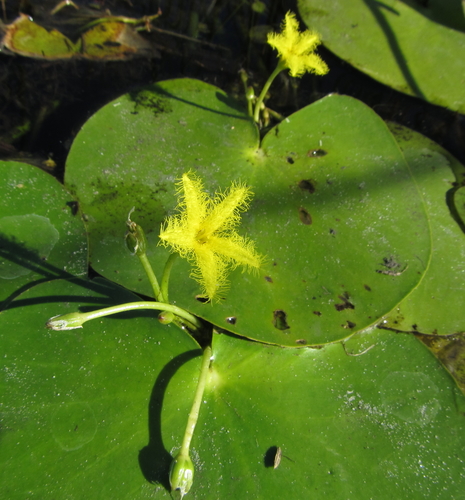
gbif· cc-by-nc
Mervyn Lotter
Description
Nymphoides peltata is a PERENNIAL. See above for USDA hardiness. It is hardy to UK zone 6. It is in flower from July to September, and the seeds ripen from August to October. The species is hermaphrodite (has both male and female organs) and is pollinated by Bees, Lepidoptera (Moths & Butterflies). Suitable for: light (sandy), medium (loamy) and heavy (clay) soils. Suitable pH: neutral and basic (mildly alkaline) soils. It cannot grow in the shade. It can grow in water.
Edible Uses
Leaves and leaf stems - cooked as a potherb. The interior of the stem is eaten, it is highly esteemed. The leaves are not very palatable. Flower buds - cooked as a potherb. Seed. No further details are given.
Medicinal Uses
Anthelmintic Diuretic Febrifuge Galactogogue Skin. Anthelmintic, diuretic, febrifuge, galactogogue, skin. The fresh leaves are used in the treatment of periodic headaches. The plant is diuretic, febrifuge and refrigerant. It is bruised and used in the treatment of burns, fevers, ulcers, snake bites and swellings. The plant contains rutin, but no details are given of the quantity.
Distribution
Europe, including Britain, from Sweden south and east to Spain, N. and W. Asia to Japan.
Where It Grows
TEMPERATE ASIA: Iran, Azerbaijan, Georgia, Russian Federation-Western Siberia (Western Siberia), Russian Federation-Eastern Siberia (Eastern Siberia), Mongolia, Russian Federation (Habarovskij kraj, Primorye, Amur), China, Korea, Japan TROPICAL ASIA: India (Jammu and Kashmir) EUROPE: United Kingdom, Sweden, Austria, Belgium, Czech Republic, Germany, Hungary, Netherlands, Poland, Slovakia, Russian Federation (European part), Belarus, Estonia, Lithuania, Latvia, Moldova, Ukraine, Albania, Bulgaria, Greece, Croatia, Italy (incl. Sardinia), Romania, Serbia, Slovenia, Turkey (Edirne, Istanbul), Spain, France, Portugal
Cultivation
A water plant growing readily in shallow water in a rich loam. It can be very invasive in a rich soil. Prefers a sunny position. Dislikes acid conditions. The flowers have a delicate, almond-like perfume.
Propagation
Seed - sow as soon as it is ripe in a greenhouse in pots submerged under 25mm of water. Prick out into individual pots as soon as the first true leaf appears and grow them on in water in a greenhouse for at least two years before planting them out in late spring. The seed is collected by wrapping the developing seed head in a muslin bag to avoid the seed being lost. Harvest it 10 days after it sinks below the soil surface or as soon as it reappears. Division in May. Each portion must have at least one eye. Submerge in pots in shallow water until established.