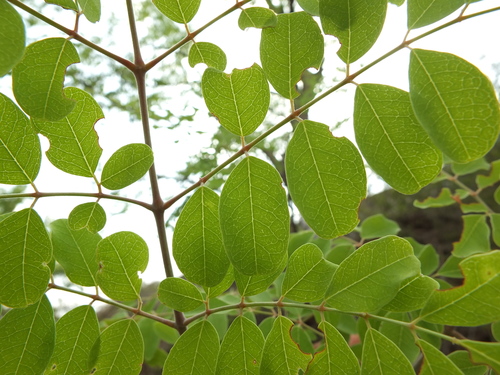
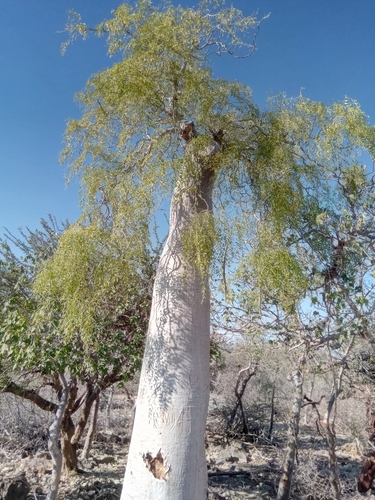
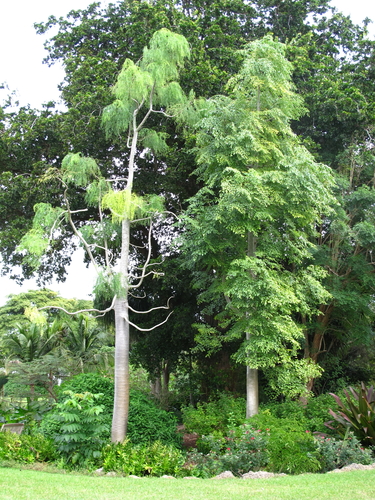
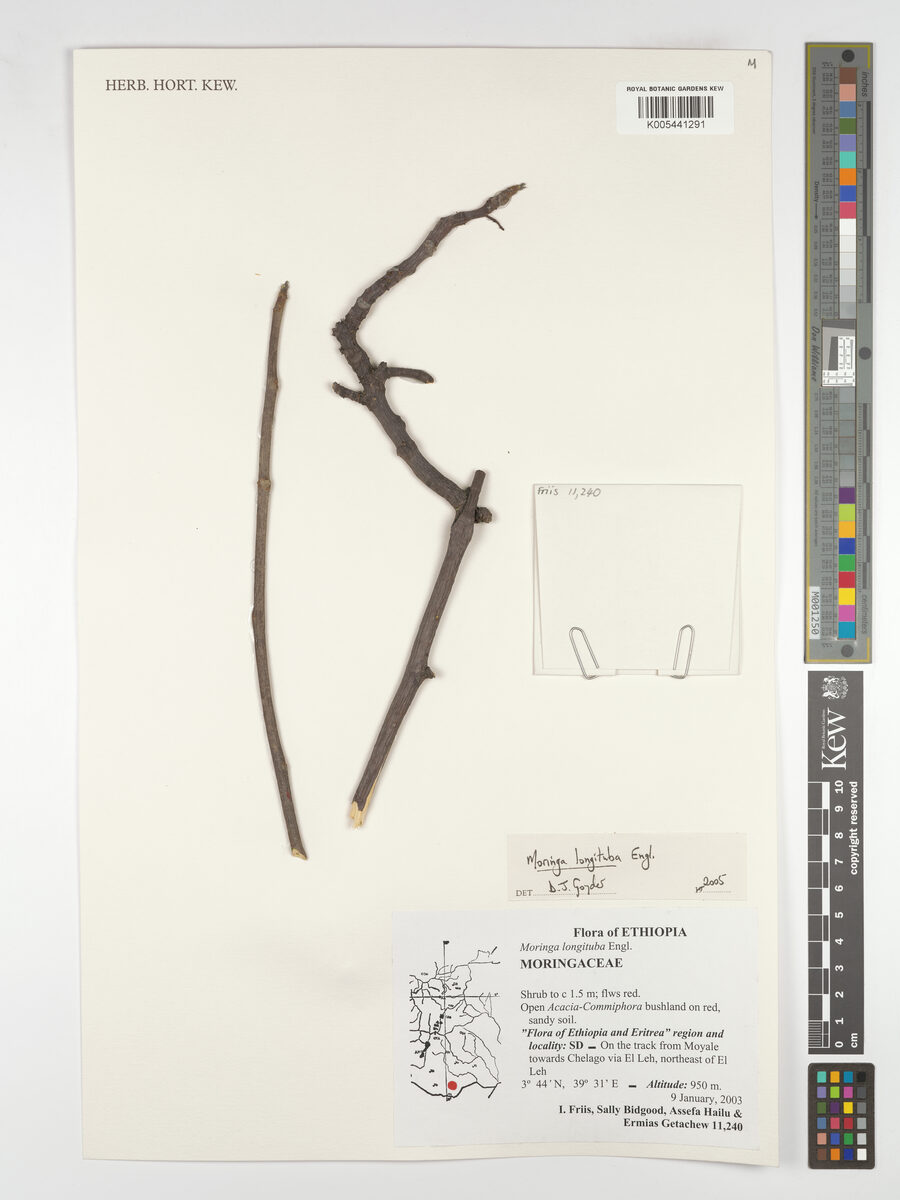
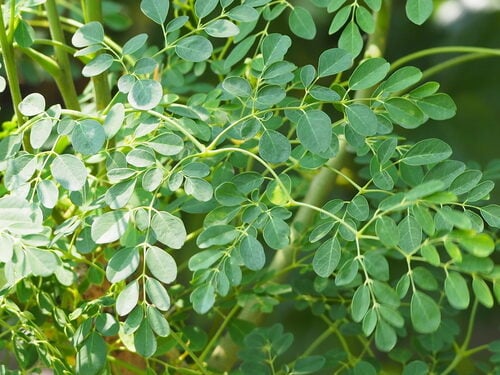
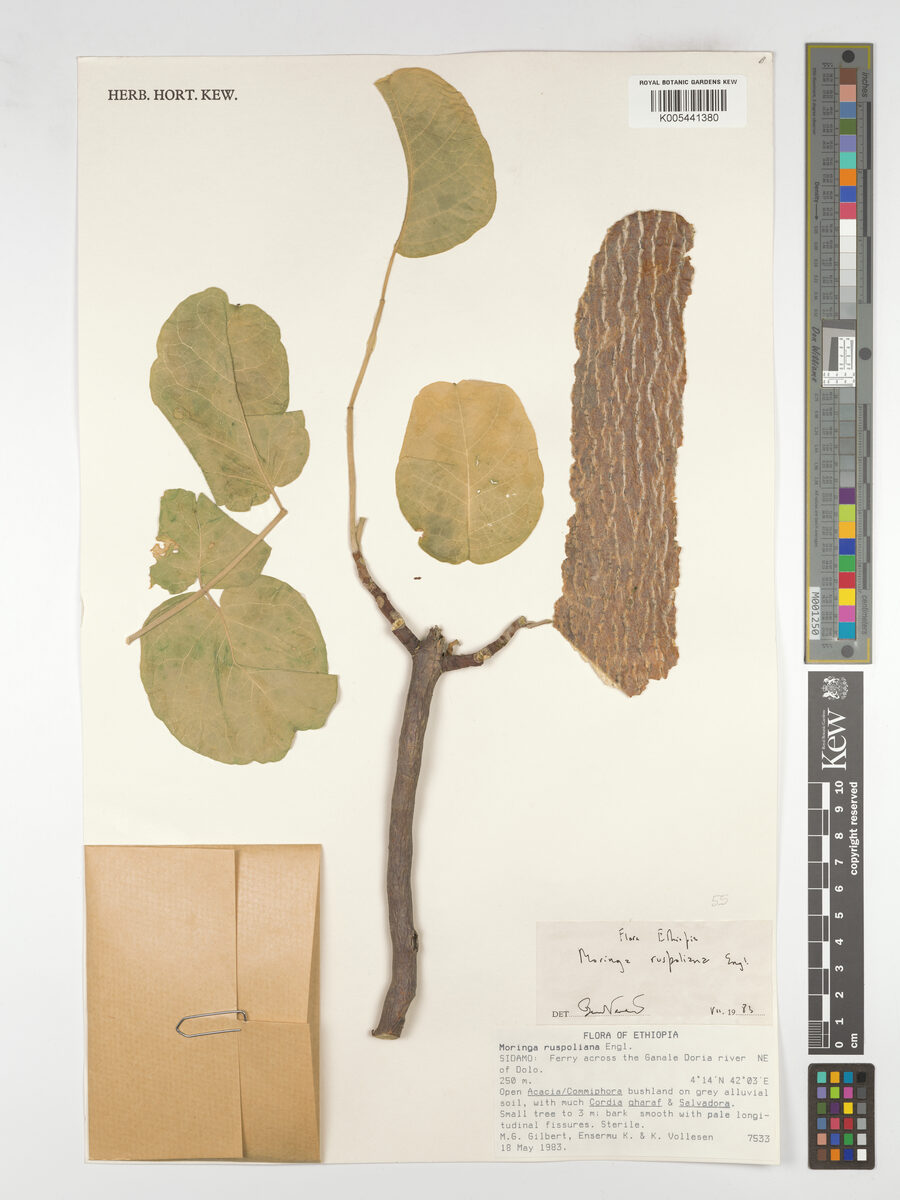
Moringa peregrina - (Forssk.) Fiori
(Forssk.) Fiori
Moringa
gbif· cc-by-nc
jafarayappally
gbif· cc-by-nc
jafarayappally
gbif· cc-by-nc
jafarayappally
Description
Moringa peregrina is a deciduous Tree growing to 8 m (26ft) by 6 m (19ft) at a medium rate. See above for USDA hardiness. It is hardy to UK zone 10. The flowers are pollinated by Bees. The plant is self-fertile. It is noted for attracting wildlife. Suitable for: light (sandy), medium (loamy) and heavy (clay) soils, prefers well-drained soil and can grow in nutritionally poor soil. Suitable pH: mildly acid, neutral and basic (mildly alkaline) soils. It cannot grow in the shade. It prefers dry or moist soil and can tolerate drought. The plant can tolerate maritime exposure.
Edible Uses
An oil, known as 'ben oil', is obtained from the seed. The oil is used for cooking. The seed contains about 50% oil. It is similar to the oil extracted from the seed of Moringa oleifera. The approximate fatty acid composition of the oil is: palmitic acid 9%, stearic acid 4%, arachidic acid 2%, behenic acid 2%, oleic acid 71%, linoleic acid 1%, and gadoleicacid 2%. The tuber of the young plant is eaten in Yemen and Oman.
Medicinal Uses
The seeds are used in medicine in the Middle East and Sudan. The oil obtained from the seed is used to treat abdominal pain.
Distribution
Northeast tropical Africa - southern Egypt, Sudan, Eritrea, Djibouti, Ethiopia, Somalia.
Where It Grows
TEMPERATE ASIA: Israel, Jordan, Oman, Saudi Arabia, Syria, Yemen,United Arab Emirates. AFRICA: Egypt, Eritrea, Ethiopia (north), Sudan (north), Somalia.
Cultivation
The plant will often only produce herbaceous growth when young, especially in dry years, dying back to ground level in the dry season. Once the tuber is large enough, the growth above ground will become woody and persist. The first fruits are produced about 3 years after planting. The plant grows quickly from both seeds and cuttings; 3 - 4 metres of annual increase in height is not unusual when adequate moisture is available. Pollarding or pruning following harvesting is recommended to promote branching. This increases pod production and facilitates harvesting as the tree is kept at a manageable height. A single tree may produce up to 1,000 seedpods per year. Leaves can be harvested throughout the year, while pods are typically harvested in late Summer to early Autumn. Moringa flowers in Spring to early Summer. Moringa is a fast-growing tree, often reaching maturity in about 6-8 months under optimal conditions.
Propagation
Seed - best sown in a nursery seedbed in light shade. Transplanting 5-month-old seedlings gave good survival rates. Cuttings - branches 100 - 150cm long have been used as cuttings and these have performed well.
Other Uses
Cosmetic Filter Oil Wood Agroforestry uses: Moringa is often used as a multi-purpose tree in agroforestry systems. It serves as a fast-growing shade tree, provides green manure, and can improve soil fertility. A good bee plant. Other Uses: An oil obtained from the seed is used in cosmetics. Traditional methods to extract the oil, as used by the Bedouin, are very simple but yield little oil. The seeds are crushed, water is added and the seeds are boiled. The mixture is left overnight to allow the oil to float to the surface, from where it is skimmed off. In a more advanced method the seeds are crushed, some water is added and the mixture is gently heated for 10 - 15 minutes. The oil is then extracted using a screw press or hydraulic press. The seeds are used as coagulant to purify water. The water purifying properties of the seed are caused by a protein which coagulates dispersed particles. The seeds are ground to a paste, the paste is put in a bottle and water is added. The mixture is shaken for 5 minutes to activate the protein. The mixture is then sieved and the solution is added to turbid water. After slowly stirring for 20 minutes, fine particles including bacteria coagulate, sink and settle on the bottom. After one hour clear water can be drawn off. The wood is very succulent and therefore not used for construction. The wood is collected for fuel in the southern Sinai, but it has now become scarce.
Synonyms
Also Known As
Moringa, Miracle tree, Ben tree, wispy-needled yasar tree, wild drum-stick tree, Bentree.