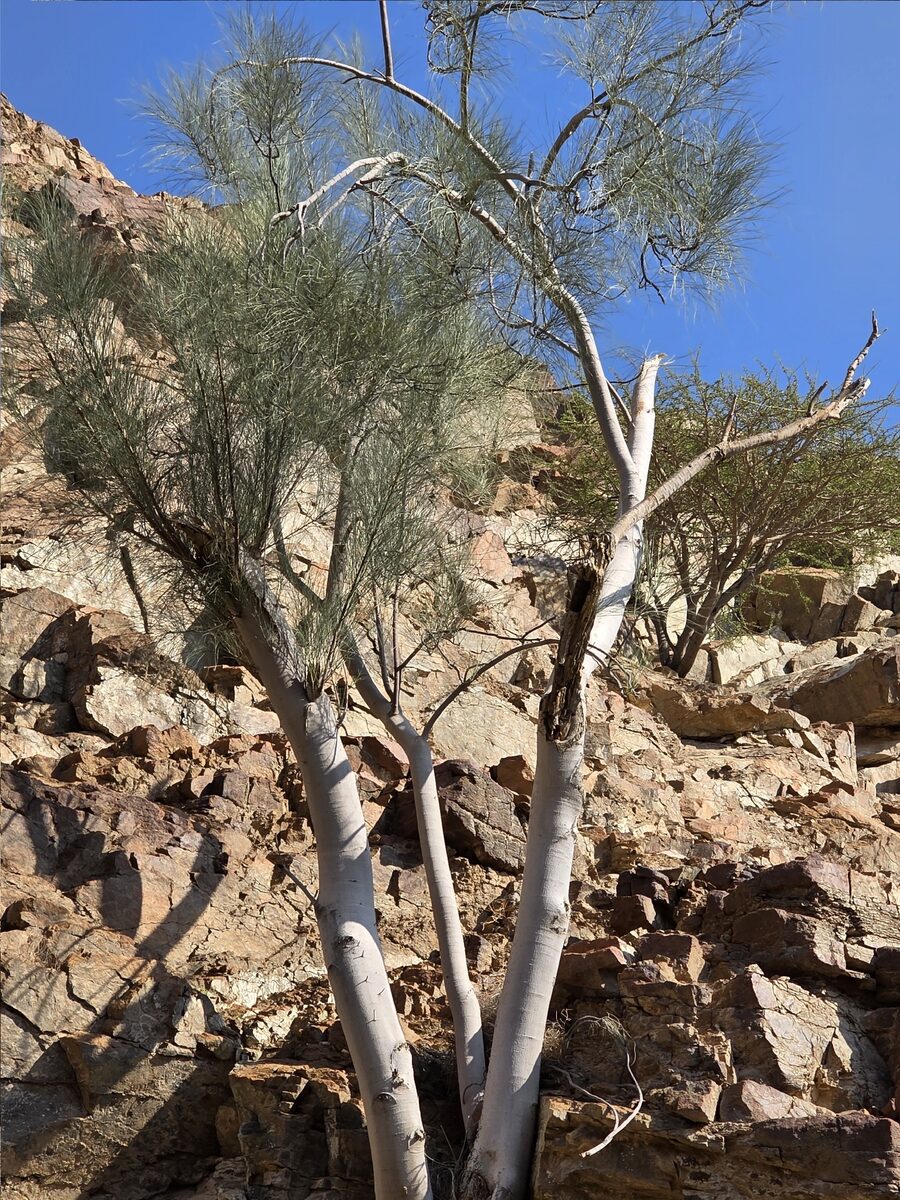
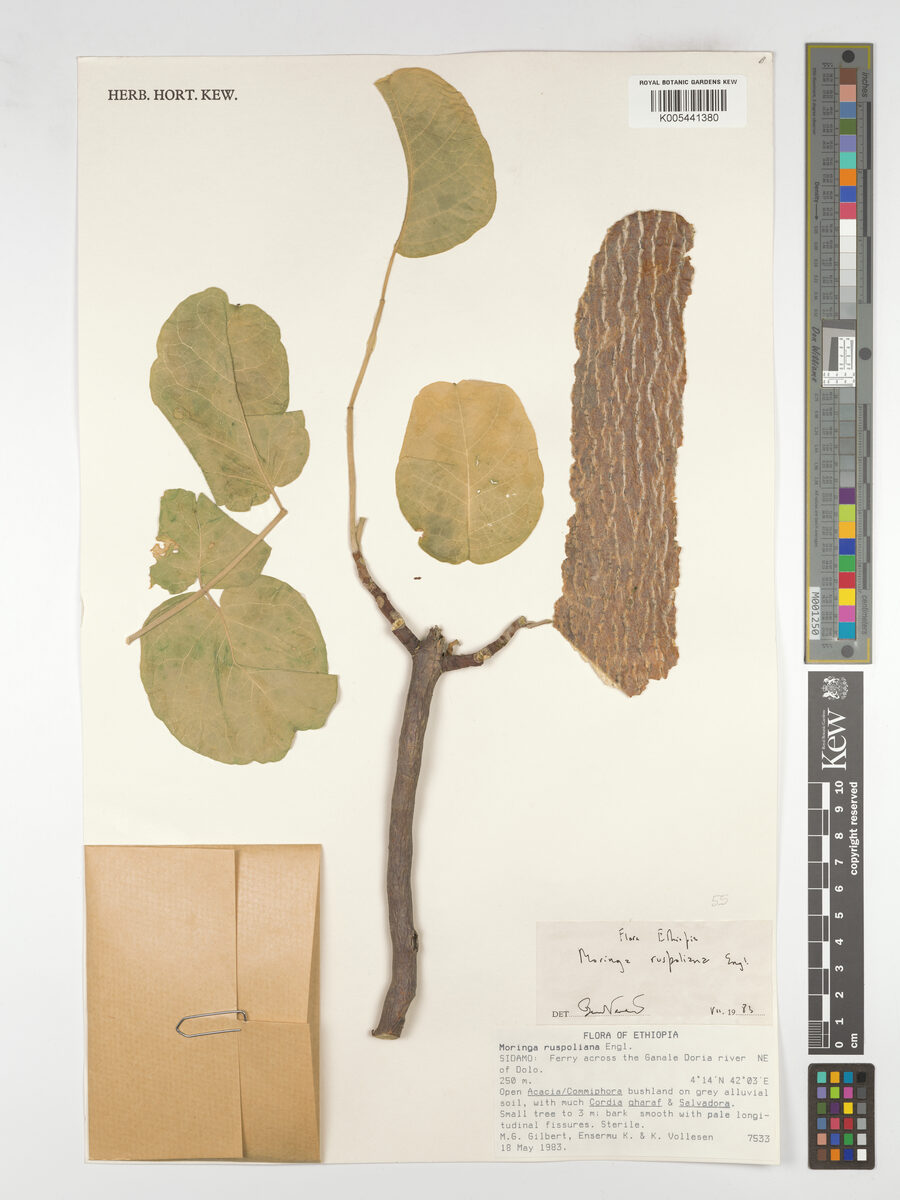
Moringa hildebrandtii
Engl.
Hildebrandt's moringa
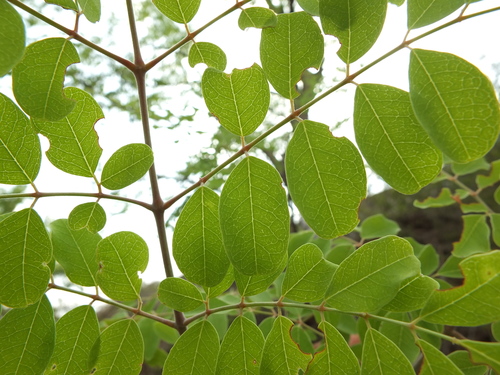
iNaturalist· cc-by-nc
(c) scott.zona, some rights reserved (CC BY-NC)
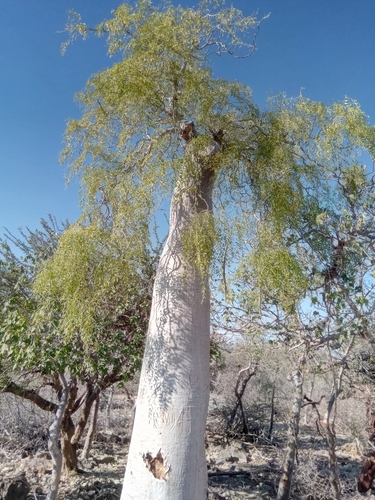
iNaturalist· cc-by-nc
(c) Laurence Ramon, some rights reserved (CC BY-NC)
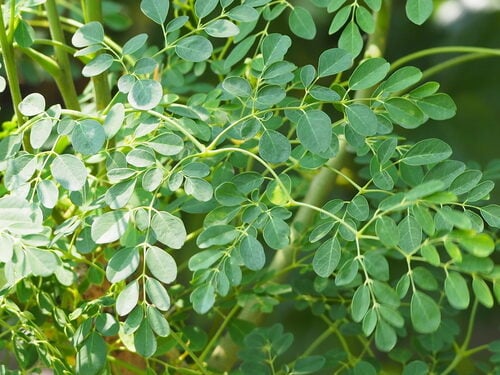
iNaturalist· cc-by-nc
(c) Laurence Ramon, some rights reserved (CC BY-NC)
Summary
Source: WikipediaMoringa hildebrandtii, or Hildebrandt's moringa, is a tree species with a massive, water-storing trunk in the family Moringaceae. It is endemic to Madagascar, where it is extinct in the wild, but preserved by indigenous horticulture practices. The plant originally was thought to grow along the west coast of Madagascar, but ethnobotany data suggest it in fact grew in the island's extreme southwest.
Description
A tree. It grows 20 m tall. The trunk can store water. The leaves can be 1 m long. The flowers are white. The fruit is 50 cm long and contains 6-12 large nut-like seeds.
Edible Uses
Oil is extracted from the seeds.
Medicinal Uses
The pulpy wood is commonly harvested for medicinal use.
Distribution
It is a tropical plant.
Where It Grows
Madagascar,
Cultivation
A plant of the dry tropics, often surviving in very arid conditions. Requires a position in full sun. Requires a well-drained soil. Established plants are very drought tolerant.
Propagation
Seed - sown in a fertile soil in a lightly shaded position in a nursery seedbed. Germination is usually easy and the seedlings straightforward to grow. During the dry season seedlings can be transplanted into the field without irrigation, even into dry places with poor soil.
Other Uses
The wood is very succulent and therefore not used for construction. The trees are grown in rows as living fences.
Notes
It is an atrisk species.
References (1)
- World Checklist of Useful Plant Species 2020. Royal Botanic Gardens, Kew