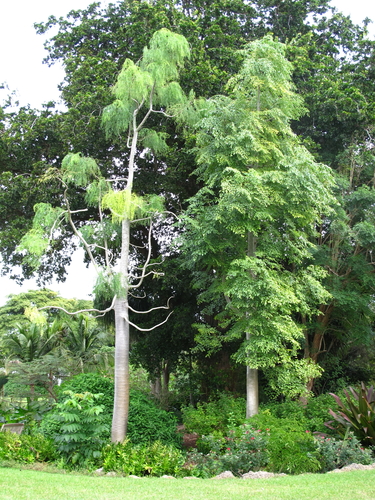
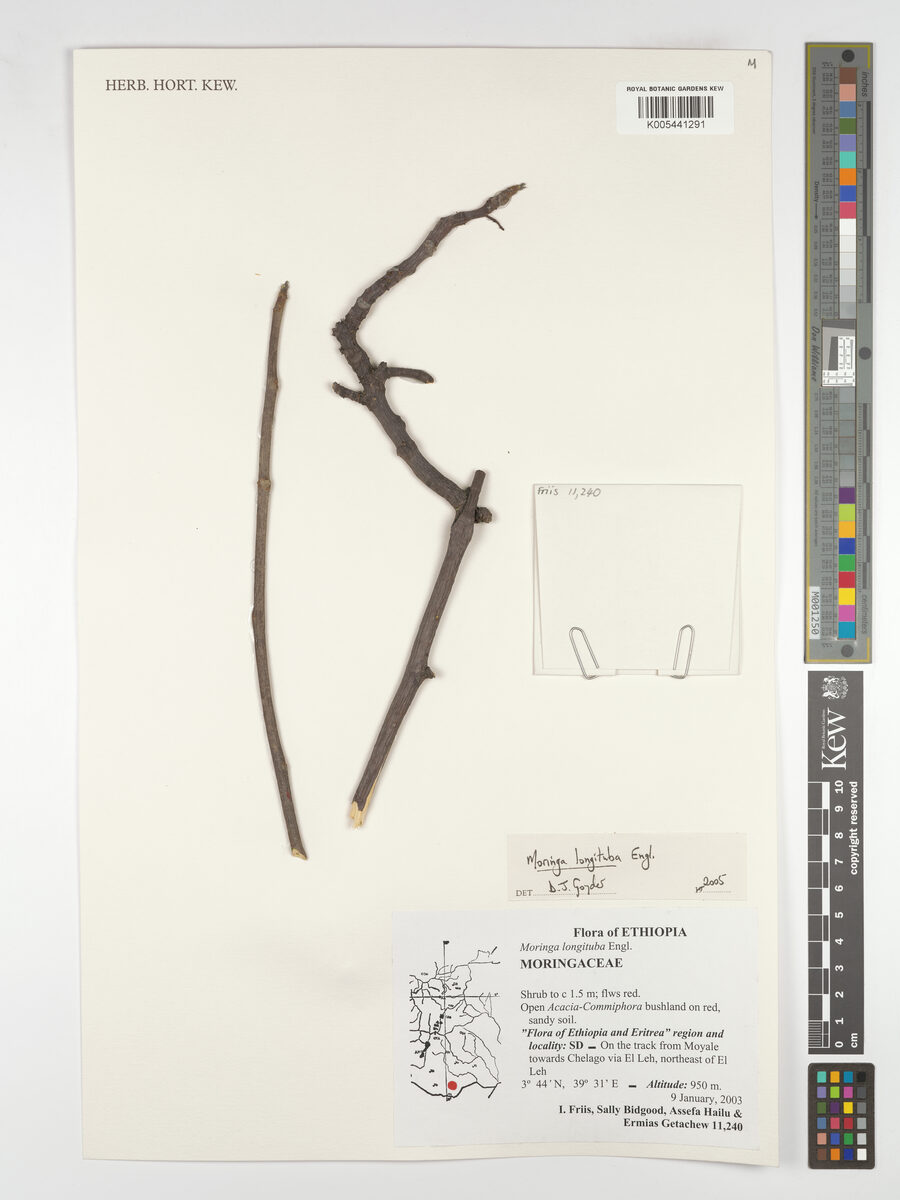
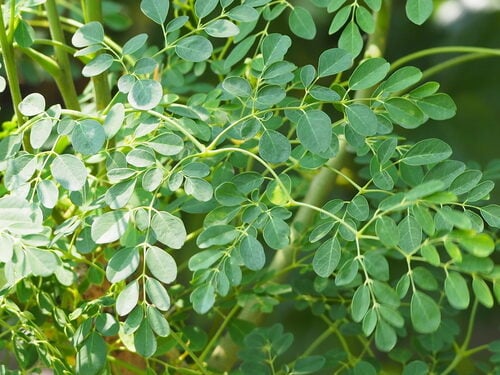
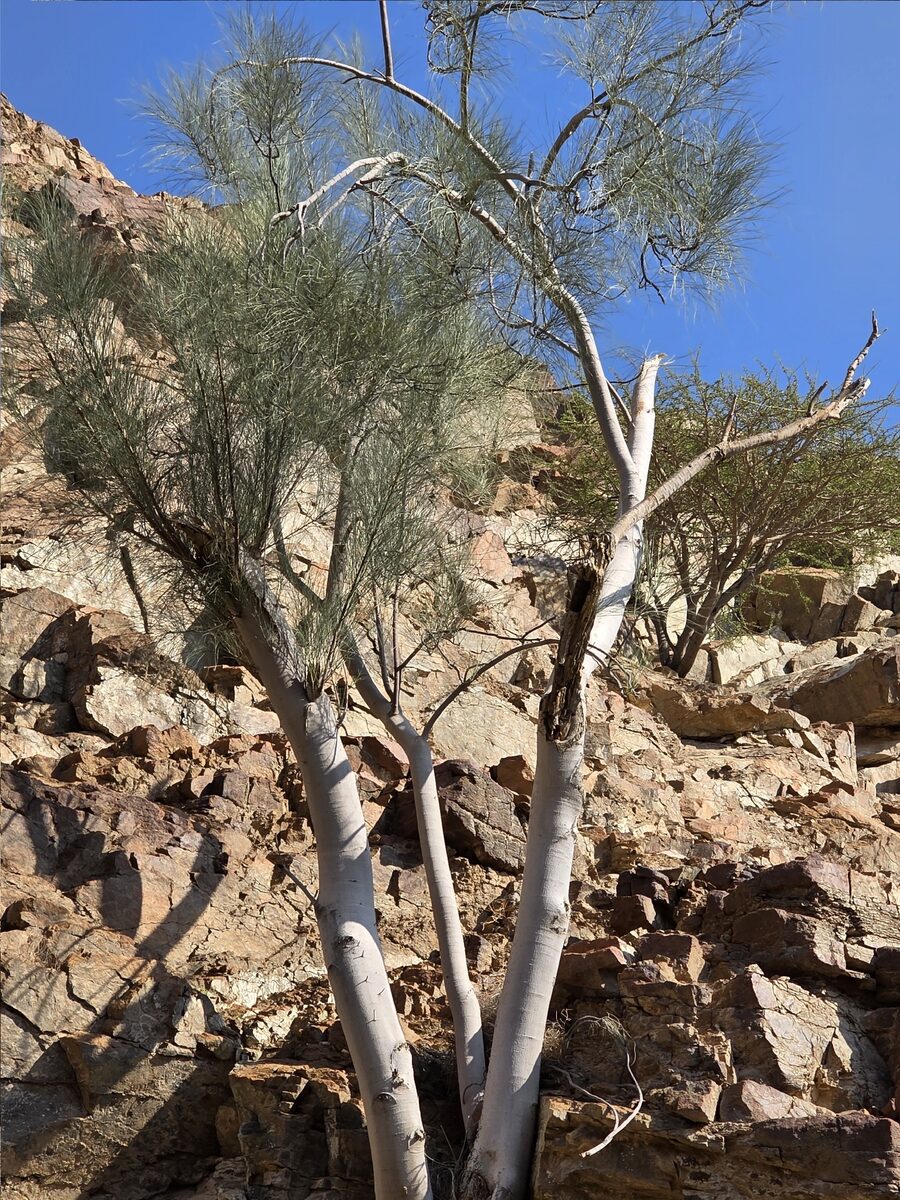
Moringa drouhardii
Jumelle
Madagascar moringa
iNaturalist· cc-by-nc
(c) Solofo Eric Rakotoarisoa, some rights reserved (CC BY-NC), uploaded by Solofo Eric Rakotoarisoa
iNaturalist· cc0
no rights reserved, uploaded by 葉子
iNaturalist· cc0
no rights reserved, uploaded by 葉子
Summary
Source: WikipediaMoringa drouhardii, the bottle tree or maroseranana, is an endemic species of southwest Madagascar. It occurs in the Madagascar spiny thickets ecoregion, especially at the limestone cliffs to the east of Lake Tsimanampetsotsa, on the Mahafaly Plateau. The species is often planted in local villages and around traditional tombs. Neither the seeds (rich in edible oil and flocculating proteins) nor the leaves (that can be eaten as green vegetables) are traditionally used in the Atsimo-Andrefana Region (southwestern Madagascar) despite their significant benefits.
Description
A tropical bottle-shaped tree native to limestone regions of Madagascar. It belongs to the Moringaceae family.
This description is brief — help expand it
Edible Uses
The seeds and leaves are edible.
Medicinal Uses
The seeds yield an oil that is used as a medicinal massage oil. The very strongly scented bark and wood are used for the treatment of colds and coughs.
Distribution
It is a tropical plant. It grows in limestone regions.
Where It Grows
Africa, East Africa, Indian Ocean, Madagascar*, North America, USA,
Cultivation
A plant of dry to very dry areas, growing where the mean annual rainfall can be as low as 200mm and very unreliable. Completely dry years are not uncommon. Found wild on calcareous soils. Established plants are very drought tolerant. Growth of young trees can be very fast if there is adequate moisture, allowing the plants to occupy open spaces in the forest. In cultivation it grows at a rate of more than 1 metre per year. Trees start bearing 3 years after planting when they have reached a height of 3 - 4 metres.
Propagation
Seed - sown in a fertile soil in a lightly shaded position in a nursery seedbed. Germination is usually easy and the seedlings straightforward to grow. During the dry season seedlings can be transplanted into the field without irrigation, even into dry places with poor soil.
Other Uses
The seeds yield an oil that is used as a base for cosmetic products and as a medicinal massage oil. The oil is odourless, tasteless and does not become rancid in storage, making it an excellent base in perfumery and pharmacology. It was formerly used as a base-oil in enfleurage to extract fragrant volatile compounds from flowers. The seed contains 36 - 45% oil; the approximate fatty acid composition of the oil is: palmitic acid 8%, stearic acid 9%, oleic acid 74%, linoleic acid 1%, arachidic acid 3%, behenic acid 3%. The tree is often planted on field boundaries.