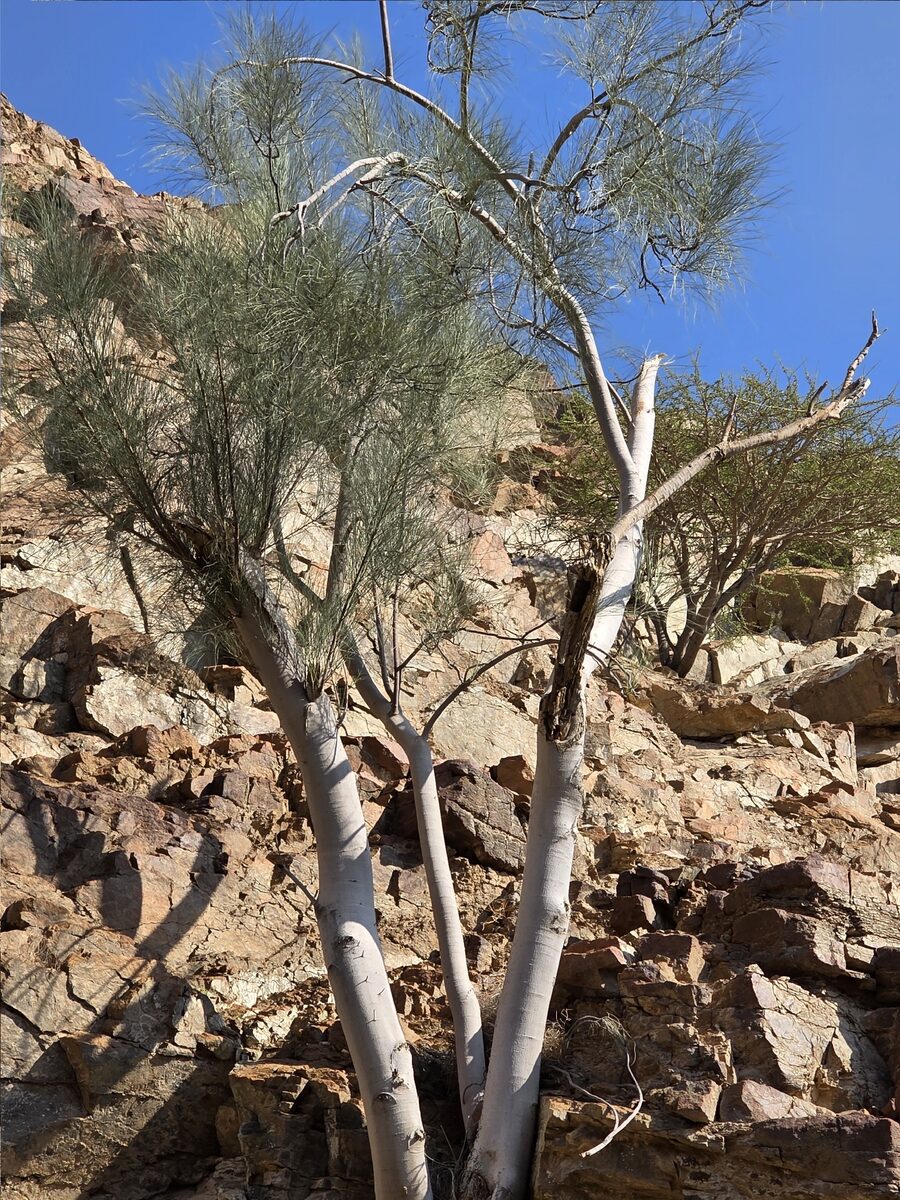
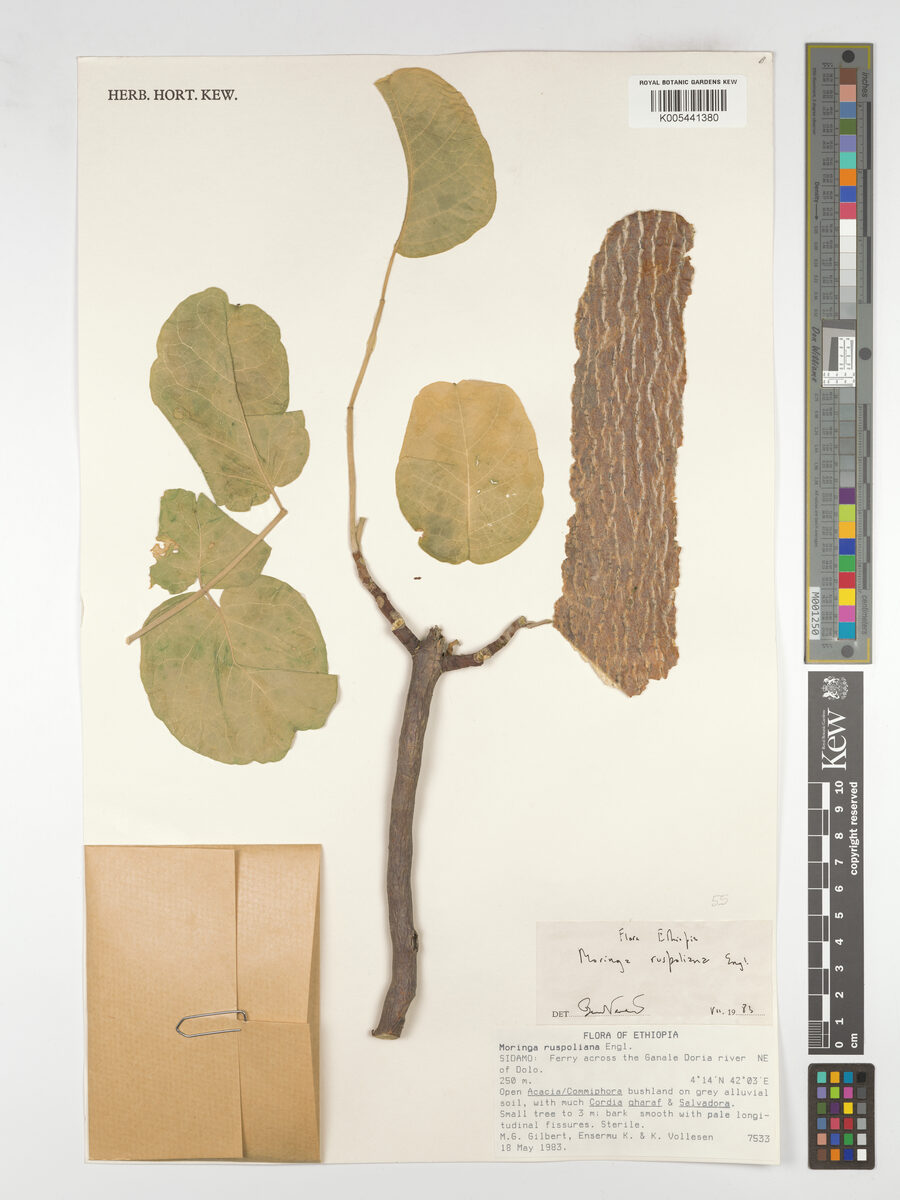
Moringa concanensis
Nimmo ex Dalz. & Gibs
Mahua
iNaturalist· cc-by
(c) Siddarth Machado, some rights reserved (CC BY), uploaded by Siddarth Machado
iNaturalist· cc-by-nc
(c) Shiwalee Samant, some rights reserved (CC BY-NC)
Description
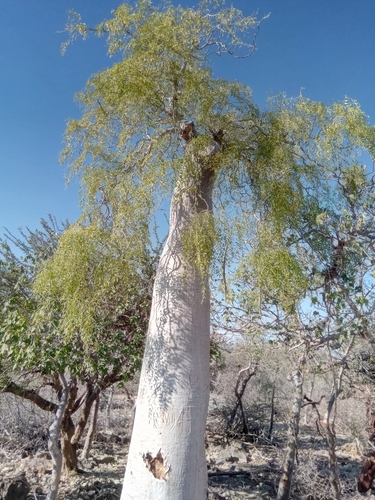
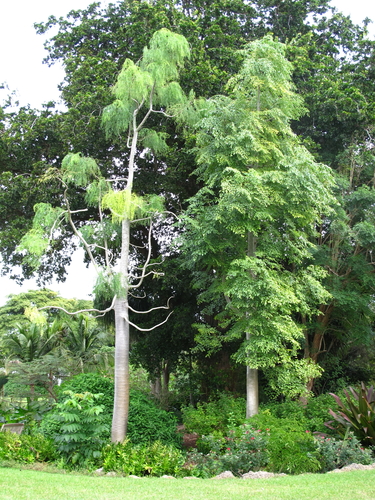
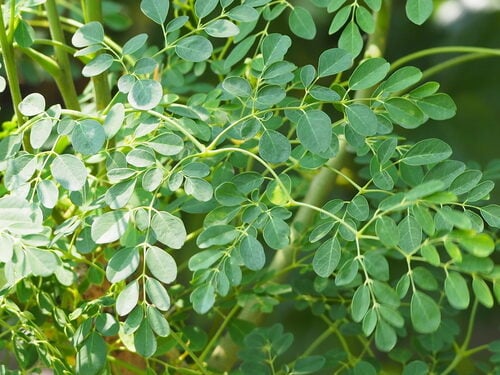
A small evergreen tree. The bark is thick. The leaves are twice divided. They are 45 cm long. The are 5-6 primary pairs of leaflet stalks then 4-6 pairs of leaflets and an odd one. They are 2.5-3.8 cm long by 1.3-2.5 cm wide. They are pale underneath. The flowers are in a loose group up to 45 cm long. The flowers are small with yellow petals and red veins. The fruit is a pod 30-45 cm long and sharply 3 angled. It has a long point. The seeds are triangle shaped. They are 1.5-2 cm long and white.
Edible Uses
The unripe fruit, leaves, and flowers are all eaten as vegetables—fruit and leaves are boiled, while flowers are washed and stir-fried.
Traditional Uses
The unripe fruit are eaten. The fruit and leaves are boiled and used as vegetables. The flowers are washed and stir-fried vegetable.
This uses section is brief — help expand it
Medicinal Uses
Moringa contain a number of sulfurous biochemical compounds called "mustard-oil glycosides" or glucosinolates commonly found in cruciferous vegetables of Brassicaceae. Benzyl glucosinolate along with family-specific glucomoringin and glucosoonjnain have been detected from various Moringa species and are thought to be the cause of the bitter taste in some Moringa leaves.
Distribution
A tropical and subtropical plant. It grows in semi-deciduous forest.
Where It Grows
Asia, Bangladesh, India, Indonesia, Northeastern India, Pakistan, SE Asia,
Notes
There are 13 Moringa species.
Also Known As
Hengvo, Jungli shewaga, Kadunugge soppu, Kattu moringai, Kattumurungai, Peyimurungai
References (11)
- Ambasta, S.P. (Ed.), 2000, The Useful Plants of India. CSIR India. p 380
- Arinathan, V., et al, 2007, Wild edibles used by Palliyars of the western Ghats, Tamil Nadu. Indian Journal of Traditional Knowledge. 6(1) pp 163-168
- Chauhan, S. H., et al, 2018, Consumption patterns of wild edibles by the Vasavas: a case study from Gujarat, India. Journal of Ethnobiology and Ethnomedicine (2018) 14:5
- Flora of Pakistan. www.eFloras.org
- Harisha, R. P. & Padmavathy, S., 2013, Knowledge and Use of Wild Edible Plants in Two Communities in Malai Madeshwara Hills, Southern India. International Journal of Botany 9(2): 64-72.
Show all 11 references Hide references
- Hedrick, U.P., 1919, (Ed.), Sturtevant's edible plants of the world. p 419
- Kuvar, S. D. & Shinde, R. D., 2019, Wild Edible Plants used by Kokni Tribe of Nasik District, Maharashtra. Journal of Global Biosciences. Volume 8, Number 2, 2019, pp. 5936-5945
- Pradhan, R., et al, 2020, Potential Wild Edible Plants and its Significance in Livelihood of Indigenous People of Male Mahadeshwara Hills, Karnataka. Economic Affairs Vol. 64, No. 4 pp. 01-14
- Pullaiah, Y., Krishnamurthy, K. V. & Bahadur, B., (Eds.), 2016, Ethnobotany of India, Volume 1: Eastern Ghats and Deccan.
- Singh, H.B., Arora R.K.,1978, Wild edible Plants of India. Indian Council of Agricultural Research, New Delhi. p 77
- World Checklist of Useful Plant Species 2020. Royal Botanic Gardens, Kew