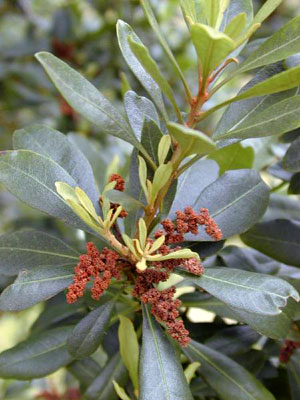
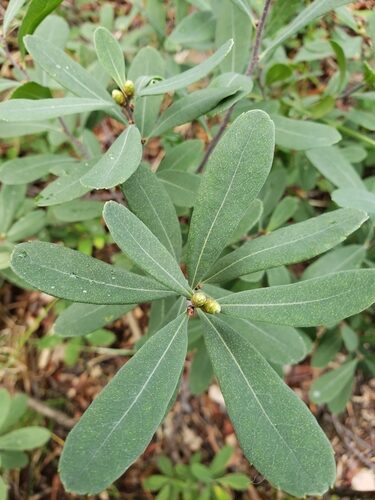
Melaleuca leucadendra - (L.) L.
(L.) L.
Paperbark, Weeping Paperbark
gbif· cc-by-nc
Ethan Beaver
gbif· cc-by-nc
Audrey Billings
gbif· cc-by-nc
Mohamad Zaenal
Description
Melaleuca leucadendra is an evergreen Tree growing to 30 m (98ft) by 20 m (65ft) at a fast rate. See above for USDA hardiness. It is hardy to UK zone 10 and is frost tender. The flowers are pollinated by Bees, Birds. It is noted for attracting wildlife. Suitable for: light (sandy), medium (loamy) and heavy (clay) soils and can grow in nutritionally poor soil. Suitable pH: mildly acid, neutral and basic (mildly alkaline) soils and can grow in saline soils. It cannot grow in the shade. It prefers moist soil and can tolerate drought. The plant can tolerates strong winds but not maritime exposure.
Edible Uses
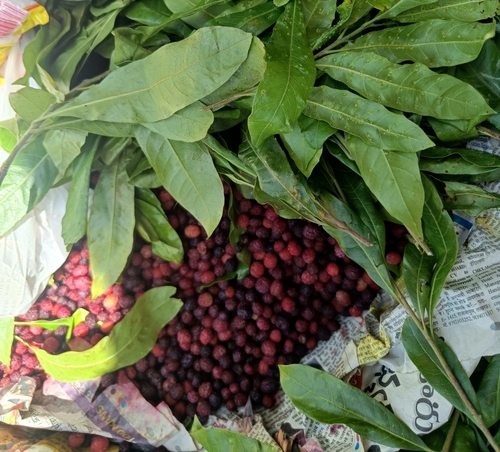
Tea. The essential oil is used as a flavouring in items such as candy, baked goods, condiments, relishes etc. The fruits and leaves are used to make a tea.
Medicinal Uses
Antirheumatic Antiseptic Antispasmodic Aromatic Expectorant Odontalgic Parasiticide StimulantAn essential oil obtained from the leaves contains several terpenoids including 50 - 60% of the strongly antiseptic cineole, betapinene and alpha-terpineol. It is aromatic and stimulant with a strong camphoraceous aroma. It is expectorant, relieves spasms, increases perspiration and expels internal parasites. It is used internally in the treatment of bronchitis, tuberculosis, colds, sinusitis, gastric infections and roundworms. Externally, it is used to treat rheumatism, gout, neuralgia, acne, nasal congestion, sinusitis, toothache, chilblains and skin diseases. The leaves and twigs can be harvested at any time of the year and used fresh, dried or the essential oil can be extracted. This herb, especially in the form of the essential oil, is subject to legal restrictions in some countries.
Distribution
Australasia - northern and western Australia to New Caledonia and Malaysia
Where It Grows
TROPICAL ASIA: Indonesia (Papua), Papua New Guinea, Indonesia (Maluku) AUSTRALASIA: Australia (Queensland, Western Australia, Northern Territory)
Cultivation
A plant of the lowland tropics and subtropics, where it is found at elevations up to 800 metres. It grows best in areas where annual daytime temperatures are within the range 28 - 37°c, but can tolerate 18 0- 40°c. It prefers a mean annual rainfall in the range 800 - 1,400mm, but tolerates 650 - 1,600mm. Prefers a moisture-retentive to wet, neutral to acid soil and a position in full sun. Tolerates light and saline soils. Prefers a pH in the range 6 - 7, tolerating 5.5 - 8.5. Plants are able to withstand periodic inundation of the soil and strong currents. Established plants are drought tolerant. Plants are very wind-firm, able to tolerate salt-laden gales. On some sites, the plant has the potential of escaping from cultivation and becoming a weed. A moderately fast-growing plant. Annual wood production potential is 10 - 16 cubic metres per hectare. Trees usually survive forest fires.
Propagation
Seed (minuscule)
Other Uses
Cosmetic Essential Insecticide Oil Parasiticide Soap Wood. Coastal garden. Public open space. Street tree. Accent. Topiary. Other Uses An essential oil is obtained from the twigs and fresh leaves. Called cajeput oil, it has an agreeable camphor-like aroma. It is used in detergents, soaps, perfumery and insect repellents. The wood is hard, heavy and close-grained. Durable in moist soil, it is used for ship building, mine timber, boat building, railway ties, posts etc.
Synonyms
Also Known As
Paperbark, Weeping Paperbark, Weeping River Teatree, Kayu puteh, Gelam, Med, Samed, Samet, Kayaputi, Cajaputi, Cajuputte, Cajuputa, Cadjeput, Kaiyappudai, cajeput tree, cajepute, cajuput, cajuput (melaleuca leucadendra), cajuput tree|lothsumbulu / weradi lothsumbulu, paper bark tree, river tea tree, weeping tea tree.