Margyricarpus pinnatus - (Lam.)Kuntze.
(Lam.)Kuntze.
Pearl Berry
gbif· cc-by-nc
Guillermo Maresca
gbif· cc-by-nc
Guillermo Maresca
gbif· cc-by
Andy Jordan
Description
Margyricarpus pinnatus is an evergreen Shrub growing to 0.3 m (1ft) by 1 m (3ft 3in) at a medium rate. See above for USDA hardiness. It is hardy to UK zone 9 and is not frost tender. It is in leaf all year, in flower from July to August, and the seeds ripen from August to September. The species is hermaphrodite (has both male and female organs) and is pollinated by Insects. Suitable for: light (sandy), medium (loamy) and heavy (clay) soils, prefers well-drained soil and can grow in nutritionally poor soil. Suitable pH: mildly acid and neutral soils. It can grow in semi-shade (light woodland) or no shade. It prefers moist soil. The plant can tolerates strong winds but not maritime exposure.
Edible Uses
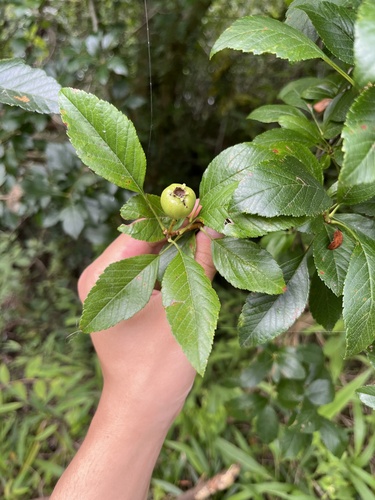
Fruit - raw or cooked. Pleasant but mild with a slightly acid flavour. The fruit can hang on the plant for a long time in good condition if it is not eaten by birds etc. The fruit is a small white berry about 7mm in diameter with a single seed. Very attractive to look at, but the flavour is very mild and you need to spend quite a while picking just to get one mouthful. Children really love the fuit, however, and this makes it an ideal plant to get them out of your hair for a while. Simply tell them that they can have as much of the fruit as they want and they will be there for half an hour or more picking it.
Medicinal Uses
Diuretic. Diuretic.
Distribution
S. America - Andes.
Where It Grows
SOUTHERN AMERICA: Brazil (Mato Grosso do Sul, Paraná, Rio Grande do Sul, Santa Catarina), Bolivia, Ecuador, Peru, Argentina (Córdoba, Mendoza, Buenos Aires, Chubut, Entre Ríos, La Pampa, Neuquén, Río Negro, Salta, Santa Cruz, Tucumán), Chile, Uruguay
Cultivation
Prefers a lime-free soil that is not too rich, with some shade at the hottest part of the day. Requires a sunny position and a well-drained soil. Requires a sheltered position. Plants are low-growing and have done very well in our exposed maritime site in Cornwall. This species is hardy to about -5°c. It is our opinion that the plants are hardier than this, they have grown outdoors in many parts of Britain that experience colder winters, and have survived all but very severe winters. The plants do not fruit well in cool wet summers.
Propagation
Seed - sow late winter or early spring in a greenhouse. The seed can be rather slow to germinate and probably needs a short period of cold stratification. Prick out the seedlings into individual pots when they are large enough to handle and grow them on in the greenhouse for their first winter. When the plants are large enough, plant them out in late spring or early summer and consider giving them some protection from the cold for their first winter outdoors. Cuttings of half-ripe wood, 4 - 5 cm with a heel, July/August in a frame. Layering.