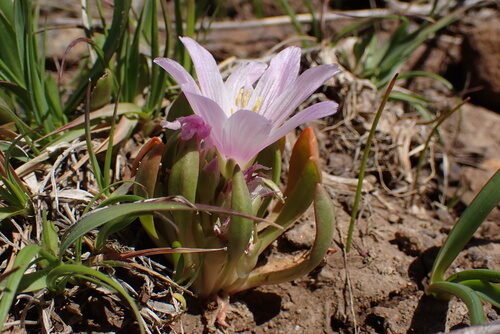
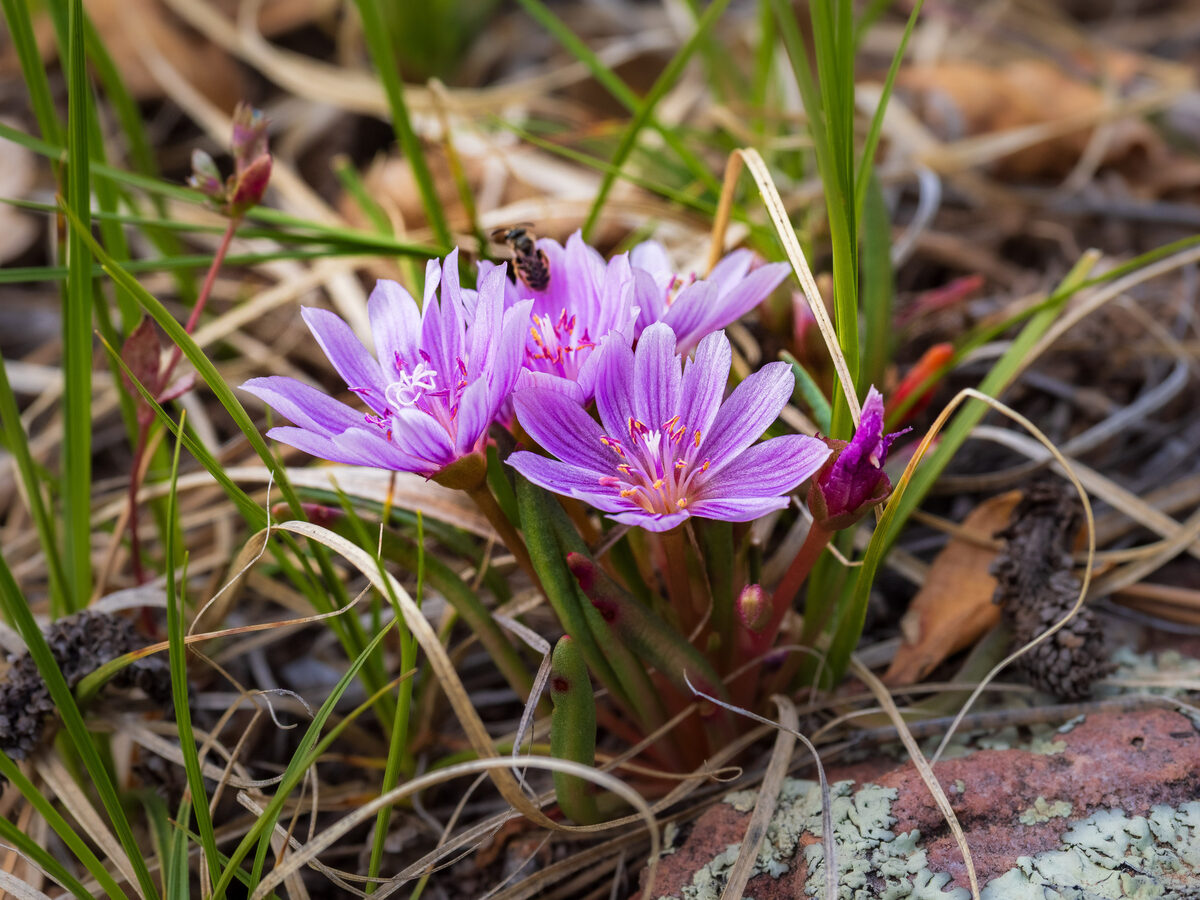
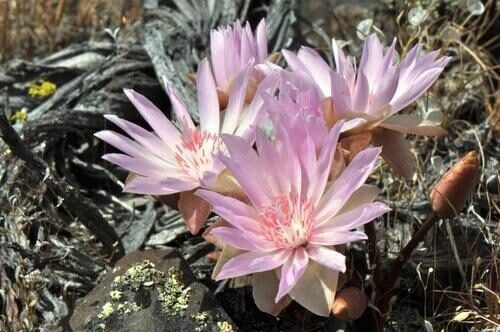
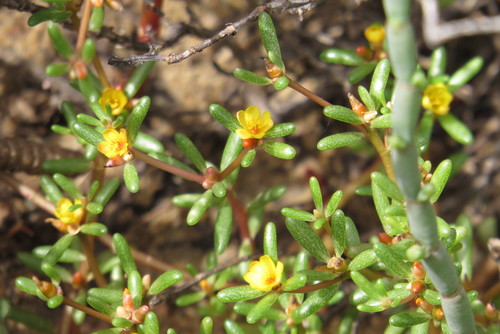
Lewisia columbiana - (Howell.)B.L.Rob.
(Howell.)B.L.Rob.
Columbian Bitterroot, Columbian lewisia, Wallowa lewisia
gbif· cc-by-nc
Clara Oliverson
gbif· cc-by-nc
Clara Oliverson
gbif· cc-by-nc
Hayden Wright
Description
Lewisia columbiana is an evergreen Perennial growing to 0.2 m (0ft 8in) by 0.2 m (0ft 8in) at a slow rate. See above for USDA hardiness. It is hardy to UK zone 5 and is not frost tender. It is in leaf all year, in flower from May to June. The species is hermaphrodite (has both male and female organs) and is pollinated by Insects. Suitable for: light (sandy) and medium (loamy) soils, prefers well-drained soil and can grow in nutritionally poor soil. Suitable pH: mildly acid and neutral soils. It can grow in semi-shade (light woodland) or no shade. It prefers moist soil.
Edible Uses
Root - cooked. Said to be extremely nutritious. It is easiest to use when the plant is in flower because the outer layer of the root (which is very bitter) slips off easily at this time of the year. The root has a good taste though a decided bitter flavour develops afterwards.
Distribution
Western N. America - South British Columbia to Oregon..
Where It Grows
NORTHERN AMERICA: Canada (British Columbia (south)), United States (Idaho, Montana, Oregon, Washington)
Cultivation
Requires a very well-drained gritty humus-rich deep soil in a sunny position. Prefers a neutral to acid soil and a position in semi-shade. Best if given a north or north-east aspect in order to protect it from the midday sun. Thrives on almost bare rock. It might be worthwhile trying this species in a crevice of a sunny drystone wall. This species prefers a moister soil than most members of the genus. This species is not reliably hardy in Britain. It can withstand consistently very cold weather but does not like alternating periods of mild and cold conditions, nor does it like winter wet. The plant is very susceptible to rotting at the neck in a damp soil. A very ornamental plant, it is very apt to hybridize with other members of the genus.
Propagation
Seed - best sown as soon as it is ripe in a cold frame in a very freely draining soil. Sow stored seed as soon as possible in a cold frame. One months cold stratification should improve germination, though this is still likely to be very slow. When they are large enough to handle, prick the seedlings out into individual pots and grow them on in the greenhouse for at least their first two winters. Plant them out into their permanent positions in late spring or early summer, after the last expected frosts. Division in March/April. Very difficult.