Portulaca napiformis
F. Muell ex Benth.
gbif· cc-by
Royal Botanic Gardens, Kew
gbif· cc-by
Royal Botanic Gardens, Kew
Description
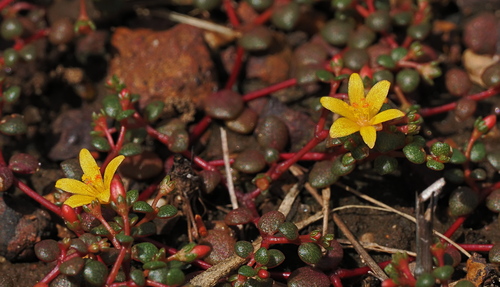
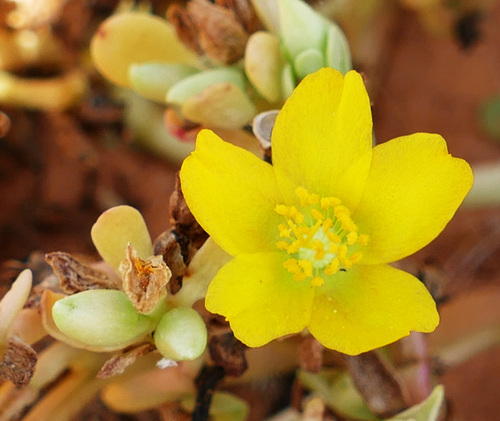
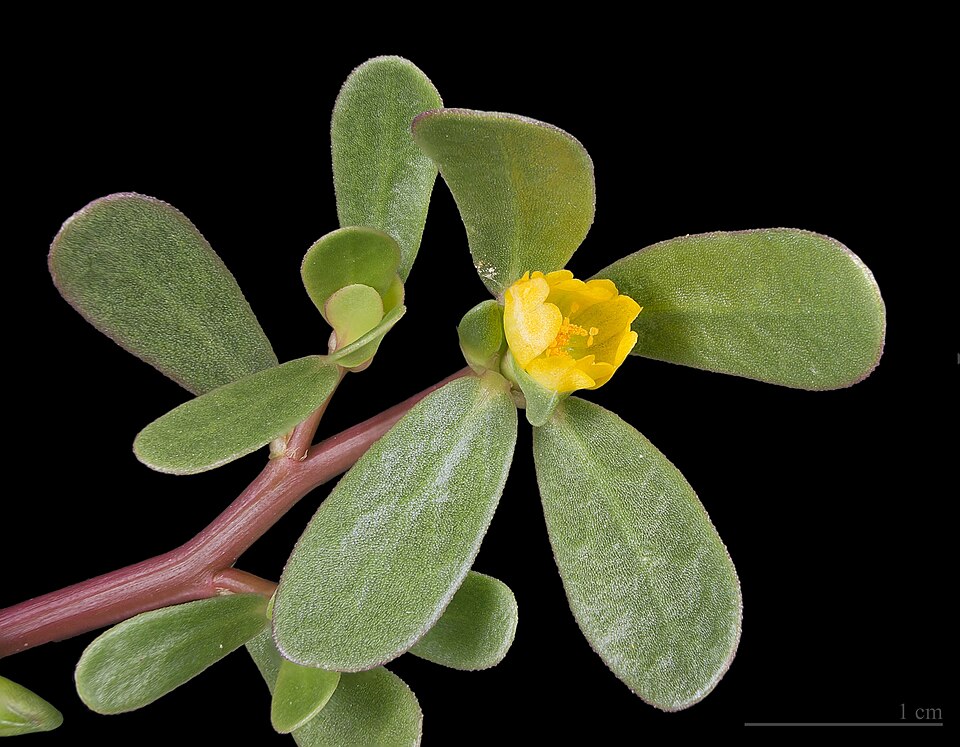
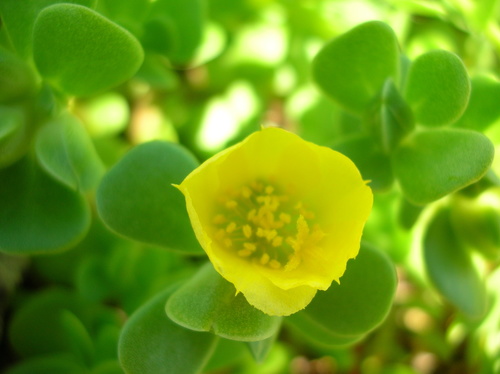
A succulent herb in the Portulacaceae family that grows 5-8 cm high with yellow flowers. It grows in tropical places on gravel, sand, or rocky sandstone ridges.
Edible Uses
The roots and seeds are eaten.
Distribution
It grows in tropical places. It grows on gravel, sand or rocky sandstone ridges.
Where It Grows
Australia*,
Cultivation
Grows wild in well-drained, gravel or sandy soils.
Notes
There are about 200 Portulaca species. They are mostly in the tropics and subtropics.
Dangerous Lookalikes
This plant can be confused with the following toxic species. Always verify identification carefully before consuming any wild plant.
Spotted Spurge
Euphorbia maculata
Hardyplants at English Wikipedia
Portulaca napiformis
Portulaca napiformis
Royal Botanic Gardens, Kew
Spotted Spurge: Milky white latex sap when broken, thinner leaves often with dark spot, prostrate growth, tiny flowers.
Portulaca napiformis: Clear sap, thick succulent leaves, reddish smooth stems, yellow flowers.
Also Known As
Karedilla
References (5)
- Bailey, F. M., 1913, Comprehensive Catalogue of Queensland Plants. Queensland Government. p 49
- Cherikoff V. & Isaacs, J., The Bush Food Handbook. How to gather, grow, process and cook Australian Wild Foods. Ti Tree Press, Australia p 164
- Cribb, A.B. & J.W., 1976, Wild Food in Australia, Fontana. p 153
- Kenneally, K.E., Edinger, D. C., and Willing T., 1996, Broome and Beyond, Plants and People of the Dampier Peninsula, Kimberley, Western Australia. Department of Conservation and Land Management. p 167
- Paczkowska, G . & Chapman, A.R., 2000, The Western Australian Flora. A Descriptive Calatogue. Western Australian Herbarium. p 463