Portulaca intraterranea
J. M. Black
Inland pigweed, Buttercup Pigface
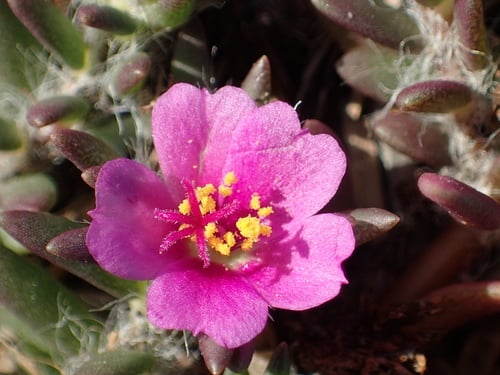
iNaturalist· cc-by-nc
(c) Anne Lawton, some rights reserved (CC BY-NC), uploaded by Anne Lawton
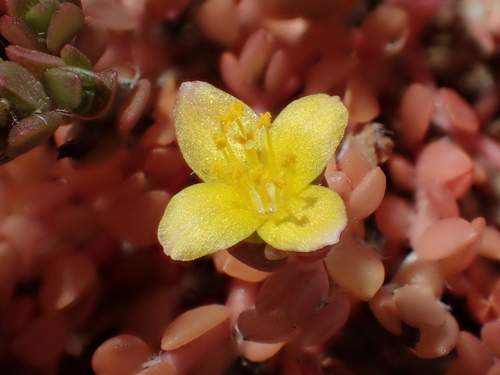
iNaturalist· cc-by-nc
(c) jeflint, some rights reserved (CC BY-NC)
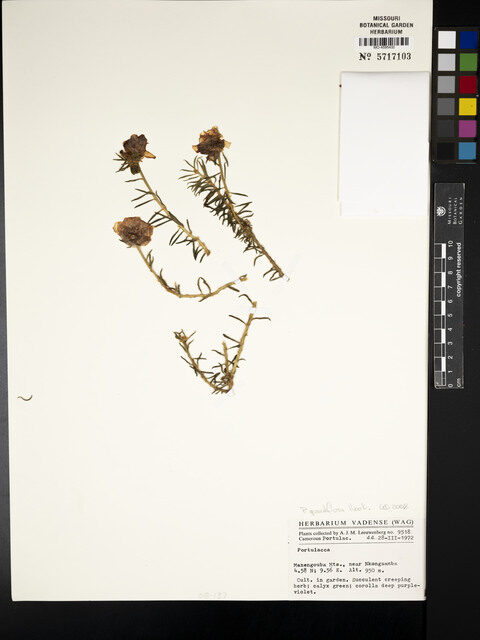
iNaturalist· cc-by-nc
(c) Steve C, some rights reserved (CC BY-NC), uploaded by Steve C
Summary
Source: WikipediaPortulaca intraterranea, the large pigweed, is a succulent herb native to deserts of central Australia. The leaves are succulent, with flowers 2.5–3.5 cm wide. Aboriginal Australians eat the thick tap-root which tastes like potato.
Description
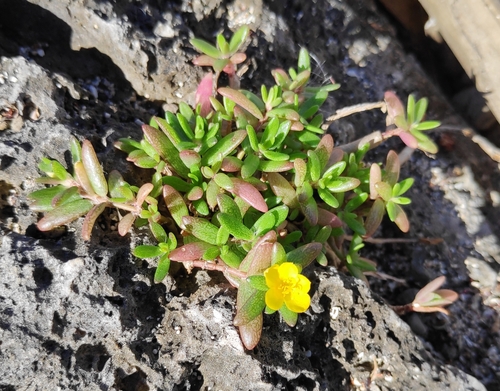
A herb which grows for one or two years. It lies along the ground and spreads 20-40 cm wide. The stems are fleshy. The leaves are 1-2 cm long by 0.1-0.3 cm wide. They are broad sword shaped. They are green or bronze. They are fleshy. The flowers are 2.5-3.5 cm across and yellow. They occur as 3-4 flowers together. The capsules are 0.5 cm long. The seeds are greyish-black.
Edible Uses
The above-ground parts can be eaten raw or cooked. The root must be cooked before eating. The seeds are also edible.
Traditional Uses
The root needs to be cooked before eating. The above ground parts can be eaten raw or cooked.
This uses section is brief — help expand it
Distribution
It grows in inland regions in Australia on sandhills and clay pans. It suits places with a hot dry climate. It requires a well drained soil and sunny position.
Where It Grows
Australia*,
Cultivation
Plants can be grown from seed or cuttings.
Notes
There are about 200 Portulaca species. They are mostly in the tropics and subtropics.
Dangerous Lookalikes
This plant can be confused with the following toxic species. Always verify identification carefully before consuming any wild plant.
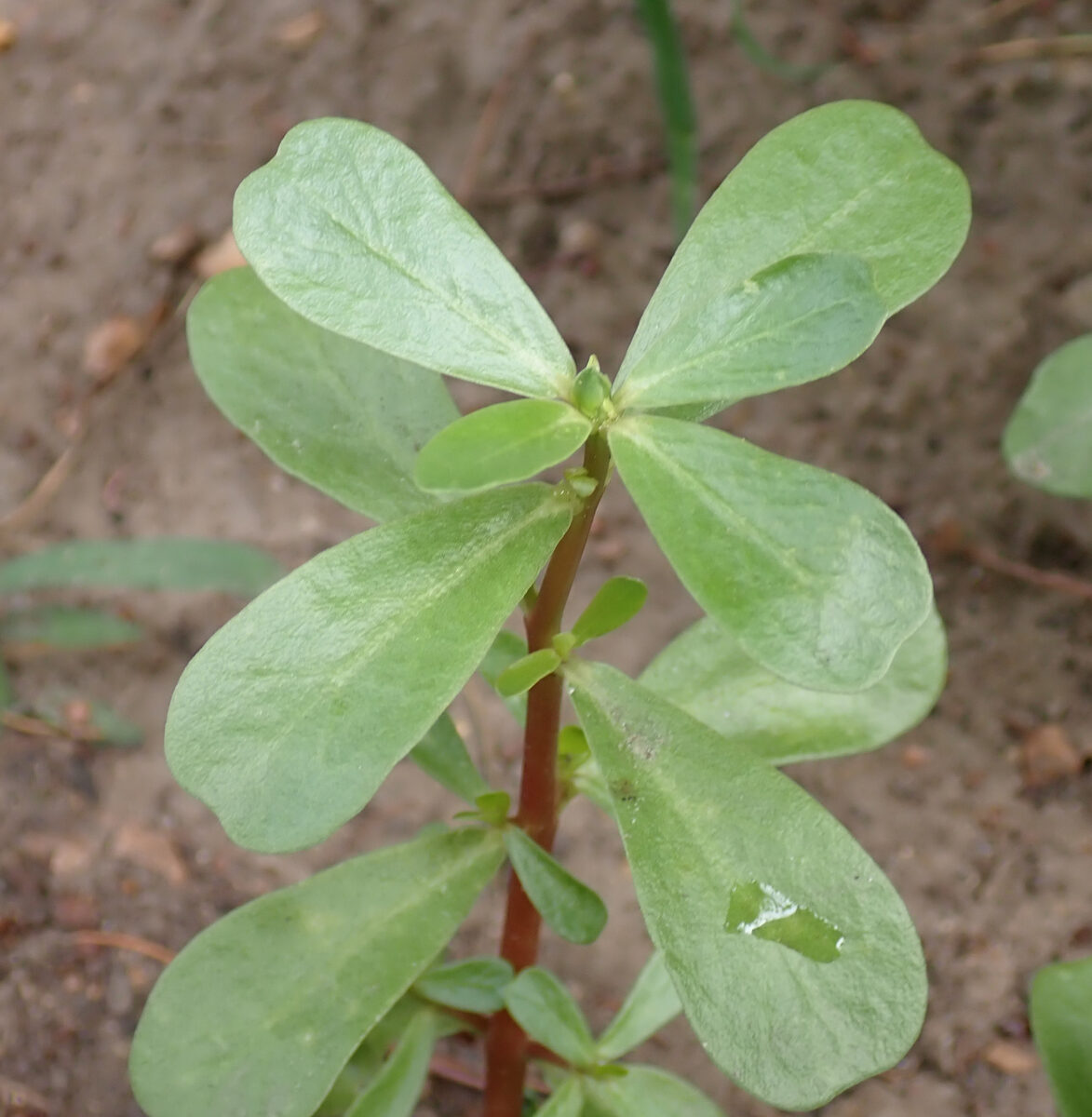
Spotted Spurge
Euphorbia maculata
Hardyplants at English Wikipedia
Inland pigweed
Portulaca intraterranea
(c) Anne Lawton, some rights reserved (CC BY-NC), uploaded by Anne Lawton
Spotted Spurge: Milky white latex sap when broken, thinner leaves often with dark spot, prostrate growth, tiny flowers.
Inland pigweed: Clear sap, thick succulent leaves, reddish smooth stems, yellow flowers.
Nutrition
| Part | Moisture | kJ | kcal | Protein | Vit A | Vit C | Iron | Zinc |
|---|---|---|---|---|---|---|---|---|
| Seed | 62.3 | 490 | 117 | 3 | — | — | 24 | 0.8 |
Also Known As
Large pigweed
References (11)
- Cancilla, D., 2018, Ethnobotanical and Ethnozoological Values Desktop Assessment - Eliwana Project. p 14
- Cherikoff V. & Isaacs, J., The Bush Food Handbook. How to gather, grow, process and cook Australian Wild Foods. Ti Tree Press, Australia p 164, 190
- Elliot, W.R., & Jones, D.L., 1997, Encyclopedia of Australian Plants suitable for cultivation. Vol 7. Lothian. p 444
- Irvine,
- Isaacs, J., 1987, Bush Food, Aboriginal Food and Herbal Medicine. Weldons. p 114
Show all 11 references Hide references
- Lazarides, M. & Hince, B., 1993, Handbook of Economic Plants of Australia, CSIRO. p 196
- Lim, T. K., 2015, Edible Medicinal and Non Medicinal Plants. Volume 9, Modified Stems, Roots, Bulbs. Springer p 68
- Low, T., 1991, Wild Food Plants of Australia. Australian Nature FieldGuide, Angus & Robertson. p 156
- Morley, B.D., & Toelken, H.R., (Eds), 1983, Flowering Plants in Australia. Rigby. p 74
- Paczkowska, G . & Chapman, A.R., 2000, The Western Australian Flora. A Descriptive Calatogue. Western Australian Herbarium. p 463
- Urban, A., 1990, Wildflowers of Inland Australia. Portside editions. p 39