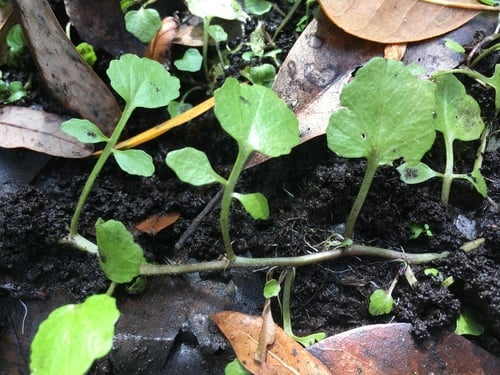
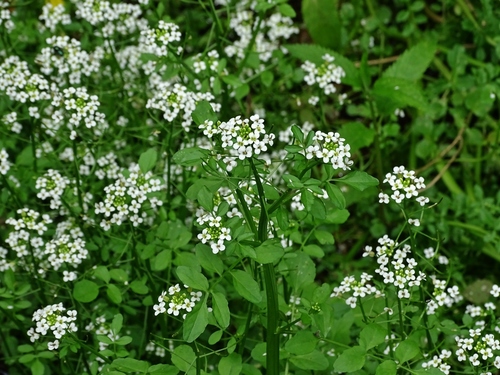
Lepidium apetalum
Willd.
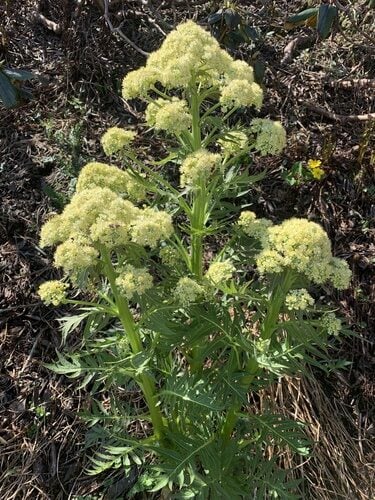
iNaturalist· cc-by-nc-sa
(c) Shuangqi Liu, some rights reserved (CC BY-NC-SA), uploaded by Shuangqi Liu
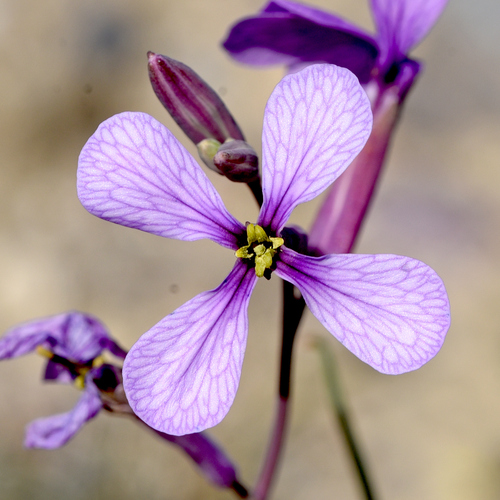
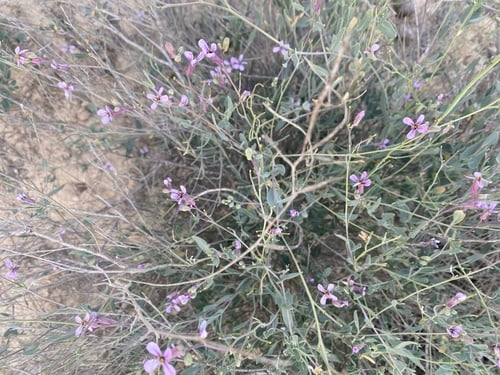
iNaturalist· cc-by-nc
(c) 小铖/Smalltown, some rights reserved (CC BY-NC), uploaded by 小铖/Smalltown
Description
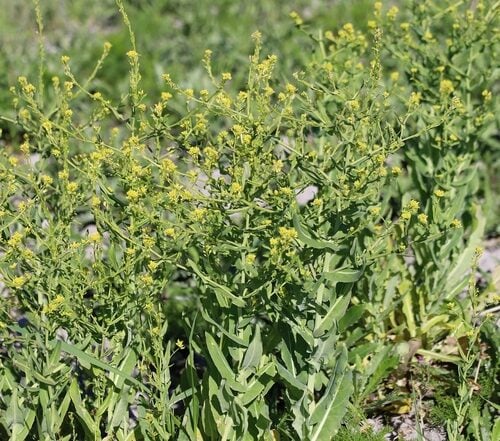
Lepidium apetalum is a ANNUAL/BIENNIAL growing to 0.3 m (1ft). It is in flower from April to August, and the seeds ripen from May to September. The species is hermaphrodite (has both male and female organs). Suitable for: light (sandy), medium (loamy) and heavy (clay) soils. Suitable pH: mildly acid, neutral and basic (mildly alkaline) soils. It can grow in semi-shade (light woodland) or no shade. It prefers moist soil.
Edible Uses
Young leaves - raw or cooked. A hot cress-like flavour.
Medicinal Uses
Antiasthmatic Antibacterial Antitussive Cardiotonic Diuretic Expectorant Purgative. The seed is antiasthmatic, antitussive, diuretic and purgative. The seed is also cardiotonic. A decoction of the leaves is used in the treatment of asthma, coughs, nausea, oedema and pleurisy. The root is decocted with other herbs and used as an expectorant. The plant contains antibacterial substances.
Distribution
Europe to E. Asia - China and Korea.
Where It Grows
TEMPERATE ASIA: Kazakhstan (southeast), Tajikistan, Mongolia, China (Anhui Sheng, Gansu Sheng, Guizhou Sheng, Hebei Sheng, Heilongjiang Sheng, Henan Sheng, Hubei Sheng, Jiangsu Sheng, Jilin Sheng, Liaoning Sheng, Nei Mongol Zizhiqu, Ningxia Huizi Zizhiqu, Qinghai Sheng, Shaanxi Sheng, Shandong Sheng, Shanxi Sheng, Sichuan Sheng, Xinjiang Uygur Zizhiqu, Xizang Zizhiqu, Yunnan Sheng, Zhejiang Sheng), Korea, Japan (Honshu, Ryukyu Islands) TROPICAL ASIA: India (Himachal Pradesh, Jammu and Kashmir, Uttar Pradesh), Nepal, Pakistan (north)
Cultivation
We have almost no information on this species and do not know if it will be hardy in Britain, though judging by its native range it should succeed outdoors in most parts of the country. The following notes are based on the general needs of the genus. Succeeds in most soils.
Propagation
Seed - sow spring in situ. Germination should take place within 3 weeks.