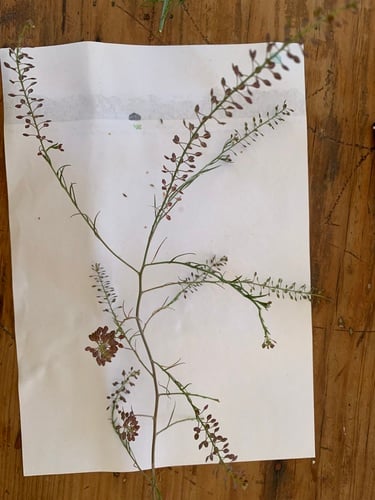
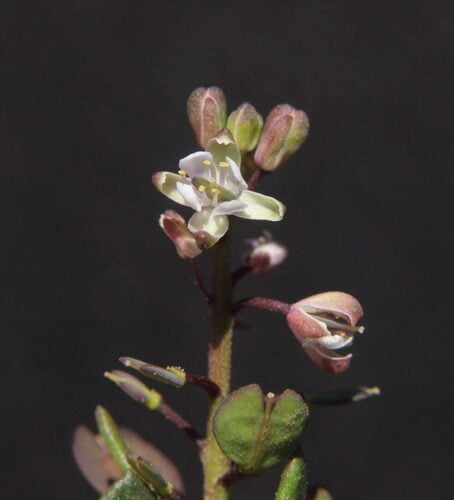
Cardamine trichocarpa
Hochst. ex A. Rich.
Hairy bittercress
iNaturalist· cc-by-sa
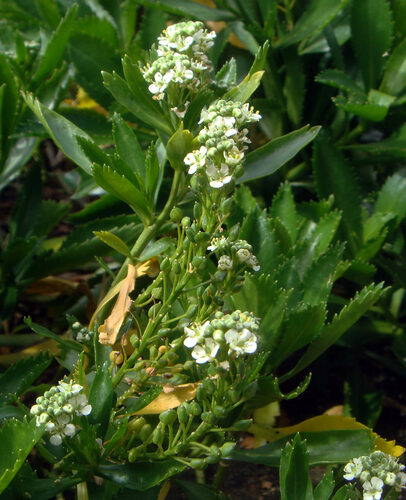
(c) Dinesh Valke, some rights reserved (CC BY-SA)
iNaturalist· cc-by-nc
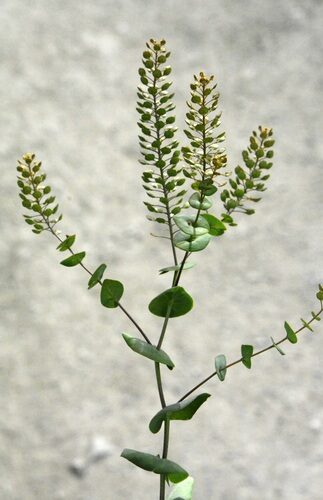
(c) Shiwalee Samant, some rights reserved (CC BY-NC), uploaded by Shiwalee Samant
iNaturalist· cc-by-nc
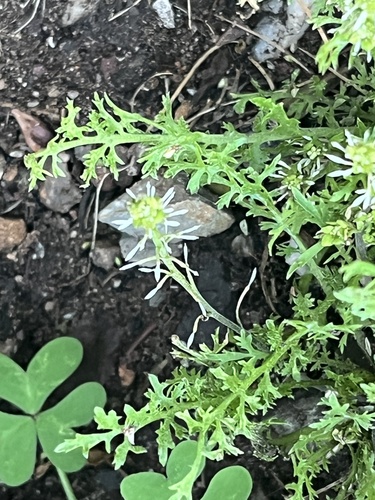
(c) Shiwalee Samant, some rights reserved (CC BY-NC), uploaded by Shiwalee Samant
Description
A herb. It can be erect or curving upwards. It grows 40 cm tall. It grows each year from seeds. The leaves are alternate. They are oblong and 15 cm long. They are compound with 3-11 leaflets and one at the end. The leaflets are oval and 5 cm long. The flowering shoots are at the top with many flowers. They are greenish. The fruit is a narrow pod 2.5 cm long by 1.5 mm wide. The seeds are oblong and 1.5 mm long by 1 mm wide.
Edible Uses
The leaves are wilted, chopped, boiled, and eaten as a vegetable, serving as a minor vegetable of local importance in mountain areas.
Traditional Uses
The leaves are wilted, chopped, boiled and eaten as a vegetable.
This uses section is brief — help expand it
Medicinal Uses
The vegetable is considered useful in the treatment of kwashiorkor. The crushed leaves are used as a dressing on wounds for 2 - 3 days to improve healing. They also make a good herbal bath for babies.
Distribution
It is a tropical plant. It grows in moist places in mountainous areas between 700-3,100 m above sea level. It grows in areas with an annual rainfall between 1,200-1,800 mm.
Where It Grows
Africa, Angola, Burundi, Cameroon, Central Africa, Central African Republic, CAR, Congo, East Africa, Ethiopia, India, Kenya, Madagascar, Sudan, Tanzania, Uganda, West Africa,
Cultivation
In Tanzania it grows in areas where the mean annual rainfall is in the range 1,200 - 1,800mm. Tolerates a wide range of soil types.
Production
The leaves are collected during the early rains.
Other Information
A minor vegetable of local importance in mountain areas.
Also Known As
Kineteshojun, Kisegeju, Okoy
References (8)
- Awas, T., 1997, A Study on the Ecology and Ethnobotany of Non-cultivated Food Plants and Wild Relatives of Cultivated crops in Gambella Region, Southwestern Ethiopia. Addis Ababa University. p 44
- Grubben, G. J. H. and Denton, O. A. (eds), 2004, Plant Resources of Tropical Africa 2. Vegetables. PROTA, Wageningen, Netherlands. p 164
- Harkonen, M. & Vainio-Mattila, K., 1998, Some examples of Natural Products in the Eastern Arc Mountains. Journal of East African Natural History 87:265-278
- Lulekal, E., et al, 2011, Wild edible plants in Ethiopia: a review on their potential to combat food insecurity. Afrika Focus - Vol. 24, No 2. pp 71-121
- Msuya, T. S., et al, 2010, Availability, Preference and Consumption of Indigenous Foods in the Eastern Arc Mountains, Tanzania, Ecology of Food and Nutrition, 49:3, 208-227
Show all 8 references Hide references
- Ruffo, C. K., Birnie, A. & Tengnas, B., 2002, Edible Wild Plants of Tanzania. RELMA p 182
- Vainio-Mattila, K., 2000, Wild vegetables used by the Sambaa in the Usumbara Mountains, NE Tanzania. Ann. Bot. Fennici 37:57-67
- Yimer, A., et al, 2021, Ethnobotanical study of wild edible plants used by Meinit Ethnic Community at Bench-Maji Zone, Southwest Ethiopia. Research Square. p 5