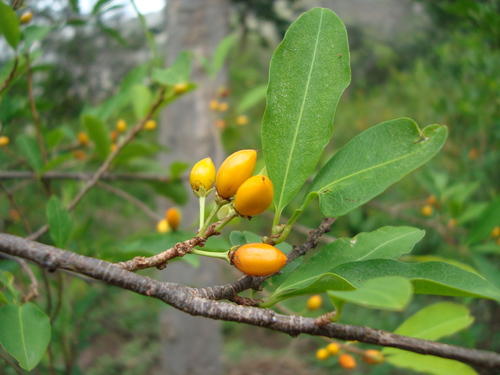
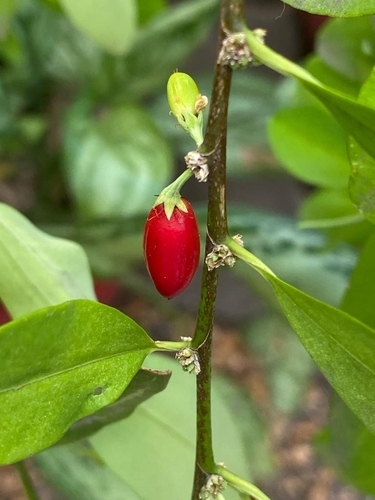
Erythroxylum cuneatum
(Miq.) Kurz.
iNaturalist· cc-by-nc-nd
(c) loupok, some rights reserved (CC BY-NC-ND)
iNaturalist· cc-by
(c) pbsg, some rights reserved (CC BY)
iNaturalist· cc-by
(c) pbsg, some rights reserved (CC BY)
Description
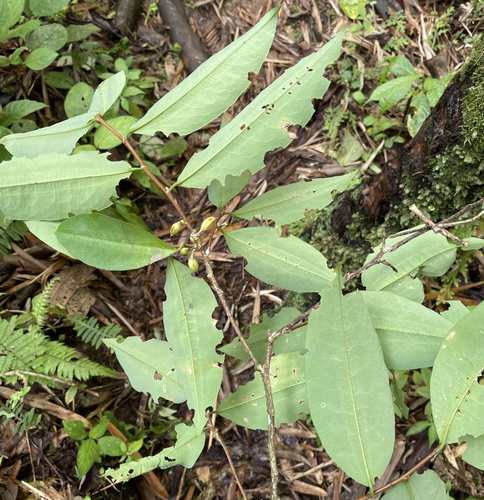
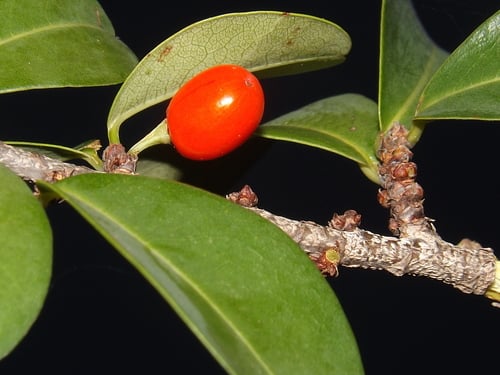
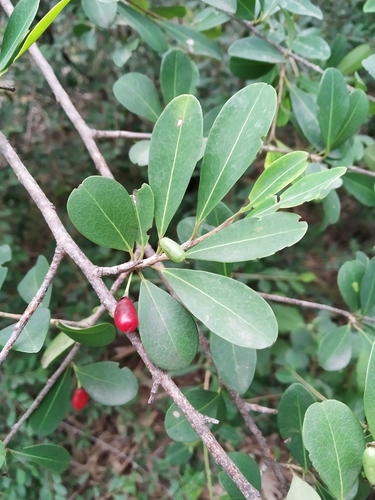
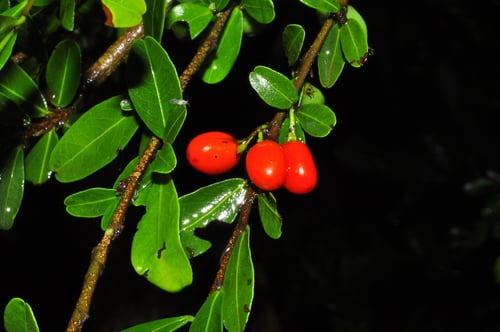
A small or large tree. They can grow 2.5 to 30 m high. The trunk is up to 35-55 cm across. The small branches are angular. The leaves vary in size and shape. They can be broadly or narrow oval or oblong. They are 5-11 cm long by 2-3 cm wide. They are dark green and shiny above and dull light green underneath. The midrib is sunken above and prominent underneath. The flowers are in clusters of 1-8. They are white to light green. The fruit is fleshy and oval. It is red and 7-12 mm long by 3-6 mm wide.
Edible Uses
The leaves are used as a vegetable, particularly in vegetable soup, and have astringent properties.
Traditional Uses
The leaves are used as a vegetable. They are astringent. They are used in vegetable soup.
This uses section is brief — help expand it
Medicinal Uses
The plant has various medical benefits.
Distribution
A tropical plant. It can grow behind sandy beaches or on rocky shores. It can also grow in a range of other locations including peat forest and limestone ridges up to 900 m above sea level.
Where It Grows
Asia, Indochina, Indonesia, Myanmar, Pacific, Philippines, SE Asia, Thailand,
Notes
There are about 250 Erythroxylum species. It has various medical benefits.
Synonyms
Also Known As
Ankara nula, Asan, Baka, Banka, Buguran, Dook oung, Kakane, Kayu mutoh, Membentaan, Nembentahan
References (4)
- Conn, B.J., (Ed.) 1995, Handbooks of the Flora of Papua New Guinea. Vol 3. Melbourne University Press. p 56
- Kachenchart, B., et al, 2008, Phenology of Edible Plants at Sakaerat Forest. In Proceedings of the FORTROP II: Tropical Forestry Change in a Changing World. Bangkok, Thailand.
- Payens, J. P.D.W., 1958, Connaraceae in Flora Malesiana 5(4) p 534
- Srichaiwong, P., et al, 2014, A Study of the Biodiversity of Natural Food Production to Support Community Upstream of Chi Basin, Thailand. Asian Social Science 10 (2):