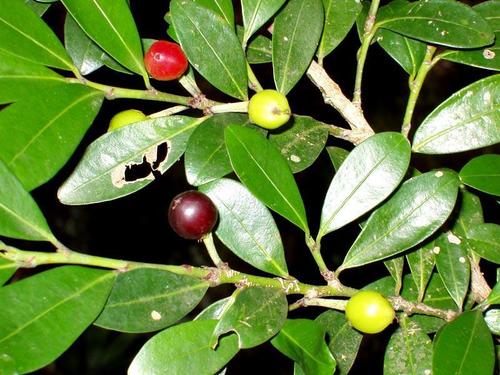
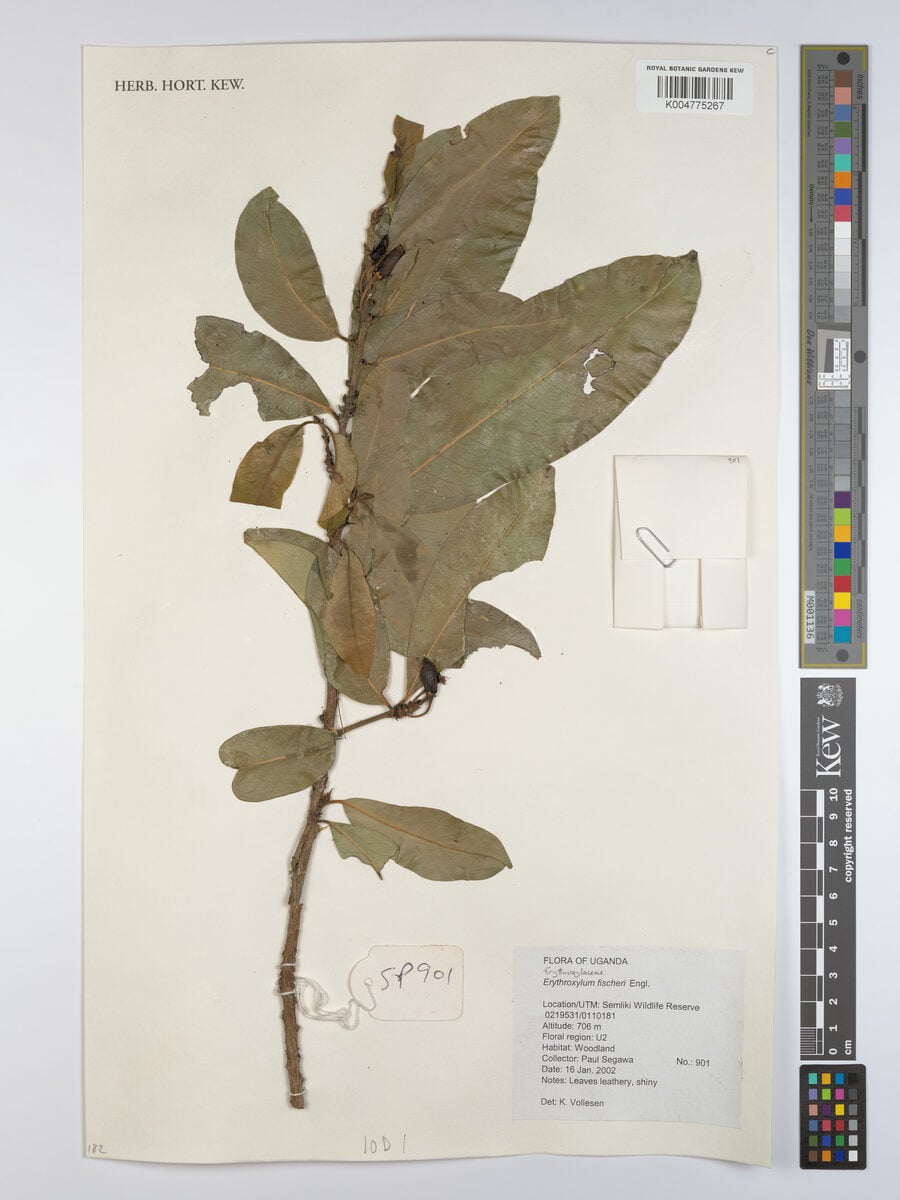
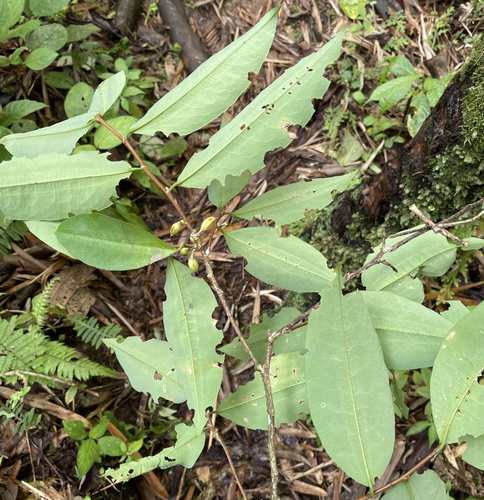
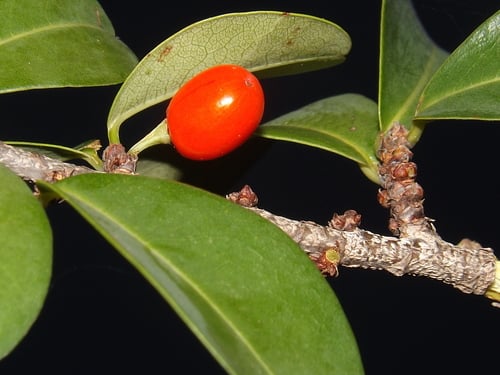
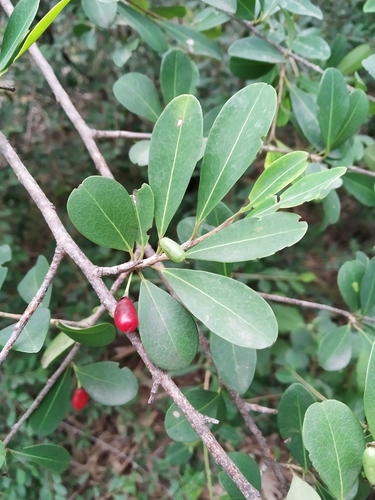
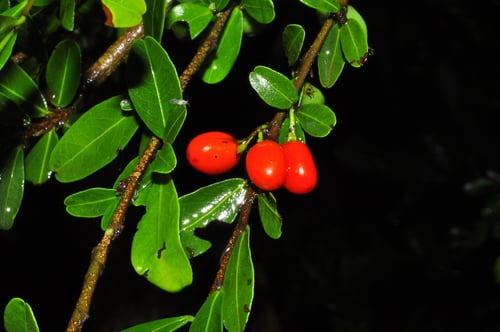
Erythroxylum novogranatense var. truxillense
(Rusby) Plowman
Trujilla coca
iNaturalist· cc-by-nc
(c) danimontes_2023, some rights reserved (CC BY-NC), uploaded by danimontes_2023
iNaturalist· cc-by-nc
(c) Joey Santore, some rights reserved (CC BY-NC), uploaded by Joey Santore
iNaturalist· cc-by-nc
(c) Joey Santore, some rights reserved (CC BY-NC), uploaded by Joey Santore
Summary
Source: WikipediaErythroxylum novogranatense, also known as Colombian Coca, is a species of shrub or small tree in the family Erythroxylaceae native to Colombia, Ecuador, Peru, Trinidad-Tobago, and Venezuela. It is used medicinally and as a narcotic. Erythroxylum novogranatense is one of the primary species of cultivated Coca, despite being less widely cultivated than Erythroxylum coca.
Description
A tropical shrub or small tree in the Erythroxylaceae family. The leaves are harvested and dried for tea preparation.
This description is brief — help expand it
Edible Uses
Leaves are dried and brewed as tea.
Medicinal Uses
As one of the oldest cultivated plants in the Americas, Erythroxylum novogranatense has been cultivated as a source of cocaine for thousands of years, but its role in the production of cocaine is relatively small. Erythroxylum novogranatense var. novogranatense represents about 20% of the coca crop grown in Colombia. Erythroxylum novogranatense var. truxillense is used as a flavouring agent of Coca Cola, which uses decocainised extracts of this variety. The cocaine produced by the process of decocanisation is sold for legal use in modern surgery for pain management. Dried leaves of Erythroxylum novogranatense var. novogranatense are used in the preparation of coca tea by the indigenous Nasa tribe of Colombia. The leaves of Erythroxylum novogranatense are also used to produce Coca flour. It is cultivated as an ornamental plant throughout tropical countries.
Known Hazards
The cocaine content in leaves of E. novogranatense var. novogranatense is 0.55-0.93%, with an average of 0.77% and in E. novogranatense var. truxillense the cocaine content is 0.42-1.02%, with a mean of 0.72%. The foliage also contains cinnamoylcocaine. The plants also contain methyl salicylate.
Distribution
It is a tropical plant.
Where It Grows
Andes, Ecuador, Peru, South America,
Cultivation
Plants are grown from seeds.
Synonyms
References (2)
- Kermath, B. M., et al, 2014, Food Plants in the Americas: A survey of the domesticated, cultivated and wild plants used for Human food in North, Central and South America and the Caribbean. On line draft. p 348
- Wiersema, J. H. & Leon, B., 2013, World Economic Plants. A Standard Reference CRC Press. 2nd Ed. p 285