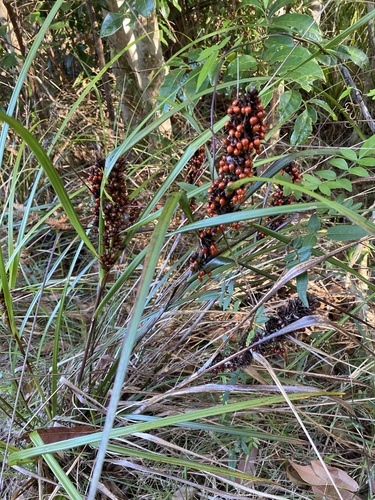
Cyperus erythrorhizos
Muhl.
Redroot Flatsedge
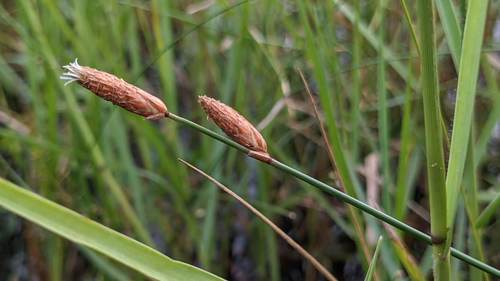
iNaturalist· cc-by-nc
(c) Samuel Brinker, some rights reserved (CC BY-NC), uploaded by Samuel Brinker
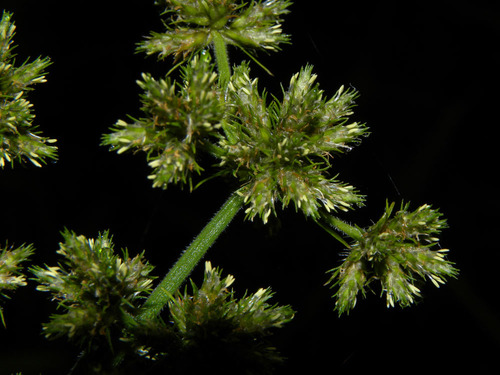
iNaturalist· cc-by
(c) Michael J. Papay, some rights reserved (CC BY), uploaded by Michael J. Papay
iNaturalist· cc-by
(c) Michael J. Papay, some rights reserved (CC BY), uploaded by Michael J. Papay
Description
Cyperus erythrorhizos is a ANNUAL growing to 0.8 m (2ft 7in) by 0.2 m (0ft 8in) at a fast rate. See above for USDA hardiness. It is hardy to UK zone 5. The flowers are pollinated by Wind. It is noted for attracting wildlife. Suitable for: light (sandy), medium (loamy) and heavy (clay) soils. Suitable pH: mildly acid, neutral and basic (mildly alkaline) soils. It can grow in semi-shade (light woodland) or no shade. It prefers moist or wet soil.
Edible Uses
The seeds are considered edible and were historically gathered as a grain-like resource. Roots are not typically documented as a food source for this species. As with all aquatic or semi-aquatic plants, proper cooking is advisable to reduce pathogen risk. Edible Uses & Rating: Seeds may be harvested, dried, and processed into meal or added to grain mixtures. Their overall rating is moderate; they are useful but not exceptional, primarily due to the labor required for collection. Taste, Processing & Kitchen Notes: The seeds are comparable to those of bulrushes—mild, slightly nutty, and free of harsh flavors. When ground into flour, they can be incorporated into breads or porridges. Roasting may enhance flavor, while boiling softens the seed coats. The stems, though technically usable, tend to be fibrous and are not recommended as a primary food. Seasonality (Phenology): Flowering and seed production can occur nearly year-round in warmer climates but are most reliable from late spring through autumn. Seeds should be collected once fully mature and dry. Safety & Cautions (Food Use): Plants growing in wetlands may harbor parasites or microbial contaminants. Cooking is strongly recommended. Accurate identification is also essential because wetland sedges often grow intermixed with unrelated species. Harvest & Processing Workflow: Seed heads should be clipped once they begin to dry, then threshed to separate the achenes. Winnowing removes chaff. Seeds may then be roasted, boiled, or ground. Gathering is easiest during dry weather when the seed heads release readily. Cultivar/Selection Notes: No known cultivars exist. This is a strictly wild species with limited horticultural development. Look-Alikes & Confusion Risks: Other Cyperus species may appear similar, but the reddish roots are distinctive when exposed. Sedges can be differentiated from grasses by their typically triangular stems and lack of paired glumes. Traditional/Indigenous Use Summary: Seeds of related flatsedges were important foods among several Native American groups, suggesting that redroot flatsedge likely served as a supplementary grain where available.
Medicinal Uses
Cyperus erythrorhizos, commonly known as red-root flatsedge, has documented traditional, though limited, culinary/subsistence use, rather than broad medicinal application. Traditional Food Use: The Kumeyaay Native Americans have traditionally used the mashed seeds of Cyperus erythrorhizos to make porridge. Characteristics: It is an annual plant identified by its red-pigmented, tangled root mat. It is important not to confuse C. erythrorhizos with Cyperus rotundus (Nutgrass) or Cyperus esculentus (Tigernut), which are well-documented in traditional medicine (Ayurveda, Chinese medicine) for treating digestive issues, inflammation, and skin conditions. Warning: While some Cyperus species are edible, others can be toxic. There is no specific evidence supporting the use of C. erythrorhizos in modern pharmacological applications.
Known Hazards
Plants growing in wetlands may harbor parasites or microbial contaminants. Cooking is strongly recommended. Accurate identification is also essential because wetland sedges often grow intermixed with unrelated species.
Distribution
The native range of this species is S. Canada to U.S.A., NW. Mexico.
Where It Grows
US. USA. Alabama, Arizona, Arkansas, British Columbia, California, Connecticut, Delaware, District of Columbia, Florida, Georgia, Illinois, Indiana, Iowa, Kansas, Kentucky, Louisiana, Maine, Manitoba, Maryland, Massachusetts, Mexico Northwest, Michigan, Minnesota, Mississippi, Missouri, Nebraska, Nevada, New Hampshire, New Jersey, New Mexico, New York, North Carolina, North Dakota, Ohio, Oklahoma, Ontario, Oregon, Pennsylvania, Rhode I., South Carolina, South Dakota, Tennessee, Texas, Utah, Vermont, Virginia, Washington, West Virginia, Wisconsin.
Cultivation
Redroot flatsedge is not a staple wild food but represents a dependable emergency grain in wetland environments. Its ecological resilience adds to its value for traditional foraging systems. Growing Conditions: Prefers moist to saturated soils and tolerates seasonal flooding. It performs well in full sun but can endure partial shade. Habitat & Range: Common across much of North America in marshes, ditches, streambanks, and disturbed wetlands. Size & Landscape Performance: Its upright, tufted growth provides texture in naturalistic plantings but it is seldom used ornamentally. Cultivation (Horticulture): Rarely cultivated intentionally; typically regarded as a volunteer species in wet gardens. Pests & Problems: Generally hardy, though prolonged drought limits vigor. Identification & Habit: A perennial sedge with grass-like leaves, triangular stems, and flattened spikelets arranged in rows. Roots often display reddish coloration. Pollinators: Like most sedges, redroot flatsedge is primarily wind-pollinated and offers minimal nectar resources, though birds may consume the seeds. Plant Name: Redroot Flatsedge. Family: Cyperaceae. Genus: Cyperus. Common Names: Redroot flatsedge, redroot nutgrass. USDA Hardiness Zones: Approximately 4–10. Height/Spread: Typically 20–80 cm tall, spreading gradually via fibrous roots rather than aggressively creeping rhizomes.
Propagation
Spreads by seed and root division.
Other Uses
Its upright, tufted growth provides texture in naturalistic plantings but it is seldom used ornamentally. Rarely cultivated intentionally; typically regarded as a volunteer species in wet gardens. Provides seed for birds and cover for small wetland fauna while stabilizing soils. Like most sedges, redroot flatsedge is primarily wind-pollinated and offers minimal nectar resources, though birds may consume the seeds.
Synonyms
Also Known As
Red-root flatsedge