Eruca vesicaria
(L.) Cav.
Rocket
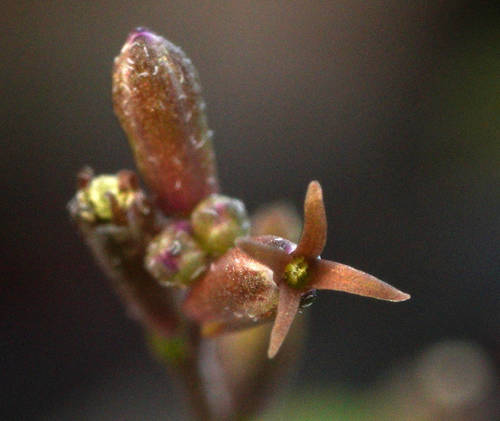
iNaturalist· cc-by-nc
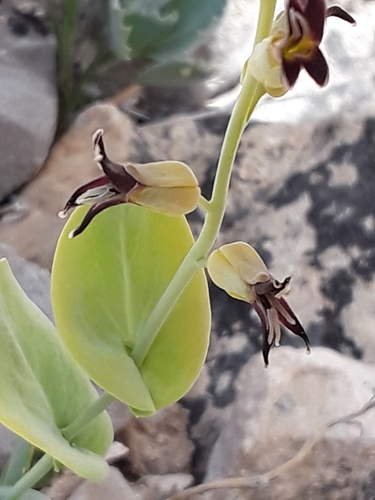
(c) Víctor González García, some rights reserved (CC BY-NC), uploaded by Víctor González García
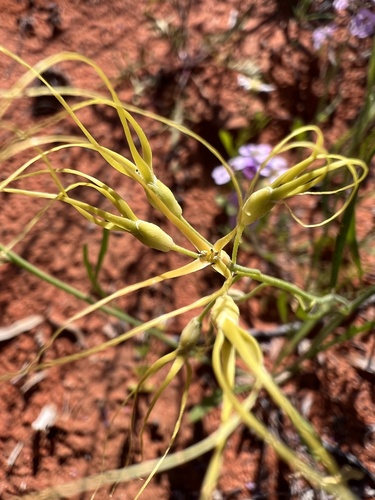
iNaturalist· cc-by-nc
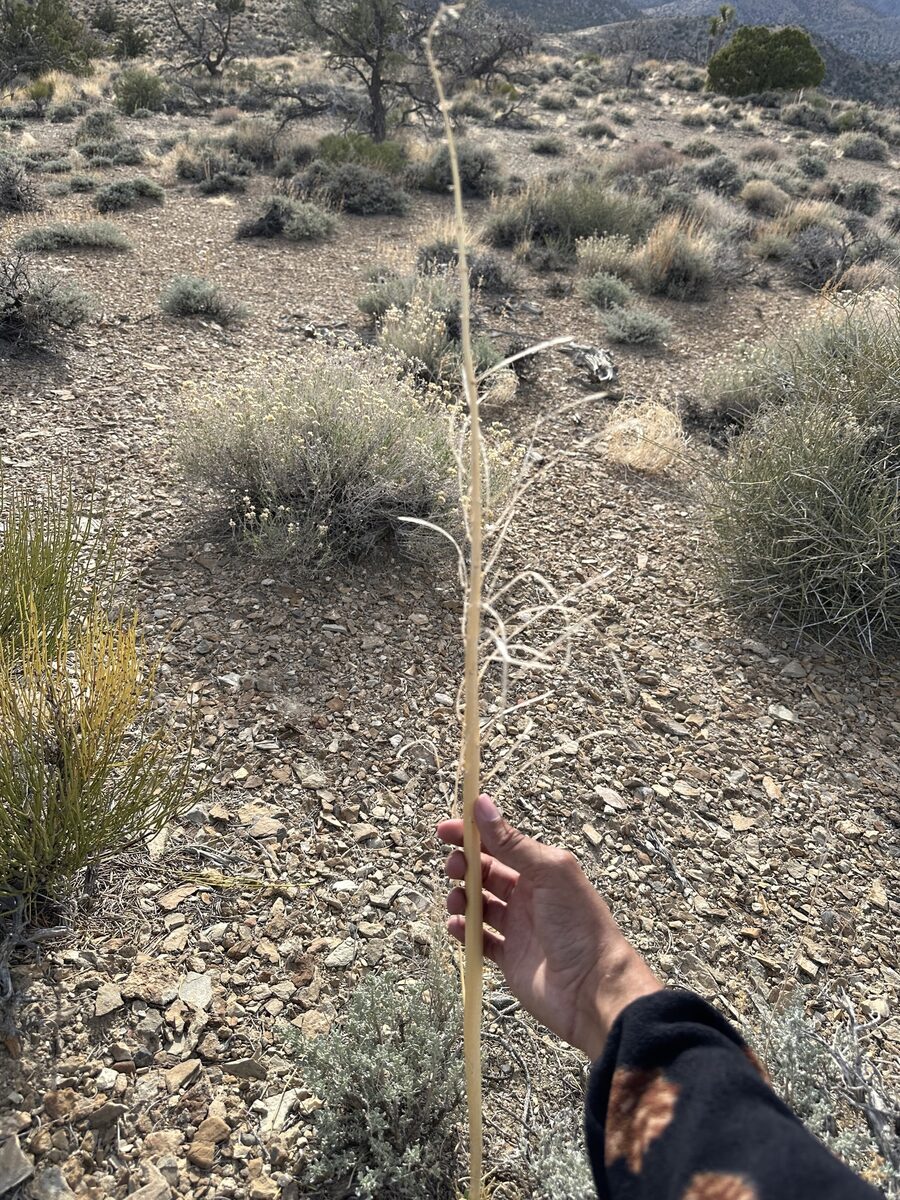
(c) James Bailey, some rights reserved (CC BY-NC), uploaded by James Bailey
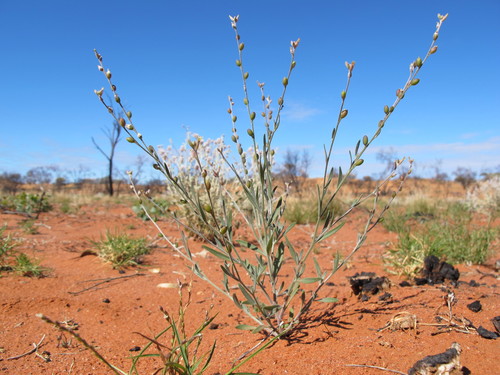
iNaturalist· cc-by-nc
(c) arkim, some rights reserved (CC BY-NC), uploaded by arkim
Summary
Source: WikipediaEruca vesicaria is a species of Eruca native to Spain, Morocco, and Algeria. Some botanists consider Eruca vesicaria and E. sativa conspecific. However, they are different in many morphological aspects such as sepal persistence, silique shape, and habit. Most importantly, they do not hybridize freely with each other as there is partial reproductive isolation between them. Plants of the World Online has accepted them as two distinct species.
Description
A cabbage family herb. It is an annual plant. It grows to a height of 1 m and spreads to 0.5 m across. It has a taproot, The stem is erect and slender with few branches. The leaves are bright green and occur opposite each other. The leaves have deep lobes. The flowers are white or pale yellow with purple veins. There are 4 petals. The fruit are 1-4.5 cm long. They are beaked and erect. There are many seeds and are round and 1-2 mm across.
Edible Uses
Young leaves can be eaten raw or cooked and have a distinctly strong, spicy flavour that is best from fast-grown plants. A few leaves work well in salads, though the flavour is too intense for many people. Older leaves that have grown too hot to eat on their own can be pureed and added to soups. In milder parts of Britain, edible leaves can be produced year-round through successional sowings, particularly if winter crops are given some protection. The flowers are edible raw, with a similar taste to the leaves, and make an attractive garnish on a salad bowl. The seeds yield a semi-drying oil known as jamba oil, containing 32% fat and 27% protein. Its use as a salad or cooking oil is limited by an initial acridity, which disappears after the oil has been stored for 6 months, at which point it becomes suitable for cooking and can substitute for rapeseed oil. A mustard can also be made from the seed; the pungency develops when cold water is added to the ground seed, as an enzyme (myrosin) acts on a glycoside (sinigrin) to produce a sulphur compound over 10–15 minutes. Mixing with hot water or vinegar, or adding salt, inhibits the enzyme and produces a mild, bitter mustard.
Traditional Uses
The young leaves are used as a salad vegetable. They are tender, bitter and slightly mustard flavoured. Older leaves can be pureed and used in soups and sauces. The seeds are also eaten. They are used in pickles. They are used for Persian mustard. The seeds yield an edible oil. The flowers are used as a garnish. The seeds can be sprouted and eaten.
Medicinal Uses
Rocket was once commonly used medicinally, though today it is regarded mainly as a salad herb. The leaves are antiscorbutic, diuretic, rubefacient, stimulant, and stomachic. Eruca contains the glucosinolate methylsulphinylbutyl isothiocyanate, which induces enzymes with anticancer activity. The seed is rubefacient and stimulant, and powdered seed has shown antibacterial activity, though no alkaloids have been isolated. The oil from the seed is said to have aphrodisiac properties and can be used for massage and soothing the skin.
Distribution
A native of Mediterranean regions. It will grow on most well drained soils. It prefers an open sunny position. It is drought and frost resistant. It can grow on poor soils and with low rainfall. It suits hardiness zones 7-10. In the tropics it grows up to 2,100 m altitude. It can grow in arid places. Tasmania Herbarium.
Where It Grows
Afghanistan, Africa, Albania, Algeria, Amazon, Andorra, Argentina, Armenia, Asia, Australia, Austria, Azerbaijan, Bahrain, Balkans, Belarus, Bolivia, Bosnia, Brazil, Bulgaria, Canary Islands, Cape Verde, Caucasus, Central Africa, Central Asia, Chad, Chile, China, Cook Islands, Costa Rica, Crete, Croatia, Cuba, Cyprus, Czech Republic, Dagestan, East Africa, Ecuador, Egypt, Eritrea, Ethiopia, Europe, France, Georgia, Germany, Greece, Hawaii, Hungary, India, Iran, Iraq, Israel, Italy, Jordan, Kazakhstan, Kenya, Kyrgyzstan, Kuwait, Lebanon, Libya, Lithuania, Mali, Malta, Mauritania, Mediterranean*, Mexico, Middle East, Moldova, Mongolia, Morocco, New Zealand, Niger, North Africa, North America, Norway, Oman, Pacific, Pakistan, Palestine, Paraguay, Philippines, Poland, Portugal, Qatar, Romania, Russia, Sahel, Saudi Arabia, Scandinavia, Sicily, SE Asia, Slovakia, Slovenia, Socotra, South Africa, Southern Africa, South America, Spain, Sudan, Switzerland, Syria, Tasmania, Tajikistan, Tunisia, Turkey, Türkiye, Turkmenistan, Tuvalu, Ukraine, United Arab Emirates, UAE, USA, Uzbekistan, West Africa, West Indies, Yemen, Yugoslavia, Zimbabwe,
Cultivation
Plants are grown from seed. Seeds germinate in about 1 day at 25°C. Plants need to be cross-pollinated by insects to produce seed.
Propagation
Sow seed in situ. Germination is usually very rapid, taking as little as 24 hours at 25°C. Successional sowings every few weeks will provide a continuous supply of edible leaves.
Other Uses
The seed yields a semi-drying oil rich in erucic acid that can substitute for rapeseed oil. It burns with very little soot and can be used for lighting. Industrially, eruca seed oil is used as a lubricant, in soap-making, as an illuminating agent, in massage, in medicines, and as a salad oil. High erucic acid (HEA) oil has notable properties including high smoke and flash points, stability and oiliness at high temperatures, the ability to remain fluid at low temperatures, and durability. It is used to produce erucamide, a slip additive in polythene and polypropylene that reduces surface friction and prevents adhesion between film surfaces. HEA oil is also used in printing inks and lubricants. An essential oil from the leaves contains 67 volatile components representing 96.52% of the oil, characterised by a high content of sulphur and nitrogen compounds. Erucic oil is sometimes used to adulterate rapeseed or mustard oil.
Production
It should be grown using high nitrogen levels to assist rapid growth and reduce the bitterness. Leaves are picked before flowering to give a more mild taste. Leaves can be harvested after about 3-4 weeks.
Other Information
It is a commercially cultivated vegetable.
Notes
There are 4 or 5 Eruca species. The seeds contain 30-35% oil.
Nutrition
| Part | Moisture | kJ | kcal | Protein | Vit A | Vit C | Iron | Zinc |
|---|---|---|---|---|---|---|---|---|
| Seed | 6.3 | 2023 | 484 | 17.8 | — | — | — | — |
| Leaves | 91.7 | 105 | 25 | 2.6 | 35 | 15 | 1.5 | 0.5 |
Synonyms
Also Known As
Arugula, Assu, Bhutaghna, Bou hammou, Braymabogani, Chipiquelite, Daradharsha, Garden rocket, Garguir, Jamama, Jamba oil, Jamba, Jaramago blanco, Jar jeer, Jawawa, Jirjir, Laken, Lharra, Mediterranean rocket, Navadna rukvica, Oruga, Rabano, Rauke, Rocket-salad, Roka, Roketsuto, Roman rocket, Roqueta, Roquette, Ruca, Rucola, Rucula, Rugula, Selmogi, Seoha, Shwetsursha, Tamira, Tara-mira, Tara, Taramira, Usan, Yabani roka, Zi ma cai
References (92)
- Ali-Shtayeh, M. S., et al, 2008, Traditional knowledge of wild edible plants used in Palestine (Northern West Bank): A comparative study. J Ethnobiol Ethnomed. 4: 13
- Al-Qura'n, S. A., 2010, Ethnobotanical and Ecological Studies of Wild Edible Plants in Jordan. Libyan Agriculture Research Center Journal International 1(4):231-243 (As Eruca sativa)
- Al-Sodany, Y. M., et al, 2013, Medicinal Plants in Saudi Arabia: I. Sarrwat Mountains at Taif, KSA. Academic Journal of Plant Sciences 6 (4): 134-145 (As Eruca sativa)
- Ambasta, S.P. (Ed.), 2000, The Useful Plants of India. CSIR India. p 202
- Asfaw, Z. and Tadesse, M., 2001, Prospects for Sustainable Use and Development of Wild Food Plants in Ethiopia. Economic Botany, Vol. 55, No. 1, pp. 47-62
Show all 92 references Hide references
- Barazani, O. & Ziffer-Berger, J., 2014, Eruca sativa, a Tasty Salad Herb with Health-Promoting Properties, in Z. Yaniv, N. Dudai (eds.), Medicinal and Aromatic Plants of the Middle-East, Springer p 269
- Bernholt, H. et al, 2009, Plant species richness and diversity in urban and peri-urban gardens of Niamey, Niger. Agroforestry Systems 77:159-179
- Bidak, L. M., et al, 2015, Goods and services provided by native plants in desert ecosystems: Examples from the northwestern coastal desert of Egypt. Global Ecology and Conservation 3 (2015) 433–447
- Biscotti, N. et al, 2018, The traditional food use of wild vegetables in Apulia (Italy) in the light of Italian ethnobotanical literature. Italian Botanist 5:1-24 (As Eruca sativa)
- Blamey, M and Grey-Wilson, C., 2005, Wild flowers of the Mediterranean. A & C Black London. p 68
- Blanco-Salas, J., et al, 2019, Wild Plants Potentially Used in Human Food in the Protected Area “Sierra Grande de Hornachos” of Extremadura (Spain). Sustainability 2019, 11, 456
- Bodkin, F., 1991, Encyclopedia Botanica. Cornstalk publishing, p 399
- Bremness, L., 1994, Herbs. Collins Eyewitness Handbooks. Harper Collins. p 249
- Brown, D., 2002, The Royal Horticultural Society encyclopedia of Herbs and their uses. DK Books. p 204
- Burnie, G & Fenton-Smith, J., 1999, A Grower's Guide to Herbs. Murdoch Books. p 57
- Bussman, R. W., et al, 2016, A comparative ethnobotany of Khevsureti, Samtskhe-Javakheti, Tusheti, Svaneti, and Racha-Lechkhumi, Republic of Georgia (Sakartvelo), Caucasus. Journal of Ethnobiology and Ethnomedicine (2016) 12:4 (As Eruca sativa)
- Bussman, R. W., et al, 2021, Unity in diversity—food plants and fungi of Sakartvelo (Republic of Georgia), Caucasus. Journal of Ethnobiology and Ethnomedicine (2021) 17:72 p 6
- Cerne, M., 1992, Wild Plants from Slovenia used as Vegetables. Acta Horticulturae 318 (As Eruca sativa)
- Cheifetz, A., (ed), 1999, 500 popular vegetables, herbs, fruits and nuts for Australian Gardeners. Random House p 125
- Cundall, P., (ed.), 2004, Gardening Australia: flora: the gardener's bible. ABC Books. p 559
- D'Ambrosio, U., & Puri, R. K., 2016, Foodways in transition: food plants, diet and local perceptions of change in a Costa Rican Ngäbe community. Journal of Ethnobiology and Ethnomedicine (2016) 12:3 p 22
- Della, A., et al, 2006, An ethnobotanical survey of wild edible plants of Paphos and Larnaca countryside of Cyprus. J. Ethnobiol. Ethnomed. 2:34
- Demir, I. & Ayaz, N., 2022, Wild edible plants contributing to the traditional foods of Mardin (Turkey) Province. Indian Journal of Traditional Knowledge Vol 21(3), July 2022, pp 569-582
- Dogan, Y., 2012, Traditionally used wild edible greens in the Aegean Region of Turkey. Acta Societatis Botanicorum Poloniae 81(4): 329-342 (As Eruca sativa)
- Duarte, M. C., et al, 2022, Diversity of Useful Plants in Cabo Verde Islands: A Biogeographic and Conservation Perspective. Plants 2022, 11, 1313 p 10
- Ertug, F., 2004, Wild Edible Plants of the Bodrum Area. (Mugla, Turkey). Turk. J. Bot. 28 (2004): 161-174
- Ertug, F, Yenen Bitkiler. Resimli Türkiye Florası -I- Flora of Turkey - Ethnobotany supplement
- Facciola, S., 1998, Cornucopia 2: a Source Book of Edible Plants. Kampong Publications, p 58
- Flora of Australia, Volume 8, Lecythidales to Batales, Australian Government Publishing Service, Canberra (1982) p 246
- Flora of China @ efloras.org Volume 8
- Flora of Pakistan.
- Galalaey, A. M. K., et al, 2021, Ethnobotanical study of some wild edible plants in Hujran Bason, Kurdistan Region of Iraq. ZANCO Journal of Pure and Applied Sciences. Salahaddin University-Erbil p 26 (As Eruca sativa)
- Gard. dict. ed. 8: Eruca no. 1. 1768
- Geraci, A., et al, 2018, The wild taxa utilized as vegetables in Sicily (Italy): a traditional component of the Mediterranean diet. Journal of Ethnobiology and Ethnomedicine (2018) 14:14
- Grubben, G. J. H. and Denton, O. A. (eds), 2004, Plant Resources of Tropical Africa 2. Vegetables. PROTA, Wageningen, Netherlands. p 294
- Hadjichambis, A. C., et al, 2007, Wild and semi-domesticated food plant consumption in seven circum-Mediterranean areas. International Journal of Food Sciences and Nutrition. 2007, 1-32.
- Hamayun, M., Ethnobotanical Studies of some Useful Shrubs and Trees of District Buner, NWFP, Pakistan
- Hedrick, U.P., 1919, (Ed.), Sturtevant's edible plants of the world. p 293
- Hemphill, I, 2002, Spice Notes. Macmillan. p 326
- Hermandez Bermejo, J.E., and Leon, J. (Eds.), 1994, Neglected Crops. 1492 from a different perspective. FAO Plant Production and Protection Series No 26. FAO, Rome. p 303
- Heywood, V. H. & Zohary, D.,1995, A Catalogue of the Wild Relatives of Cultivated Plants Native to Europe. Flora Mediterranea 5 - 1995, p 391
- Hibbert, M., 2002, The Aussie Plant Finder 2002, Florilegium. p 95
- Hinnawi, N. S. A., 2010, An ethnobotanical study of wild edible plants in the Northern West Bank "Palestine". An-Najah National University. p 92
- Hu, Shiu-ying, 2005, Food Plants of China. The Chinese University Press. p 416 (As Eruca vesicaria)
- Ibn Oaf, H.S., 2004. Eruca vesicaria (L.) Cav. [Internet] Record from Protabase. Grubben, G.J.H. & Denton, O.A. (Editors). PROTA (Plant Resources of Tropical Africa), Wageningen, Netherlands. < http://database.prota.org/search.htm>. Accessed 16 October 2009.
- Jardin, C., 1970, List of Foods Used In Africa, FAO Nutrition Information Document Series No 2.p 43, 77
- Kargioglu, M. et al, 2010, Traditional Uses of Wild Plants in the Middle Aegean Region. Human Ecology 38:429-450
- Katz, E., et al, 2012, No greens in the forest? Note on the limited consumption of greens in the Amazon. Acta Soc Bot Pol 81(4):283–293 (As Erica sativa)
- Kays, S. J., and Dias, J. C. S., 1995, Common Names of Commercially Cultivated Vegetables of the World in 15 languages. Economic Botany, Vol. 49, No. 2, pp. 115-152
- Khan, A. H., et al, 2023, Traditional foraging for ecological transition? Wild food ethnobotany among three ethnic groups in the highlands of the eastern Hindukush, North Pakistan. Journal of Ethnobiology and Ethnomedicine 19:9
- Kiple, K.F. & Ornelas, K.C., (eds), 2000, The Cambridge World History of Food. CUP p 434, 1722
- Kybal, J., 1980, Herbs and Spices, A Hamlyn Colour Guide, Hamlyn Sydney p 94
- Lazarides, M. & Hince, B., 1993, Handbook of Economic Plants of Australia, CSIRO. p 96
- Luczaj et al, 2013, Wild vegetable mixes sold in the markets of Dalmatia (southern Croatia). Journal of Ethnobiology and Ethnomedicine. 8:2
- Luczaj, L. et al, 2014, Wild Food Plants of Dalmatia (Croatia). in A. Pieroni, C. L. Quave (eds.), Ethnobotany and Biocultural Diversities in the Balkans, p 138 (As Eruca sativa)
- Mahklouf, M. H., 2019, Ethnobotanical Study of Edible Wild Plants in Libya. European Journal of Ecology. 5(2): 30-40 (As Eruca sativa)
- Malezas Comestibles del Cono Sur, INTA, 2009, Buernos Aires
- Martin, F.W. & Ruberte, R.M., 1979, Edible Leaves of the Tropics. Antillian College Press, Mayaguez, Puerto Rico. p 188
- Miguel, E., et al, 1989, A checklist of the cultivated plants of Cuba. Kulturpflanze 37. 1989, 211-357 (As Eruca sativa)
- Morley, B. & Everard, B., 1970, Wild Flowers of the World. Ebury press. Plate 30
- Nassif, F., & Tanji, A., 2013, Gathered food plants in Morocco: The long forgotten species in Ethnobotanical Research. Life Science Leaflets 3:17-54
- Norrington, L., & Campbell, C., 2001, Tropical Food Gardens. Bloomings Books. p 52
- Norton, J., et al, 2009, An Illustrated Checklist of the Flora of Qatar. UNESCO Office in Doha.
- Oran, S. A. S., 2015, Selected Wild Aromatic Plants in Jordan. International Journal of Medicinal Plants. Photon 108 (2015) 686-699 (As Eruca sativa)
- Paczkowska, G. & Chapman, A.R., 2000, The Western Australian Flora. A Descriptive Catalogue. Western Australian Herbarium. p 185
- Pasta, S., et al, 2020, An Updated Checklist of the Sicilian Native Edible Plants: Preserving the Traditional Ecological Knowledge of Century-Old Agro-Pastoral Landscapes. Frontiers in Plant Science. Volume 11|Article 388 (As Eruca sativa)
- Pieroni, A., et al, 2005, Food for two seasons: Culinary uses of non-cultivated local vegetables and mushrooms in a south Italian village. International Journal of Food Sciences and Nutrition, 56(4): 245-272 (As Eruca sativa)
- Plants for a Future database, The Field, Penpol, Lostwithiel, Cornwall, PL22 0NG, UK. http://www.scs.leeds.ac.uk/pfaf/
- PROSEA handbook Volume 13 Spices. p 253
- Rivera, D. et al, 2006, Gathered Mediterranean Food Plants - Ethnobotanical Investigations and Historical Development, in Heinrich M, Müller WE, Galli C (eds): Local Mediterranean Food Plants and Nutraceuticals. Forum Nutr. Basel, Karger, 2006, vol 59, pp 18–74
- Royal Botanic Gardens, Kew (1999). Survey of Economic Plants for Arid and Semi-Arid Lands (SEPASAL) database. Published on the Internet; http://www.rbgkew.org.uk/ceb/sepasal/internet [Accessed 15th April 2011]
- Ruiters-Welcome, A. K., 2019, Food plants of southern Africa. Ph.D. thesis. Univ. of Johannesburg p 39 (As Eruca sativa)
- Schneider, E., 2001, Vegetables from Amaranth to Zucchini: The essential reference. HarperCollins. p 26
- Seidemann J., 2005, World Spice Plants. Economic Usage, Botany, Taxonomy. Springer. p 147
- Sher, H. et al, 2011, Ethnobotanical and Economic Observations of Some Plant Resources from the Northern Parts of Pakistan. Ethnobotany research & Applications 9:027-041 (As Eruca sativa)
- Sher, Z., Hussain, F., & Ibrar, M., 2014, Traditional knowledge on plant resources of Ashezai and Salarzai Valleys, District Buner, Pakistan. African Journal of Plant Science. Vol. 8(1), pp. 42-53, January 2014 (As Eruca sativa)
- Staples, G.W. and Herbst, D.R., 2005, A tropical Garden Flora. Bishop Museum Press, Honolulu, Hawaii. p 203
- Tasmanian Herbarium Vascular Plants list p 17
- Tardio, J., et al, Ethnobotanical review of wild edible plants in Spain. Botanical J. Linnean Soc. 152 (2006), 27-71 (Also as Eruca sativa)
- Terra, G.J.A., 1973, Tropical Vegetables. Communication 54e Royal Tropical Institute, Amsterdam, p 45
- Torre, de la, L., et al, 2008, Enciclopedia de las Plantas Útiles del Ecuador. Herbario QCA. Pontificia Universidad Católica del Ecuador. p 257
- Tronickova, E. & Krejcova, Z., 1987, Ortaggi, Instituto Geografico de Agostini, Cecoslovacchia. p 92
- Tukan, S. K., et al, 1998, The use of wild edible plants in the Jordanian diet. International Journal of Food Sciences and Nutrition. 49:225-235
- Ulian, T., et al, 2020, Unlocking plant resources to support food security and promote sustainable agriculture. Plants, People, Planet. 2020;2:421–445.
- Urgamal, M., Oyuntsetseg, B., Nyambayar, D. & Dulamsuren, Ch. 2014. Conspectus of the vascular plants of Mongolia. (Editors: Sanchir, Ch. & Jamsran, Ts.). Ulaanbaatar, Mongolia. “Admon“ Press. 334pp. (p. 79-90).
- USDA, ARS, National Genetic Resources Program. Germplasm Resources Information Network - (GRIN). [Online Database] National Germplasm Resources Laboratory, Beltsville, Maryland. Available: www.ars-grin.gov/cgi-bin/npgs/html/econ.pl (10 April 2000)
- van Wyk, B., 2005, Food Plants of the World. An illustrated guide. Timber press. p 191
- Welcome, A. K. & Van Wyk, B.-E., 2019, An inventory and analysis of the food plants of southern Africa. South African Journal of Botany 122 (2019) 136–179 (As Eruca sativa)
- Wiersema, J. H. & Leon, B., 2013, World Economic Plants. A Standard Reference CRC Press. 2nd Ed. p 281
- Young, H., et al, 2005, Darfur - Livelihoods under Siege. Feinstein International Famine Center. p 175
- Youssef, R. S. A., 2013, Medicinal and non-medicinal uses of some plants found in the middle region of Saudi Arabia. Journal of Medicinal Plants Research. Vol. 7(34), pp. 2501-2517
- Zeven, A. C. & de West, J. M. J., 1982, Dictionary of cultivated plants and their regions of diversity. Wageningen. p 72