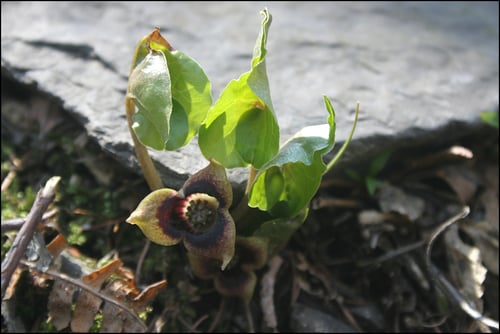
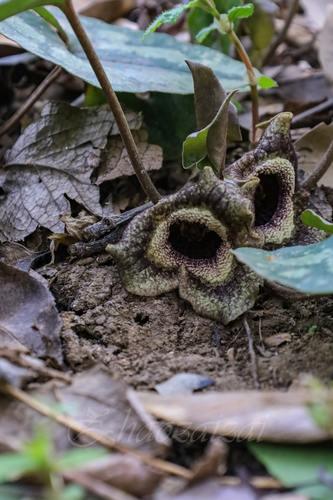
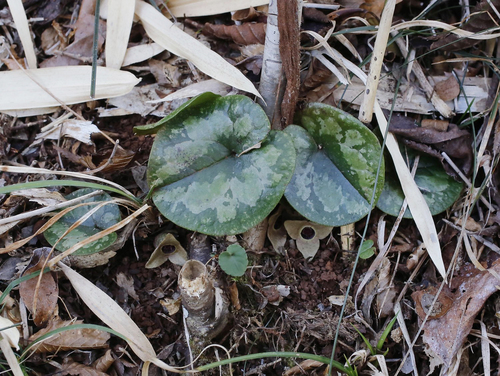
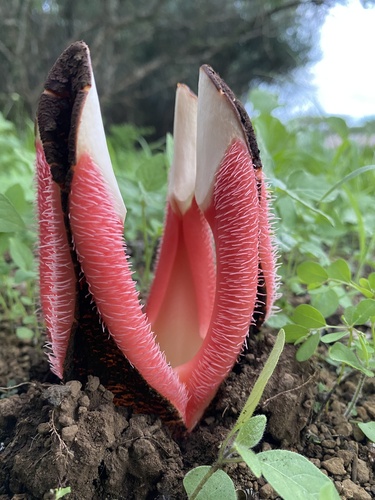
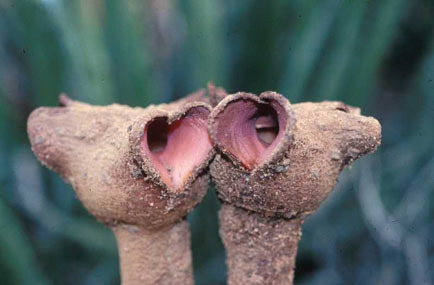
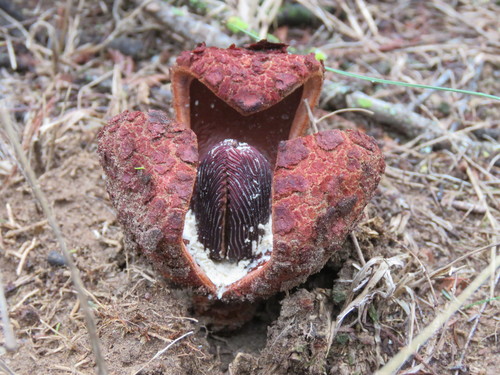
Asarum reflexum
Bickn.
gbif· cc-by-nc
The Trustees of Indiana University
gbif· cc-by-nc
Delaware State University, Claude E. Phillips Herbarium (DOV-)
gbif· cc0
Botanical Research Institute of Texas
Description
Asarum reflexum is a PERENNIAL growing to 0.2 m (0ft 8in). See above for USDA hardiness. It is hardy to UK zone 6. It is in flower in May. The species is hermaphrodite (has both male and female organs) and is pollinated by Flies. Suitable for: light (sandy), medium (loamy) and heavy (clay) soils and prefers well-drained soil. Suitable pH: mildly acid, neutral and basic (mildly alkaline) soils. It can grow in full shade (deep woodland) or semi-shade (light woodland). It prefers moist soil.
Edible Uses
Condiment. The underground stem is a ginger substitute. The root has a pungent, aromatic smell like mild pepper and ginger mixed, but more strongly aromatic. It is usually harvested in the autumn and can be dried for later use.
Known Hazards
Although no reports of toxicity have been found for this plant, at least 3 other members of this genus have reports that the leaves are toxic. Some caution is therefore advised in the use of this plant.
Distribution
Eastern N. America - Connecticut and New York to Iowa, Michigan, North Carolina and Kansas.
Where It Grows
Coming Soon
Cultivation
Prefers a rich moist neutral to acid soil in woodland or a shady position in the rock garden. Plants are found on alkaline soils in the wild. Plants are hardy to at least -15°c. The flowers are malodorous and are pollinated by flies. Plants often self-sow when growing in a suitable position.
Propagation
Seed - best sown in a cold frame as soon as it is ripe in the summer. Stored seed will require 3 weeks cold stratification and should be sown in late winter. The seed usually germinates in the spring in 1 - 4 or more weeks at 18°c. When large enough to handle, prick the seedlings out into individual pots and grow them on in light shade in the greenhouse for at least their first winter. Plant them out when large enough in late spring. Division in spring or autumn. Plants are slow to increase. It is best to pot the divisions up and keep them in light shade in the greenhouse until they are growing away strongly.