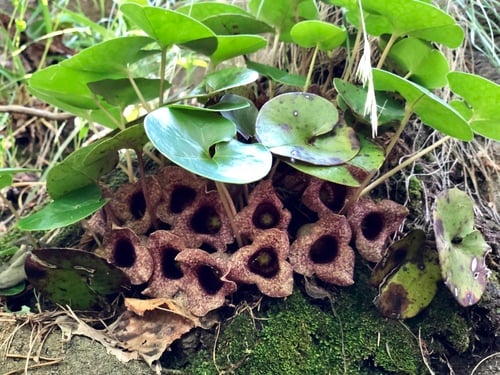
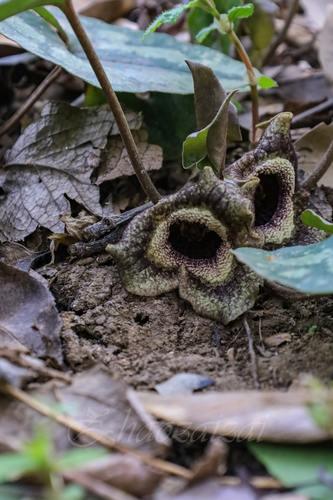
Asarum sieboldii
Miq.
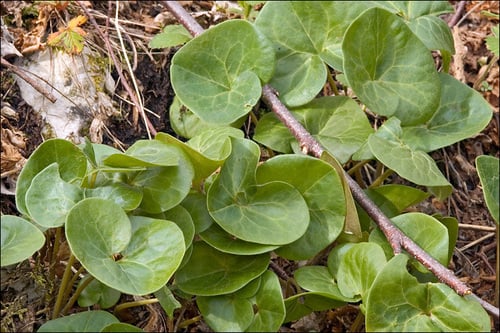
iNaturalist· cc-by-nc
(c) Lee, seong-won, some rights reserved (CC BY-NC), uploaded by Lee, seong-won
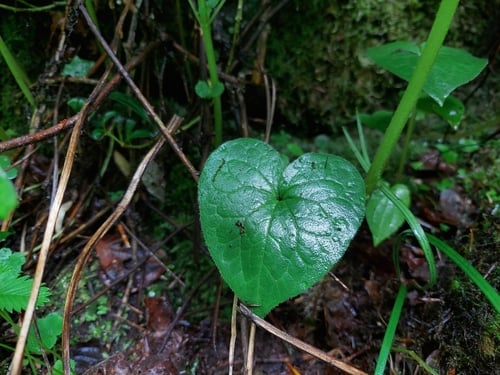
iNaturalist· cc-by-nc
(c) onidiras-iNaturalist, some rights reserved (CC BY-NC), uploaded by onidiras-iNaturalist
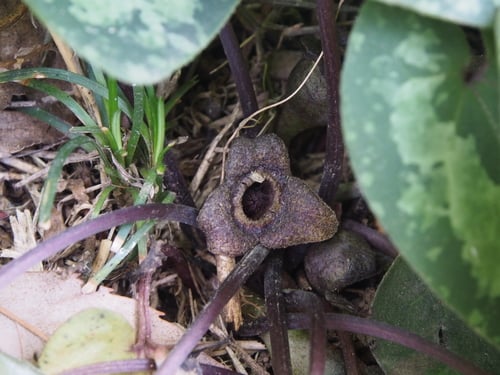
iNaturalist· cc-by-nc
(c) onidiras-iNaturalist, some rights reserved (CC BY-NC), uploaded by onidiras-iNaturalist
Summary
A perennial growing to 0.2 m in height with flowers from April to May. Hermaphrodite, fly-pollinated blooms. Tolerates light sandy, medium loamy, and heavy clay soils with good drainage. Prefers mildly acidic to neutral pH. Grows in full shade or semi-shade and requires consistently moist soil.
Description
A perennial growing to 0.2 m in height with flowers from April to May. Hermaphrodite, fly-pollinated blooms. Tolerates light sandy, medium loamy, and heavy clay soils with good drainage. Prefers mildly acidic to neutral pH. Grows in full shade or semi-shade and requires consistently moist soil.
Edible Uses
None known
Medicinal Uses
Anaesthetic Analgesic Antibacterial Antipyretic Diaphoretic Diuretic Emetic Expectorant Hypotensive Odontalgic Purgative Sedative Sternutatory Odontalgic, sternutatory. The entire plant is anaesthetic, analgesic, antibacterial, antipyretic, antitussive, diaphoretic, diuretic and hypotensive. It is used in the treatment of colds, severe toothache, rheumatic pain and chronic bronchitis with copious and thin phlegm. This remedy should be used with caution, large doses of the essential oil can lead to death. The root is analgesic, expectorant, sedative, diaphoretic, diuretic, emetic and purgative. A decoction is used in the treatment of stuffy nose, toothache, headache, rheumatic aches and pains, productive coughing and wheezing. It is harvested in the autumn and dried for later use.
Known Hazards
One report says that this plant should be used with caution, a reason is not given.
Distribution
It is a subtropical plant. It grows in moist valleys in forests.
Where It Grows
Asia, China, Korea,
Cultivation
We have very little information on this species and do not know if it will be hardy in Britain, though judging by its native range it should succeed outdoors in many parts of this country. The following notes are based on the general needs of the genus. Prefers a rich moist neutral to acid soil in woodland or a shady position in the rock garden. Plants are hardy to at least -15°c. The flowers are malodorous and are pollinated by flies. Plants often self-sow when growing in a suitable position.
Propagation
Seed - best sown in a cold frame as soon as it is ripe in the summer. Stored seed will require 3 weeks cold stratification and should be sown in late winter. The seed usually germinates in the spring in 1 - 4 or more weeks at 18°c. When large enough to handle, prick the seedlings out into individual pots and grow them on in light shade in the greenhouse for at least their first winter. Plant them out when large enough in late spring. Division in spring or autumn. Plants are slow to increase. It is best to pot the divisions up and keep them in light shade in the greenhouse until they are growing away strongly.
Other Uses
None known Special Uses
Also Known As
Xixin
References (3)
- Kang, Y., et al, 2012, Wild food plants and wild edible fungi in two valleys on the Qinling Mountains (Shaanxi, central China) Journal of Ethnobiology and Ethnomedicine; 9:26
- Kang, Y., et al, 2012, Wild food plants and wild edible fungi of Heihe valley (Qinling Mountains, Shaanxi, central China): Herbophilia and indifference to fruits and mushrooms. Acta Societas Botanicorum Poloniae 81(4):4-5-413
- www.eFloras.org Flora of China